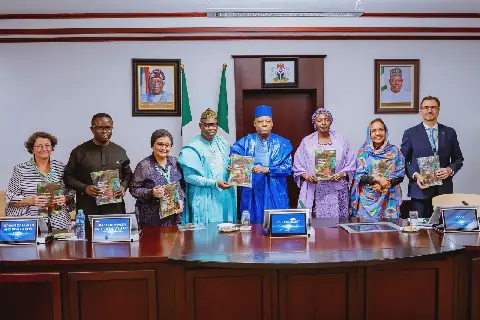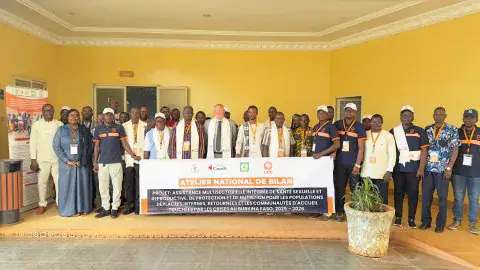
CARE International and its partner, the Alliance technique d'assistance au développement (ATAD), with financial support from the Canadian government through Global Affairs Canada, have been implementing a multisectoral assistance project in Burkina Faso since January 2025. The project aims to improve access to essential social services for populations affected by crises. An national review workshop was held in Ouagadougou on October 29, 2026, to assess the project's progress, identify challenges, and explore ways to sustain the initiatives.
The project focuses on providing integrated health, nutrition, and protection services to affected communities. Dr. Jean Marie Zongo, CARE's coordinator, stated that the project was designed to respond to the needs of displaced, returned, and host communities affected by the security and humanitarian crisis. The project's objectives include providing multisectoral assistance, particularly in sexual and reproductive health, nutrition, and protection. To achieve these goals, several interventions were conducted, including capacity building for health structures, provision of medical equipment, and rehabilitation of health centers in insecure areas.
The project has made significant progress, with approximately 200,000 people benefiting from the interventions. These include women, children, internally displaced persons, returnees, and host community members. The project's areas of intervention were selected through a participatory approach involving national and regional actors to prioritize areas with the greatest needs in health, protection, and humanitarian assistance. Dr. Zongo emphasized that the project aimed to contribute to the rehabilitation of health centers to enable women and children to access necessary care.
In addition to health services, the project has prioritized the protection of women and girls. Four spaces have been dedicated to providing them with meeting spaces, life skills training, and promoting their well-being within their communities. The project's coordinator highlighted that the areas of intervention were chosen based on a participatory approach, with national and regional actors identifying areas with the most significant needs.
Representing the Minister of Family, Secretary General Ourobé Éric Coulibaly praised the initiative, which addresses essential needs of crisis-affected populations. He emphasized that challenges in accessing healthcare, nutritional risks, and gender-based violence are significant concerns for communities. Coulibaly stressed that the project's success should be measured by its concrete impact on beneficiaries' lives, rather than just the number of activities conducted.
Coulibaly outlined four key orientations to ensure the project's sustainability. These include strengthening the appropriation of achievements by competent technical services and local authorities, consolidating coordination among health, nutrition, protection, and social action sectors, and promoting community participation, particularly from women and youth, in identifying needs and designing interventions.
The project's review workshop provides an opportunity for stakeholders to assess progress, identify challenges, and explore ways to sustain the initiatives. The project's findings and recommendations will inform future programming and contribute to improving the lives of crisis-affected populations in Burkina Faso.
Key points
- The project provided multisectoral assistance to approximately 200,000 people in Burkina Faso.
- The project's interventions included capacity building for health structures, provision of medical equipment, and rehabilitation of health centers.
- The project's sustainability will depend on strengthening coordination among sectors and promoting community participation.