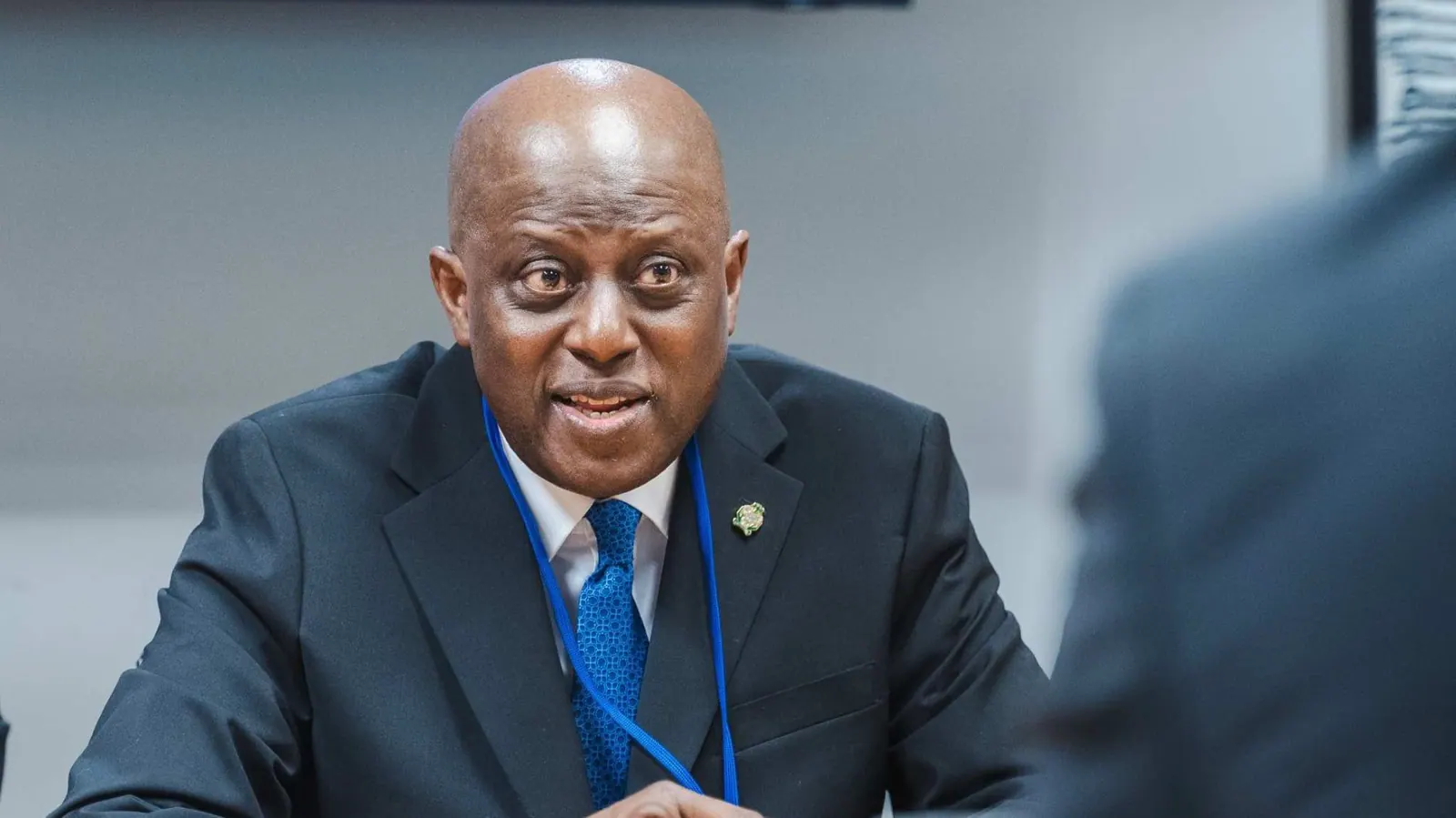
Yemi Cardoso has led the Central Bank of Nigeria (CBN) in a series of broad financial-system reforms over the past three years. These reforms aim to stabilize key economic prices and create a more efficient banking system. Since assuming office in September 2023, Cardoso has overhauled the foreign exchange market, embarked on an ambitious banking recapitalisation, tightened monetary policy, and strengthened payment-system regulation. The results are visible, with foreign exchange-market distortions reduced and the naira experiencing one of the longest periods of stability in recent years.
The CBN's reforms have yielded significant results, including a rise in foreign reserves to above $55 billion and banks raising about N4.65 trillion in fresh capital in about two years. Digital payment systems have also improved. However, for households and businesses, the assessment is more complicated. The naira exchange rate remains above N1,300/$, and inflation, at above 15 per cent, remains higher than in many other African economies. High financing costs continue to constrain business performance, making the macroeconomic gains difficult for many Nigerians to relate to.
Cardoso inherited a monetary and financial system under considerable pressure, with elevated inflation, a fragmented foreign exchange market, and eroded banking system capital stocks. The CBN tightened monetary policy, reformed the FX market, commenced a major bank recapitalisation programme, and strengthened regulation of financial institutions and payment operators. The scale of the changes seen in the past three years has been substantial, with 33 banks meeting the CBN's revised minimum capital requirements by March 31, 2026.
The banking-sector recapitalisation is a clear example of the difference between institutional reform and its economic payoff. The additional capital provides stronger buffers for many banks, but stronger bank balance sheets do not automatically mean cheaper credit. If banks have more capital but businesses continue to face lending rates of 35 per cent, the transmission from recapitalisation to production remains weak. This contradiction suggests that the reform remains an unfinished business for Cardoso.
The CBN has placed considerable emphasis on FX stability rather than defending a particular value range for the naira. The argument is that businesses and investors can plan better around a stable and transparent market than under a regime dominated by an artificially strong currency and market distortions. However, a naira that is more stable but significantly weaker than its pre-reform value raises the nominal cost of imported goods, highlighting the complexity of monetary policy management.
To improve market functioning, the CBN has introduced the Nigerian FX Code, revised FX regulations, reformed bureaux de change (BDCs), and introduced new rules for international money-transfer operators and oil-company export proceeds. The Fourth Edition of the Foreign Exchange Manual, launched in May 2026, represented another step towards codifying the market. These reforms aim to reduce uncertainty and provide a transparent mechanism for bringing proceeds into the country.
The economy needs more than monetary policy to achieve the desired results; it needs the support of robust fiscal programmes to respond positively to monetary-policy gains. A stable naira, improved liquidity, and lower inflation cannot automatically translate into improved credit in a largely unbankable economy. The collaboration between the CBN and fiscal authorities will go a long way in determining whether the overall objective of recapitalisation will be achieved and if monetary policy will serve its purpose.
Key points
- The CBN's reforms have led to significant changes in the foreign exchange market and banking sector.
- Despite progress, challenges persist, including high inflation and financing costs.
- The success of Cardoso's reforms depends on collaboration between the CBN and fiscal authorities.