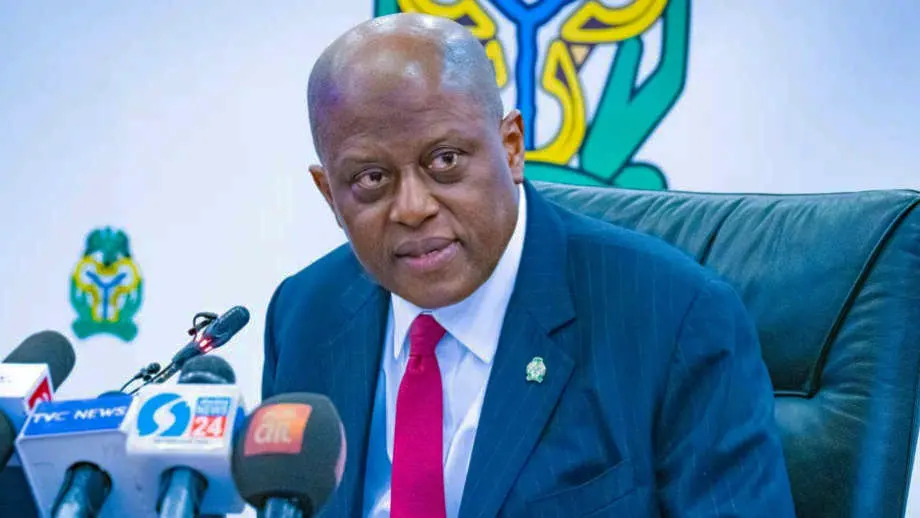
Nigeria's financial ecosystem was in turmoil when Olayemi Cardoso took over as Governor of the Central Bank of Nigeria (CBN) on September 22, 2023. The naira was plummeting in the foreign exchange market, prices of goods were rising, and households and businesses were feeling the squeeze. Banks faced tremendous pressure to strengthen their financial base, and concerns about the transparency and effectiveness of some areas of the financial system had weakened confidence.
Cardoso had to tackle several problems at once, including stabilising the naira, controlling inflation, strengthening banks, and restoring confidence in the financial system. Nearly three years later, financial experts and stakeholders say the apex bank's reform programme has produced appreciable changes across banking, foreign exchange, payments, consumer protection, financial markets, and external reserves. However, Nigerians still contend with high living costs, and businesses continue to complain about financing costs and other operating challenges.
President Bola Tinubu has publicly commended Cardoso's leadership of the CBN, while international recognition has also followed, including the Central Bank of the Year Award by Central Banking, London. The story of the Cardoso years is less about one single policy and more about a series of reforms that have gradually changed the way the CBN manages banks, foreign exchange, payments, financial markets, and Nigeria's reserves.
One of the biggest milestones came on March 31, 2026, when the CBN concluded the latest banking recapitalisation exercise. The exercise saw 33 banks meet the revised minimum capital requirements, raising about N4.65 trillion in fresh capital. About 72.55 per cent of the funds came from domestic sources. A bank with a stronger capital base has a bigger cushion against unexpected losses and is better placed to finance major projects and businesses.
The CBN also introduced new succession requirements in September 2025 for Domestic Systemically Important Banks (DSIBs). These rules are designed to ensure that when a chief executive leaves, the bank does not suddenly find itself without a credible leadership structure. Another development came in February 2026, when the CBN approved the Bank of Industry's Non-Interest Banking Window, potentially widening access to finance.
The CBN has introduced several measures aimed at making the foreign exchange market more transparent and allowing demand and supply to play a greater role in determining exchange rates. On May 15, 2026, the apex bank launched the fourth edition of its Foreign Exchange Manual, providing clearer rules for how foreign exchange transactions should be conducted. The CBN also reformed the operations of Bureau de Change operators and introduced the FX BDC Purchase Tracker to improve monitoring and compliance.
Nigeria's payments system has changed dramatically over the years, with millions of transactions now taking place electronically. The CBN has placed payments-system security at the centre of its reforms, launching the Payments System Vision 2028 roadmap on June 1, 2026. The aim is to make it easier for different payment platforms to work together while ensuring that transactions are safe and reliable. Agent banking has also received tighter regulation, with revised guidelines issued on October 6, 2025.
Key points
- The CBN's reform programme has produced appreciable changes across banking, foreign exchange, payments, consumer protection, financial markets, and external reserves.
- The banking recapitalisation exercise saw 33 banks meet the revised minimum capital requirements, raising about N4.65 trillion in fresh capital.
- The CBN has introduced several measures aimed at making the foreign exchange market more transparent and allowing demand and supply to play a greater role in determining exchange rates.