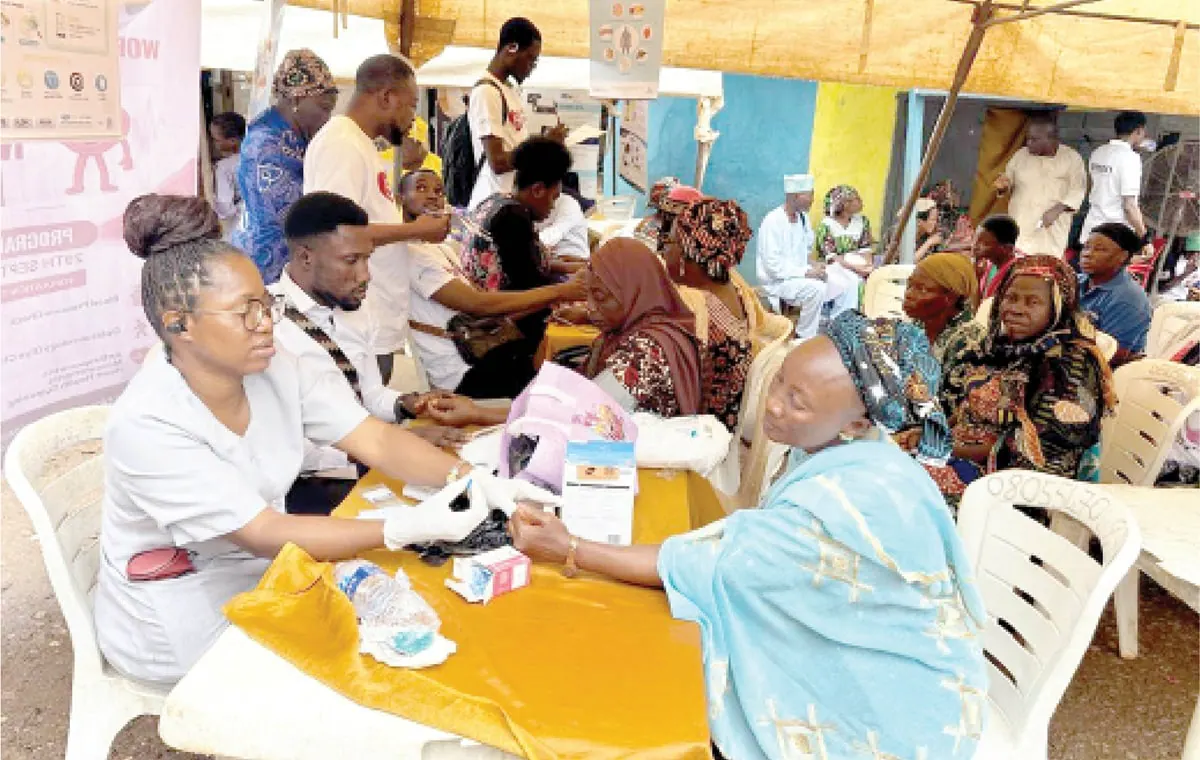
Hundreds of residents, including children, young adults, and the elderly, gathered in an Ibadan community on September 29 for free cardiovascular and other health screenings. The outreach program, conducted by the Stroke Free Society International, University College Hospital (UCH), Ibadan, and the World Heart Federation, aimed to create awareness about cardiovascular diseases and provide early detection and prevention. The program brought together cardiovascular health professionals with a simple yet crucial message: knowing one's health status early can make a significant difference between preventing a life-threatening condition and living with its consequences.
Leading the medical team was Professor Moshood Adeoye, a cardiologist, who emphasized that cardiovascular diseases, including hypertension, heart attacks, and stroke, are increasingly affecting people in society. Many residents remain unaware of their risk factors, and financial constraints or ignorance often prevent them from seeking medical attention. Adeoye, who was born in the community over six decades ago, returned to provide medical services as a way of giving back. He explained that the outreach aimed to educate residents about symptoms and risk factors, adding that some children already show signs of conditions that could predispose them to cardiovascular diseases later in life.
The medical team visited a primary school to identify cardiovascular risks among children, including congenital and rheumatic heart diseases, hypertension, and other conditions. Adeoye noted that some children may already have hypertension or diabetes without knowing it, and that early identification of these problems is crucial. This year's program introduced vision screening for children, as some pupils who appeared inattentive or struggled academically might be experiencing visual impairment. The initiative aimed to provide follow-up support for residents found to be at risk, including monitoring their blood pressure and providing medication and medical advice.
Dr. Olanike Orimolade, Consultant Cardiologist at UCH and the University of Ibadan College of Medicine, emphasized that the message of World Heart Day is fundamentally about prevention. She explained that cardiovascular health is closely linked to conditions such as hypertension, diabetes, and high cholesterol, which can remain silent for years. Orimolade advised adults to seek medical attention when experiencing persistent headaches, unusual tiredness, or other symptoms, and urged parents and teachers to pay attention to unusual symptoms in children and teenagers.
For the President of Stroke Free Society International, Ogunleye Adelere, the World Heart Day outreach represented another milestone in the organization's seven-year journey of taking stroke and cardiovascular disease prevention to communities. Adelere said the organization was established with a central objective of preventing stroke and other heart-related conditions through regular screening, health education, and early intervention. The society has taken its activities to several communities, screening residents for blood pressure, blood sugar, and other health indicators to identify possible health risks early.
Dr. John Oladapo, Senior Registrar, Cardiology Unit, UCH, noted that the turnout was encouraging, particularly because many of those who came for screening were within the economically productive age group. The outreach program demonstrated the significance of community-based initiatives in addressing the growing burden of cardiovascular diseases in Nigeria. According to experts, prevention and early detection are key to reducing the risk of cardiovascular diseases and promoting overall health.
The World Heart Day outreach in Ibadan highlights the growing concern about cardiovascular diseases in Nigeria. Experts warn that the increasing cases of cardiovascular diseases pose a significant threat to the country's healthcare system and economy. As the country continues to grapple with the challenges of cardiovascular diseases, initiatives like the Stroke Free Society International's outreach program are crucial in promoting awareness, prevention, and early detection.
Key points
- Many Nigerians are suffering from cardiovascular diseases without knowing, and financial constraints or ignorance often prevent them from seeking medical attention.
- The outreach program aimed to provide early detection and prevention of cardiovascular diseases, including hypertension, heart attacks, and stroke.
- Experts emphasize that prevention and early detection are key to reducing the risk of cardiovascular diseases and promoting overall health.