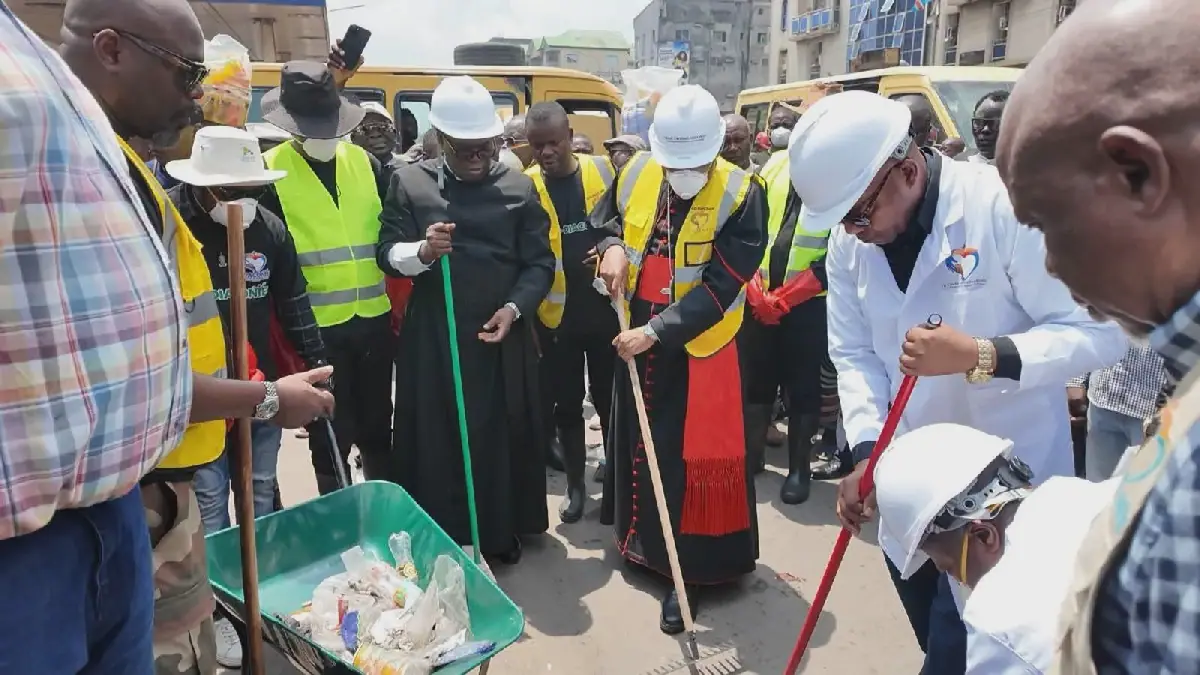
On November 13, Cardinal Fridolin Ambongo, the Archbishop of Kinshasa, participated in a cleanup operation at Place Victoire in the Kalamu commune. The event, organized by the Diaconate of the Archdiocese of Kinshasa, brought together nearly 300 young people, parish officials, and local authorities. This initiative coincided with the 10th World Day of the Poor, celebrated on November 15. By joining the effort, the cardinal emphasized the importance of collective responsibility in addressing the issue of insalubrity in Kinshasa.
The cleanup operation, known as "salongo," aimed to raise awareness about the need for a cleaner and healthier environment in Kinshasa. The cardinal's participation gave the event a significant social dimension, as it involved young people often marginalized by society. By working together with local authorities and church representatives, these young individuals were able to contribute to a collective effort that promoted social solidarity and environmental care.
The Diaconate's initiative is part of a broader effort to promote social solidarity and environmental care in Kinshasa. The theme of the diocesan celebration, "Biso mpe lokola, sima ya Bakonzi ya Engumba mpe ya Eklezia, tolingi Kisasa ebonga," reflects the desire to see Kinshasa regain its beauty through the engagement of authorities and the Church. This event echoed the cardinal's previous statements on the degradation of Kinshasa, where he lamented the city's transformation into a "vast dumpster."
On September 26, Cardinal Ambongo opened the 2026-2027 pastoral year by highlighting the dire situation in Kinshasa. He denounced the accumulation of plastic waste, clogged drains, disappearance of green spaces, and recurrent flooding. While emphasizing that the Church should not replace the Congolese state, the cardinal refused to remain indifferent to the worsening living conditions. The Place Victoire cleanup operation was a practical translation of this pastoral commitment.
However, occasional cleaning operations may not be enough to restore Kinshasa to its former glory. Effective public services, coherent waste management, adapted infrastructure, and collective discipline are essential for sustainable progress. While the Church's mobilization can raise awareness and encourage citizens, it cannot absolve authorities of their responsibilities. The question remains as to how many more cleanup operations are needed to make Kinshasa a permanently clean and healthy city.
The event also highlighted the need for a long-term strategy to address the issue of insalubrity in Kinshasa. The city's residents and authorities must work together to develop and implement effective solutions to prevent pollution and promote environmental sustainability. By engaging in this effort, the Church aims to encourage a sense of collective responsibility and promote positive change in the community.
Ultimately, the success of such initiatives depends on the sustained commitment of all stakeholders, including authorities, citizens, and faith-based organizations. By working together, it is possible to create a cleaner, healthier, and more sustainable environment for the people of Kinshasa. The cardinal's leadership and the Church's involvement in this effort are crucial in promoting a culture of social responsibility and environmental stewardship.
Key points
- The Catholic Church, led by Cardinal Fridolin Ambongo, is promoting a culture of social responsibility and environmental stewardship in Kinshasa.
- The initiative aims to encourage collective action to address the issue of insalubrity in the city.
- Long-term solutions require sustained commitment from authorities, citizens, and faith-based organizations.