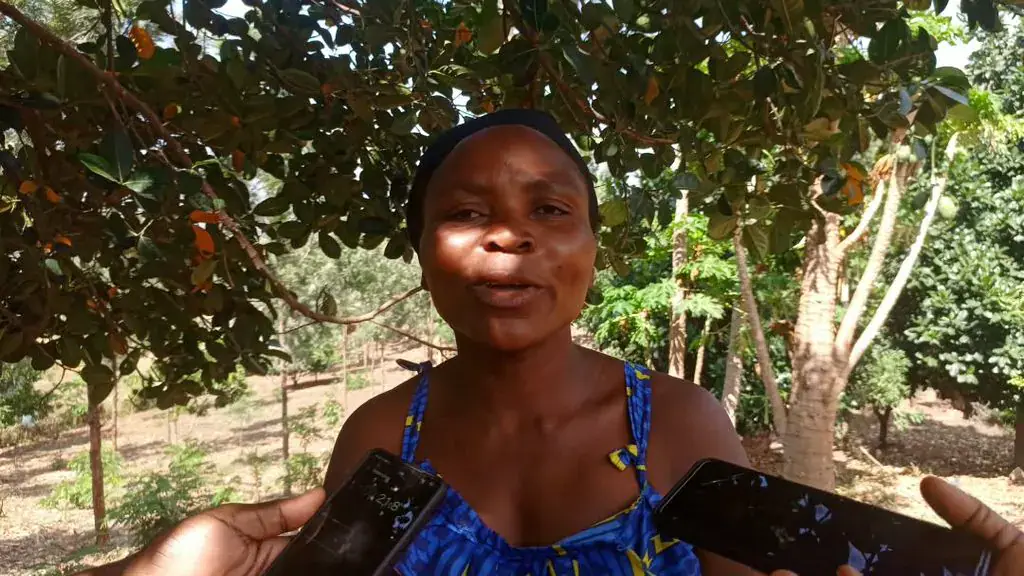
In the Rwenzori region of Uganda, smallholder farmers are transforming their lives by planting trees on their farms and earning income from carbon credits. Peninnah Kyakimwa, a 40-year-old mother of 10, is one such farmer who has benefited from this initiative. She planted trees on about two acres of her farm in Kogere Cell, Busumba Village, Kasese District, which has not only restored previously dry and unproductive land but also provided her with a source of income to pay school fees for her children and invest in additional land for coffee growing.
The Environmental Conservation Trust of Uganda (ECOTRUST) is behind this initiative, working with farmers to link tree planting and sustainable land management to the voluntary carbon market through the Trees for Global Benefits programme. The programme allows farmers to plant and maintain trees, which absorb carbon dioxide from the atmosphere and store carbon in their biomass and soils. The resulting climate benefits can be quantified, monitored, and verified, and carbon credits representing those benefits can be sold to buyers seeking to support emissions reductions or removals.
For farmers like Kyakimwa, the global language of carbon markets is ultimately translated into very local priorities: school fees, livestock, farm inputs, and land. The trees have not solved every problem, with termites remaining a major threat, particularly to newly planted trees. However, Kyakimwa has continued planting and has also formed savings structures with other farmers to save, borrow, and invest. This has provided her with a safety net and an opportunity to plan for the future.
Philmon Baluku, a 46-year-old farmer who grows coffee alongside trees on his three-hectare farm in the Rwenzori region, also sees the benefits of this initiative. He says that trees have become part of his agricultural investment, allowing him to continue producing food and cash crops while maintaining vegetation on his farm. The integration of trees into existing farming systems is a key aspect of agroforestry, which can help protect soil, provide shade, support biodiversity, and store carbon.
At the centre of this model is carbon, with a carbon credit representing one metric tonne of carbon dioxide equivalent that has been reduced, avoided, or removed from the atmosphere. The amount of carbon stored by trees is estimated using established methodologies and then subjected to monitoring and verification before credits can be issued. Those credits can be purchased by companies and other organisations participating in voluntary carbon markets.
However, a recent study published in September 2026 in Communications Sustainability found that carbon payments do not have the same meaning for every household. A farmer's financial circumstances can determine whether they are able to participate in the first place, and farmers have to consider the initial costs of establishing and maintaining trees and meeting project requirements. The study highlights the importance of understanding the complexities of smallholder farmers' participation in agroforestry-based carbon projects.
Despite these challenges, the initiative has the potential to make a significant impact on the lives of smallholder farmers in Uganda's Rwenzori region. ECOTRUST Executive Director Pauline Nantongo Kalunda says that the system should ultimately work for the people growing the trees, with the farmer, community, and environmental integrity being maintained. As more farmers participate in this initiative, it will be interesting to see how it evolves and the impact it has on the region.
Key points
- Smallholder farmers in Uganda's Rwenzori region are earning income from carbon credits by planting trees on their farms.
- The initiative has improved the livelihoods and land productivity of farmers, providing them with a source of income to invest in their farms and communities.
- However, the initiative also faces challenges, including the initial costs of establishing and maintaining trees and meeting project requirements.