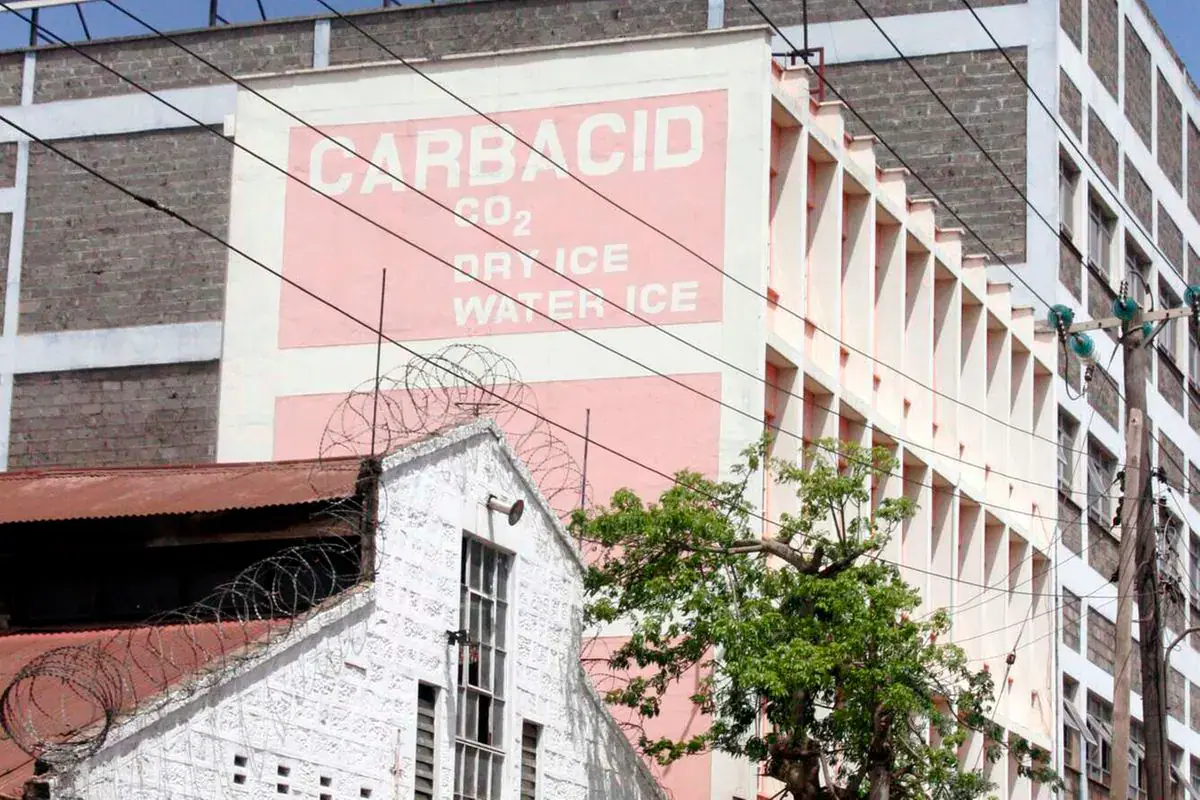
Carbacid Investments, a leading carbon dioxide producer in Kenya, is expanding its solar power capacity to reduce electricity costs. The company plans to install an additional 400 kilowatt-peak (kWp) solar generation capacity at its Kagwe plant, alongside a 723 kilowatt-hour battery storage system. This move aims to increase renewable energy's contribution to its electricity consumption to about half by 2029.
The investment will build on an existing 1,610 kWp solar portfolio across its Kagwe and Sosiani plants. In the year ended July 2026, the solar installations generated 1.72 million kilowatt-hours of electricity, accounting for about 27 percent of the group's power requirements. The Sosiani plant in Eldoret has an installed solar capacity of 860 kWp, while the Kagwe facility has 750 kWp.
According to Carbacid's 2026 sustainability report, the facilities are on track to scale their solar share from an average 30 percent to approximately 50 percent by the financial year 2029/30. The company says its solar installations have strengthened its operations by reducing dependence on grid electricity, lowering energy costs, and cushioning its manufacturing operations against electricity tariff increases.
The solar installations have generated more than 2.45 million kWh cumulatively since commissioning, avoiding approximately 1,286 tonnes of carbon dioxide equivalent emissions. Solar contributed an average of 37.64 percent of electricity consumed at Sosiani during the financial year under review, peaking at 52.73 percent in January 2026. At Kagwe, the contribution averaged 21 percent, with a peak of 38.6 percent in the same month.
The January performance at Sosiani marked the first month in which solar generation exceeded electricity drawn from the national grid. This points to the potential of renewable energy to support energy-intensive manufacturing. Carbacid continues to pursue opportunities to improve energy efficiency, reduce dependence on grid electricity, and lower the associated Scope 2 emissions.
The company reported a 26 percent reduction in combined Scope 1 and Scope 2 emissions to 5,871 tonnes from 7,898 tonnes in the previous financial year. This was even as the volume of carbon dioxide supplied to customers increased by 20 percent. Generator diesel consumption declined 61 percent, while diesel consumption by bulk tankers fell 9.2 percent.
Carbacid says its sustainability investments are increasingly being integrated into its business strategy, with energy efficiency and resource conservation expected to support long-term competitiveness. The planned investments in solar point to a growing role for privately-financed renewable energy in manufacturing, where electricity expenses and reliability have a bearing on production costs and competitiveness.
Key points
- Carbacid aims to increase renewable energy's contribution to its electricity consumption to about half by 2029.
- The company's solar installations have generated more than 2.45 million kWh cumulatively since commissioning.
- Carbacid reported a 26 percent reduction in combined Scope 1 and Scope 2 emissions to 5,871 tonnes.
Reporting sources
- Carbacid ramps up solar projects to cut KPLC bills · Business Daily Africa