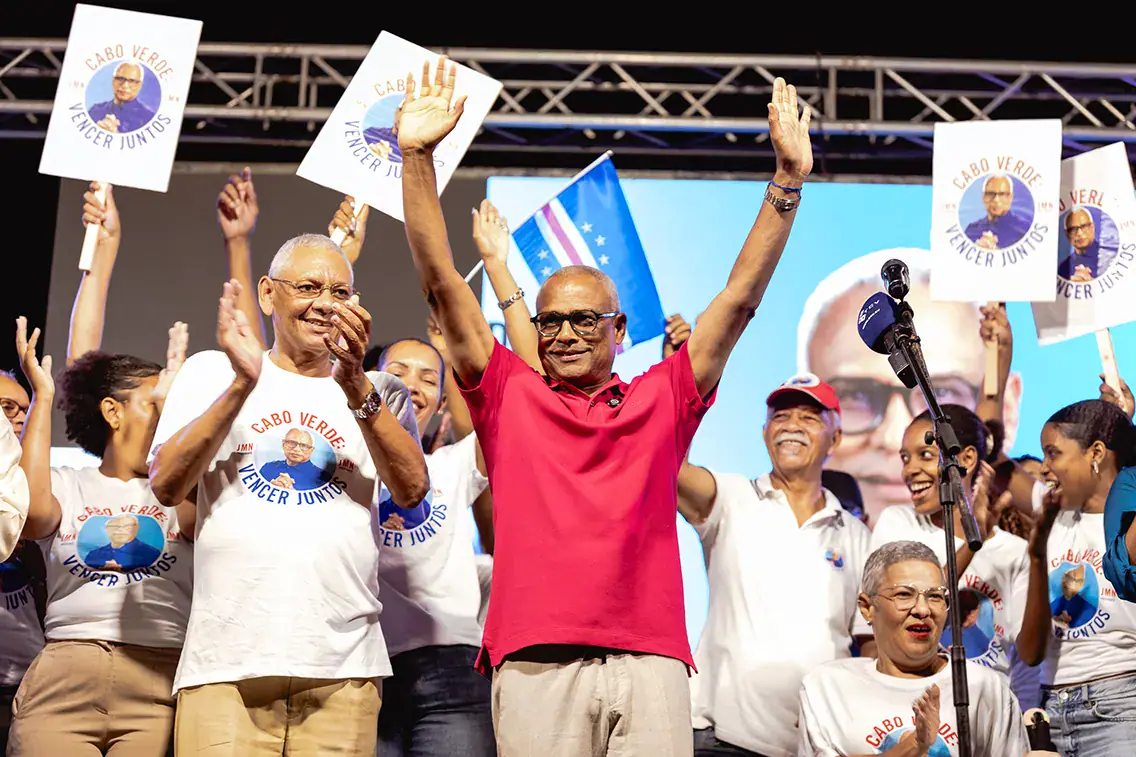
Cape Verde President Jose Maria Neves has been reelected for a second term, securing 63.8% of the vote in the November 15, 2026 elections. Neves declared victory in a televised address, stating that his closest challenger, former Justice Minister Joana Rosa, had conceded and congratulated him. He promised to continue as an independent and impartial president, serving as an arbiter and moderator of the political system.
Neves campaigned on a platform of continuity, focusing on economic growth and protecting the diaspora. He also pledged to organize a dedicated youth summit to address emigration if reelected. In 2021, Neves won the presidency with 52% of the vote. His reelection gives his party, the Partido Africano da Independência de Cabo Verde (PAICV), control of both the presidency and the premiership for the first time in over a decade.
The preliminary results show that Joana Rosa, the country's first female presidential candidate, secured 31.6% of the vote. Other candidates in the race included Antero Tavares, Casimiro de Pina, Gilson Alves, and Loisito Sousa. Low voter turnout was reported, with estimates suggesting that only about a third of the eligible 420,000 voters participated in the polls.
Pundits, including Neves himself, attributed the low turnout to the country's high emigration rate, population shifts, and outdated records. The high emigration rate and economic growth were among the top issues in the 2026 elections, with each candidate presenting plans to address these challenges. Cape Verde has a significant diaspora, with more citizens living abroad, mainly in the USA and Portugal, than at home.
Neves' reelection marks the beginning of the end of his long political career. Born in 1960, he has been a member of the PAICV since the 1980s and served as Prime Minister for 15 consecutive years until 2016. His party won a majority in the legislative elections in May 2026, leading to the appointment of Francisco Avelino Vieira de Carvalho as Prime Minister.
Cape Verde is known for its stable politics, ranking third out of 54 countries in the Mo Ibrahim Governance Index in 2025, after Seychelles and Mauritius. The country's hybrid presidential and parliamentary system has contributed to its stability, giving the presidency veto powers while retaining sufficient power for the premiership.
Neves' second term is expected to focus on addressing the country's challenges, including emigration and economic growth. His commitment to continuity and protection of the diaspora is seen as a positive step towards maintaining stability and promoting development in the 10-island archipelago.
Key points
- Neves secured 63.8% of the vote in the November 15, 2026 elections.
- The low voter turnout was attributed to the country's high emigration rate and outdated records.
- Neves' reelection gives his party control of both the presidency and the premiership for the first time in over a decade.