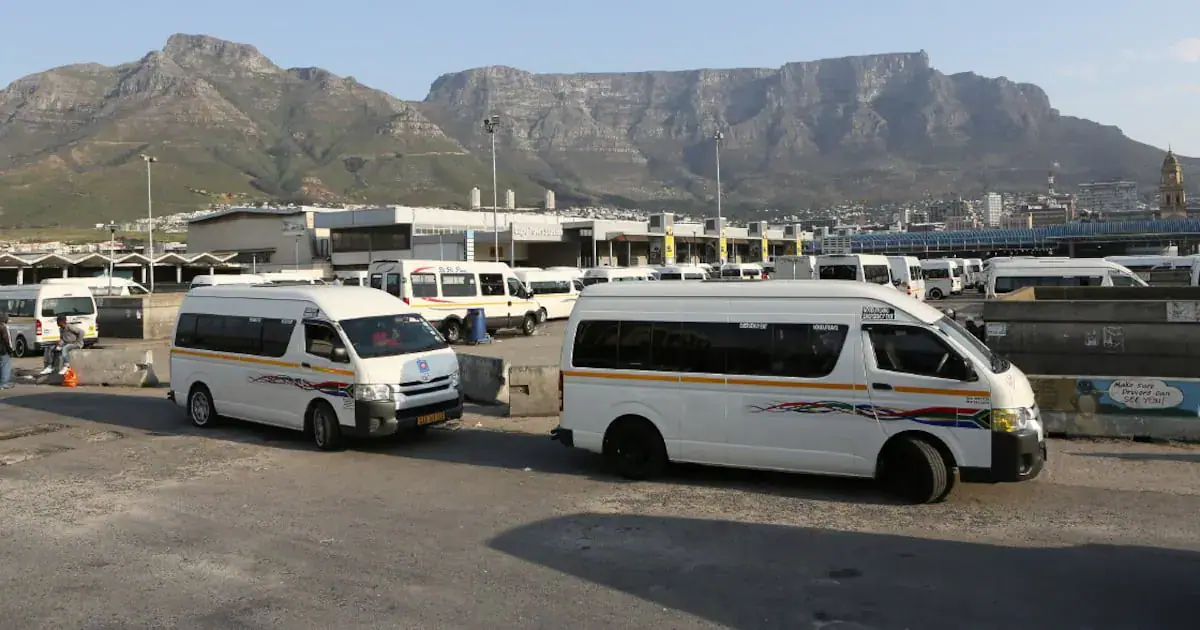
Violence involving minibus taxis and gang activity in parts of Cape Town led to the diversion of many matric candidates to alternative exam centers on Wednesday. The incidents, reported in areas such as Delft, Khayelitsha, Nyanga, Mfuleni, and Gugulethu, raised significant safety concerns for students traveling to their final exams. As a result, the Western Cape education department activated its security structures and alerted exam centers across the metro to monitor student arrivals.
Western Cape education MEC Jaco Londt stated that centers were instructed to contact candidates who had not arrived and, in cases where safety or transport challenges prevented them from reaching their registered venues, advise them to report to the nearest exam center as an emergency alternative. Candidates facing circumstances beyond their control were allowed up to an hour after the commencement of the exam to arrive and be admitted to the exam venue. This measure aimed to minimize disruptions to the national senior certificate English exam.
The violence resulted in serious concerns about student safety and their ability to reach exam centers. At Delft SAPS, two attempted murder cases and a case of discharging a firearm were opened following a shooting involving minibus taxi drivers at Palm taxi rank at about 7 am on Wednesday. Two adult men were wounded in the shooting and transported to hospital in a private vehicle. The investigation is ongoing, with police spokesperson Thembakazi Mpendukana confirming that no arrests have been made yet.
The City of Cape Town temporarily closed the Delft public transport interchange due to escalating violence between rival minibus taxi associations. Urban mobility MMC Rob Quintas condemned the latest outbreak, citing longstanding disputes over taxi routes and operating rights as the root cause. The disputes between the Cape Amalgamated Taxi Association and the Congress of Democratic Taxi Associations have persisted despite years of mediation, negotiations, and high court intervention.
The latest tensions center on contested routes between Delft, Epping, and Killarney, with concerns that the violence could spread to other major commuter corridors. MMC Quintas emphasized that thousands of passengers depend on these services daily and that further escalation would have devastating consequences. He called for the disputes to be resolved through lawful processes and meaningful engagement, rather than intimidation, shootings, and bloodshed.
Cape Town mayor Geordin Hill-Lewis stated that the city is providing full policing support to the SAPS, with metro police officers responding alongside national police to incidents in Delft, Khayelitsha, Mfuleni, and Gugulethu. The city is also making safety camera footage and surveillance technology available to assist investigations. Mayor Hill-Lewis called on taxi industry leaders to end the violence and ensure peace, emphasizing that commuters should not bear the consequences of disputes in the industry.
The city will keep commuters informed of changes to the operational status of public transport facilities as the situation develops. With the matric exams ongoing, the safety of students and commuters remains a top priority. The city's efforts to mitigate the impact of the violence and restore order to public transportation are ongoing, with a focus on protecting commuters and preventing further disruptions.
Key points
- The Western Cape education department activated its security structures to monitor student arrivals and provided alternative exam centers for matric candidates affected by the violence.
- The City of Cape Town deployed resources to protect commuters and public transport infrastructure, with metro police officers responding to incidents alongside national police.
- The violence resulted in two attempted murder cases and a case of discharging a firearm, with two adult men wounded in the shooting and transported to hospital.