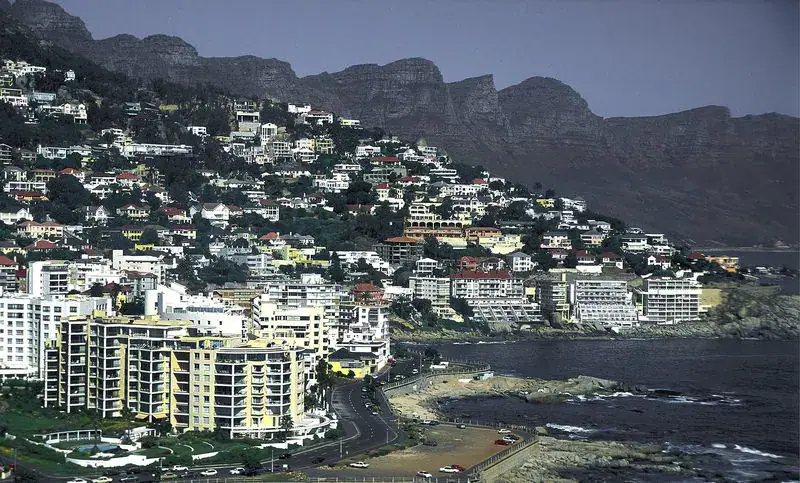
Cape Town is facing a severe housing crisis, with average monthly rents reaching R12,561, a 9.7% increase from Q1, according to the PayProp 2026 Rental Index. The city's housing waiting list has swelled to approximately 365,000 households, which will take over 70 years to address. Ndifuna Ukwazi, a social justice organization, reports that 76% of the city's population earns below R22,000 a month, making it difficult for residents to afford housing.
The city's housing crisis has been attributed to colonial-era land dispossessions and apartheid-era spatial planning, such as the Group Areas Act. Ndifuna Ukwazi's communications and strategy specialist, Yusrah Bardien, argues that post-1994 state housing policy prioritized building Breaking New Ground (BNG/RDP) houses on cheap, distant land, creating "poverty traps." The organization also points to the failure to regulate property speculation and implement inclusionary housing, allowing gentrification to push working-class families out.
Short-term rentals like Airbnbs have exacerbated the crisis, with an estimated 22,000 active listings in Cape Town, mostly concentrated in the city's most crucial economic suburbs. The City of Cape Town's own CBD Local Spatial Development Framework acknowledges that over 70% of the inner-city's rental stock is used by the hospitality industry. This has led to a shortage of affordable housing for residents, with average monthly rental fees for a one-bedroom apartment in central suburbs like Sea Point reaching over R20,000.
The Democratic Alliance (DA) has proposed releasing well-located and unused state land to private developers to increase the city's housing supply. The party also plans to reform zoning to allow developers to build more dense housing, such as apartment blocks. However, the DA does not support rent control, instead opting to regulate short-term rentals through the Short-Term Letting By-law. The by-law will rate properties available for short-term letting for more than 50% of its annual room-night capacity as commercial accommodation.
The African National Congress (ANC) blames the DA for leading Cape Town while prioritizing profit over socioeconomic wellbeing. The ANC proposes releasing well-located land for development, with a focus on redress, and prioritizing developers who commit to building low-cost housing. The party also supports addressing the "spatial apartheid" faced by the city by availing land for social and affordable housing in areas inaccessible to first-time buyers and the working class.
Good and Rise Mzansi, campaigning together for the Western Cape, have outlined plans to address Cape Town's housing crisis. Their mayoral candidate, Brett Herron, states that short-term rentals significantly contribute to the shortage, as housing stock is lost to long-term residents. The parties' plans aim to address the root causes of the crisis and provide affordable housing options for residents.
As the local government elections approach, residents are eager to see tangible solutions to the housing crisis. With parties proposing various solutions, it remains to be seen which plans will be implemented and how effective they will be in addressing the crisis. The city's residents, who are struggling to afford housing, will be watching closely to ensure that their needs are prioritized.
Key points
- The city's housing waiting list stands at approximately 365,000 households, which will take over 70 years to address.
- Short-term rentals like Airbnbs have exacerbated the crisis, with an estimated 22,000 active listings in Cape Town.
- Parties have proposed releasing well-located land for development and regulating short-term rentals to address the housing crisis.