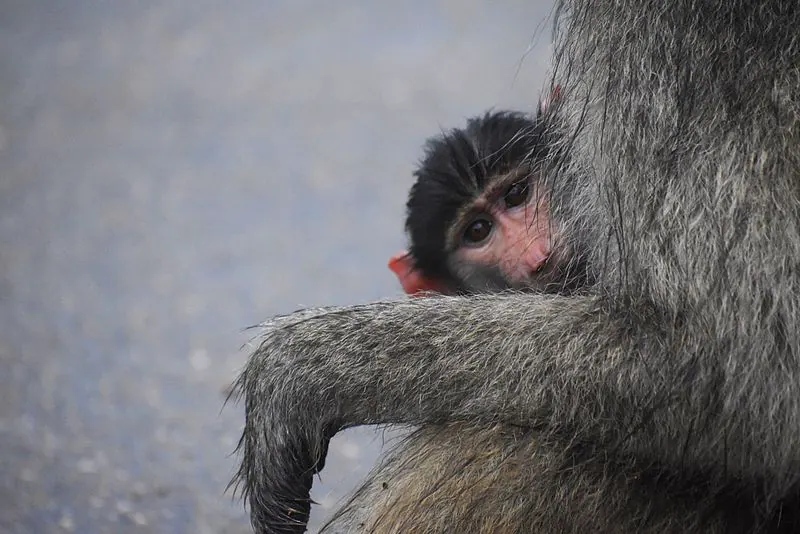
As Cape Town approaches the November 4 municipal elections, a contentious plan to manage the city's chacma baboon population has sparked intense debate. The plan involves trapping around 60 baboons from the Waterfall and Seaforth troops in Simon's Town and relocating them to permanent captivity at the Urban Wildlife Centre at Kogelfontein. Primatologist David Gaynor has warned that this could become a "monument to management failure." The plan includes capturing, assessing, and moving the animals into purpose-built enclosures, with healthy males to be vasectomized.
The Green Group Simonstown NPC (GGST) has resigned from the Cape Peninsula Baboon Advisory Group (BAG), citing concerns that their input was not being considered. GGST believes that the plan amounts to a "zoo" and that viable alternatives were not explored. The Wildlife Animal Protection Forum South Africa (WAPFSA) has also opposed the plan, arguing that it disregards the baboons' natural free-ranging existence and that coexistence measures should be implemented and evaluated before permanent captivity is considered. WAPFSA has proposed alternatives, including secure waste systems and targeted spatial exclusion.
Francesca de Gasparis, director of the South Africa Faith Communities' Environment Institute (Safcei), has also expressed concerns about the plan, citing a "profound lack of understanding" of the baboons' role in the fynbos ecosystem. The Cape of Good Hope SPCA has raised welfare concerns, stating that it does not support placing free-roaming, wild-caught baboons into a sanctuary as a long-term solution. These concerns are not limited to a handful of residents, with various organizations objecting to the plan.
The issue has gained international attention, with Reuters reporting on it last week. At its core, the issue is a failure of management and environmental leadership. Management approaches have changed over the years, but the central problem remains: management failure has repeatedly been attributed to the animals themselves. Local residents observe the troops daily and see when management decisions make the situation worse.
Waste management is a significant part of the problem, with the Western Cape committed to diverting 100% of organic waste from landfill by 2027. However, there has been little public education on why organic waste should not be placed in general refuse. Removing food waste from bins would help reduce wildlife attractants and pressure on landfill space. The rollout of baboon-proof bins was announced in early September, but Simon's Town is excluded from this rollout.
The planned removal of the Seaforth and Waterfall troops has been criticized for not addressing the underlying attractants that draw wildlife into the urban environment. Instead of addressing management failure, the plan involves trapping and removing the baboons. Concerns have been raised about the use of health and welfare concerns to justify permanent confinement or euthanasia without transparent, independent veterinary evidence.
The South African Constitution recognizes the right to an environment that is not harmful to health and wellbeing, requiring reasonable measures to protect the environment. As the city moves forward with its plan, residents and organizations are questioning whether it aligns with these constitutional requirements. The outcome will have significant implications for the city's approach to environmental management and wildlife conservation.
Key points
- The plan to trap and confine baboons in Cape Town has sparked concerns over management failure, welfare, and environmental responsibility.
- Various organizations, including the Green Group Simonstown NPC and the Wildlife Animal Protection Forum South Africa, have opposed the plan.
- The issue has gained international attention, highlighting the need for effective management and environmental leadership in Cape Town.