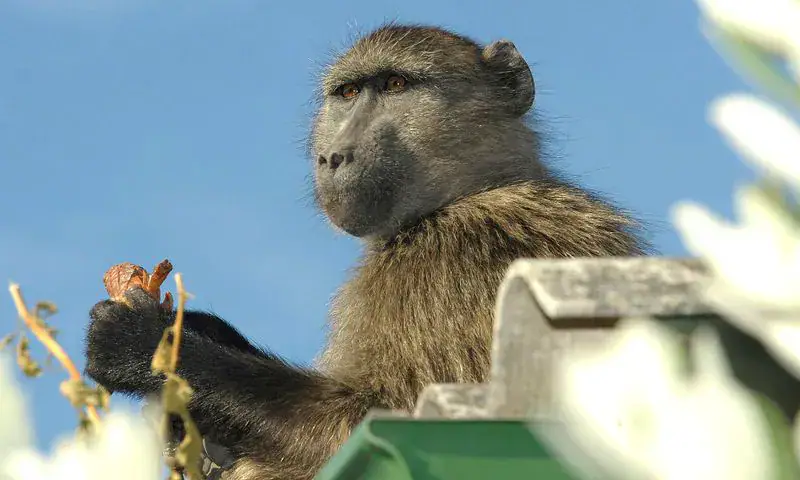
The recent capture of the Waterfall troop of baboons in Simon's Town has sparked a heated debate, with the City of Cape Town, SANParks, and CapeNature facing a legal notice, resignations from their advisory group, and public protests. The controversy highlights the consequences of decisions made without independent ethical oversight. Two weeks after the capture, the authorities are yet to announce a date for the capture of the Seaforth troop, but have made it clear that it is next in line.
The Cape of Good Hope SPCA has put the Joint Task Team on notice that it will go to court against any further permanent confinement of healthy troops. The Southern African Faith Communities' Environment Institute (Safcei) has resigned from the Cape Peninsula Baboon Advisory Group, citing a lack of transparency and public participation in the decision-making process. This is the second resignation from the group, after Green Group Simonstown left earlier.
The objections to the baboon capture are not just about the outcome, but also about the process by which the decision was made. The attorneys of the SPCA argue that each troop's circumstances must be independently assessed, while Green Group Simonstown states that it did not join the Advisory Group to lend legitimacy to decisions that are fundamentally questioned.
The debate has also highlighted the importance of considering values and moral judgements in decision-making. While scientific evidence is indispensable for handling the situation, it is not enough to make a decision of this kind. The disagreement between James Styan, chief of staff to the mayor of Cape Town, and Adam Cruise, a colleague, shows that the same facts can be weighed differently, leading to opposite conclusions.
The controversy has also sparked a discussion about the need for a transparent and open procedure for decisions of this moral weight. The authors of the op-ed, Johan Hattingh and Louise du Toit, argue that ethics belongs at the start of a decision, and that an independent ethical review is necessary to ensure that all perspectives are considered.
The pattern of disagreement has been confirmed by Nicoli Nattrass, co-director of the Institute for Communities and Wildlife in Africa (iCWild) at the University of Cape Town, who accepts much the same facts as Styan and Cruise but weighs them differently. Nattrass holds that the outcome of the comparison between the life of the baboons in the wildlife centre and their life in town is a matter of experience and judgement.
The controversy highlights the need for a more inclusive and transparent decision-making process, one that considers multiple perspectives and values. The authors propose a procedure that would ensure ongoing and constructive engagement with residents, researchers, and animal welfare organisations.
Key points
- The need for independent ethical review in decision-making processes
- The importance of considering values and moral judgements in decision-making
- The controversy highlights the need for a transparent and open procedure for decisions of this moral weight