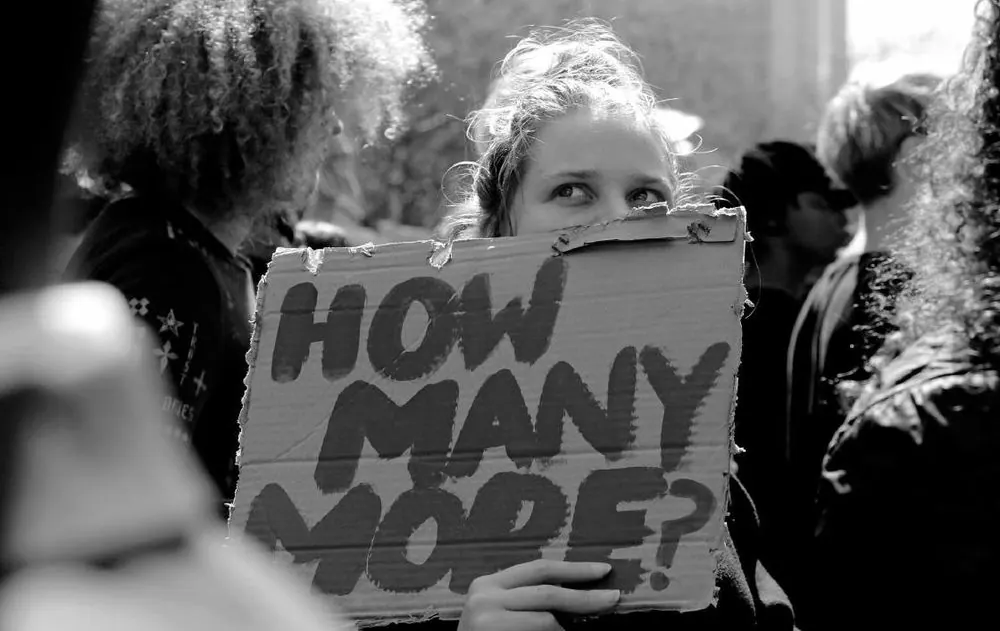
Cape Town gender-based violence activists are expressing frustration over their exclusion from a recent parliamentary debate on GBVF. The debate, which was held in response to a request from the Democratic Alliance (DA), focused on the national crisis of violence against women and children. Activists argue that it is hypocritical for Parliament to discuss GBVF without including those who are directly affected by it.
The DA's request for the debate followed a series of murders of women in Ekurhuleni, which were seen as a reflection of a broader national crisis. However, activists in Cape Town questioned how Parliament could debate GBVF while excluding those who deal with its consequences daily. They argue that survivors, community activists, and grassroots organizations should have a seat at the table to provide their insights and experiences.
Prominent South African author and community activist Latifa Jacobs said that the key question is who has been left out of these conversations. Jacobs emphasized that GBVF cannot be discussed without the voices of survivors, community activists, and those doing the work every day. She warned against GBVF becoming a matter of political point-scoring, stressing that it is about lives and that those closest to the pain should be brought into the conversation.
Heideveld activist Vanessa Nelson of Hope for the Future also criticized the exclusion of activists from the debate. Nelson questioned the timing of the debate, which comes ahead of the local government elections, and accused the DA of politicizing the issue. She argued that activists have spent years calling for interventions, safety, visibility, and accountability, but have been excluded from the debate.
Activists such as Lucinda Evans and Andrew Albertyn echoed Nelson's sentiments, questioning why women working directly with survivors had not been invited to participate in the debate. They argued that their voices matter and that they have a critical role to play in finding solutions to the crisis. Albertyn emphasized that government needs to work more closely with communities to stop the violence.
In response to the criticism, DA MP Lisa Schickerling acknowledged that Parliament should create stronger mechanisms to hear directly from survivors, grassroots organizations, and frontline workers. Schickerling said that the sitting was subject to procedural limitations, but that Parliament should not operate in isolation from those affected by the crisis. She outlined her priorities for accountability, including implementation and coordination between SAPS, prosecutors, and other departments.
Schickerling said that she would support strengthening mechanisms for survivors, NGOs, and victim-support organizations to present evidence, make submissions, and hold government accountable. She also emphasized the need for more structured engagement between parliamentary committees, survivors, and civil society. The activists' exclusion from the debate has highlighted the need for more inclusive and representative discussions around GBVF.
Key points
- Activists in Cape Town criticize their exclusion from a parliamentary debate on GBVF.
- The debate was held in response to a request from the Democratic Alliance (DA) following a series of murders of women in Ekurhuleni.
- Activists argue that survivors, community activists, and grassroots organizations should have a seat at the table to provide their insights and experiences.