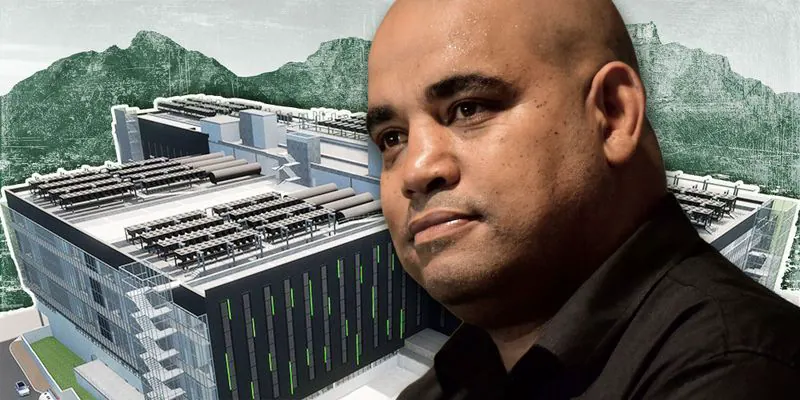
The Municipal Planning Tribunal's (MPT) approval for the Equinix data centres in Cape Town has been suspended after a formal internal appeal was lodged by the Housing Assembly social movement and the UK non-profit Foxglove. The appeal was lodged on 6 August, and the City of Cape Town has publicly acknowledged that its data centre approval process requires reform. Deputy Mayor Eddie Andrews confirmed that the City is formulating refined development guidelines for large data centre applications.
The suspended approval was for a 327,000m² site purchased by Equinix in Cape Town, which the company describes as a "long-term land bank". Equinix stated that it has no immediate plans to develop the site and has not submitted any planning or development applications. However, the land-use rezoning and bulk reallocation granted by the MPT attach permanently to the land, regardless of whether Equinix ever builds. The company pledged to engage in transparent dialogue with local authorities and communities if it decides to develop the site.
Foxglove's communications head, Tom Hegarty, explained that the legal challenge is appealing against the MPT's decision to approve Equinix's application without fundamental basic information required for it to do so lawfully. The appeal argues that the MPT lacked critical information, including an Environmental Impact Assessment, to make an informed decision about the data centre. Hegarty stressed that the most important thing for making an informed decision is the critical information that Equinix has so far withheld.
A dissenting MPT member, Wally Johnstone, a lead urban planner, explicitly stated during the hearing that the MPT had been asked to grant land-use rights for a 160MVA single-node facility without receiving basic electrical engineering profiling or line-flow assessments. The MPT relied on a high-level confirmation that Cape Town Electricity had issued a budget quotation and that the developer paid approximately R33-million in shared network charges. However, this ignores key electrical engineering realities, including the potential for voltage instability in neighbouring industrial and residential feeds.
The classification of the Equinix facility as a "warehouse that contains electronic equipment" has also been disputed. The applicant confirmed that the facility is designed for multinational digital infrastructure and "large data handling capabilities". However, the approval records contain no load-ramp agreements, step-load limitations, or spinning reserve requirements with Eskom's system operator or regional control in Bellville. This has raised concerns about the potential impact on local production lines and vulnerable residential grids.
The National Building Regulations, specifically Sans 10400-A and Sans 10400-T, require every building to be assigned an occupancy classification to determine its structural fire resistance, fire division size, emergency egress, and suppression systems. However, the standard warehouse classification (J2/J3) assumes inanimate, inactive goods stacked on racks, with low human occupancy, periodic vehicle movements, and predictable combustible fire loads. In contrast, a 160MVA hyperscale data centre houses tens of thousands of energised, high-density server racks operating 24/7, with primary hazards including electrical thermal runaways and continuous heat generation from processors.
The City of Cape Town's redrawing of guidelines for large data centre applications aims to address these concerns and ensure that future developments are aligned with the city's infrastructure and regulatory requirements. The Deputy Mayor, Eddie Andrews, emphasized the need for reform in the data centre approval process, and the City is working to develop more comprehensive guidelines for large data centre applications.
Key points
- The Municipal Planning Tribunal's approval for the Equinix data centres was suspended due to a lack of critical information.
- The City of Cape Town is reforming its data centre approval process and developing refined guidelines for large data centre applications.
- The classification of the Equinix facility as a "warehouse" has been disputed, with concerns about the potential impact on local production lines and residential grids.