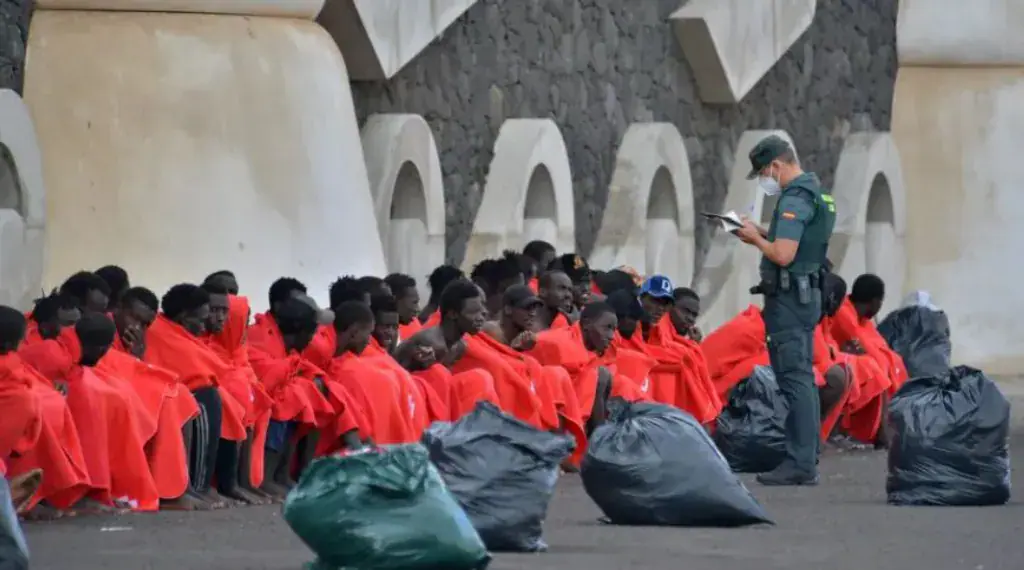
The Canary Islands are facing an intense migration crisis, with a record 1,560 migrants arriving on the island of El Hierro in a single day. Octavio Caraballo, the sub-secretary of state for the presidency of the Canary Islands government, has called for an urgent response from the European Commission. Caraballo expressed concerns about the Spanish government's handling of the situation, citing a lack of trust in their agreements and commitments.
Caraballo emphasized that the situation requires a response from the European Commission, specifically from President Ursula von der Leyen, who he believes should take responsibility for addressing the issue. He noted that there are mechanisms for European intervention that can be requested by member states, but in this case, the Spanish government has failed to act with diligence despite the dramatic situation.
The Canary Islands have received approximately 10,000 migrants since November 1, with El Hierro being the primary point of arrival for precarious boats, known as 'pateras' or 'cayucos', carrying migrants from West Africa. The island has a population of around 12,000 people and has been overwhelmed by the influx of migrants. The regional government has declared a "migration emergency" and has called for a reinforcement of the sanitary response for migrants.
Caraballo criticized the Spanish government for not being up to the task of managing the situation, stating that they are treating it as just another crisis and sending resources late and inadequately. He revealed that he had discussions with the Spanish government, including a meeting at the Moncloa Palace, where the foreign minister claimed to be in contact with the President of Senegal, hoping to resolve the situation.
Nerea Melgosa, the counselor for Well-being, Youth, and Demographic Challenge, expressed concerns about the lack of resources being made available to address the crisis. She emphasized the need for a structural policy on migration, which requires human and economic resources, and called for European participation in addressing the issue.
The migration route across the Atlantic, which originates from Morocco, Western Sahara, Mauritania, Senegal, Gambia, and Mali, is considered one of the most dangerous in the world. Despite a decrease in crossings over the past two years, the mortality rate has increased due to longer and more perilous routes being taken.
The situation is expected to intensify during the autumn season, locally known as the "crisis of the cayucos", due to calmer winds in the area, making it easier for boats to navigate. The Canary Islands government is seeking a more robust response to the crisis, including increased resources and support from the European Union.
Key points
- The Canary Islands have received approximately 10,000 migrants since November 1.
- A record 1,560 migrants arrived on the island of El Hierro in a single day.
- The situation requires a response from the European Commission to address the migration crisis.
Reporting sources
- Migrações: Canárias querem resposta urgente da UE para crise em El Hierro · Expresso das Ilhas