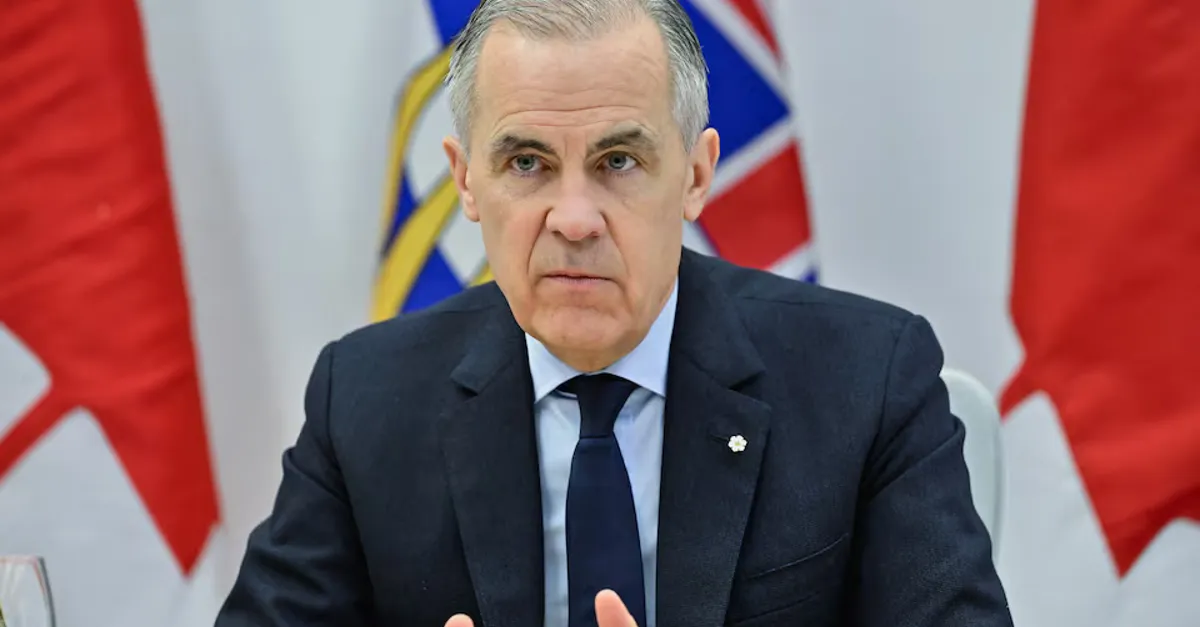
In a recent interview with The New York Times, Canadian Prime Minister Mark Carney revealed a comprehensive strategy to reduce Canada's dependence on the United States in areas such as technology, defense, and trade. Carney stated that he has prepared plans to face even the most extreme scenarios, including a potential military action by US President Donald Trump against Canada. This comes amid rising tensions between the two countries following the collapse of trade negotiations in late August.
Despite the public feud, Carney disclosed that the line of communication with the White House remains open. He claimed to have spoken with Trump "repeatedly" and that the two leaders have exchanged communications even after the negotiations stalled. Carney stated that he can pick up the phone and talk to Trump at any time, adding that their direct expressions of positions make communication more efficient. He denied that Trump's verbal sparring, including describing the Canadian leadership as "diabolical," has hindered their ability to negotiate.
Carney, a former central banker for Britain and Canada, revealed that he spent the past year studying "tail-risk scenarios," referring to the most extreme possibilities. While refusing to disclose details of these preparations, he emphasized that ignoring them would be "dereliction of duty." Carney has emerged as one of the most prominent global leaders to have challenged Trump's policies, with his approach being seen as a model for other leaders to follow in dealing with an unpredictable but indispensable ally.
The New York Times reported that Carney aims to reshape Canada's defense and technology landscape, distancing it from US dominance on multiple fronts. In the space communications sector, Carney announced that Ottawa will end its reliance on Elon Musk's Starlink network, citing concerns over Musk's "hesitation" in providing Ukraine with data targeting the Crimean Peninsula. He suggested that coordination with European and Korean partners could lead to an alternative network of sufficient size.
On the defense front, Canada has backed away from a deal for 88 F-35 fighter jets of US manufacture, with Carney considering the Swedish-made Saab Gripen as a potential alternative. While he has not made a final decision, he indicated that the criteria will include "operational capabilities in the Arctic, strategic dependence, and economic return." This suggests that the calculations go beyond technical considerations alone.
In the trade sphere, Carney reportedly still sees a genuine opportunity to revive negotiations on a free trade agreement, proposing the inclusion of potash as a bargaining chip. Canada provides around 90% of US imports of this essential fertilizer component. This move was in response to Trump's expression of interest in importing potash from Belarus, a country subject to US sanctions due to its support for Russia in Ukraine.
Carney concluded by highlighting that the experience with Washington has taught Ottawa a valuable lesson: excessive reliance on a superpower remains a latent danger until it is exposed in a single moment, after which it can no longer be ignored.
Key points
- Canada's Prime Minister Mark Carney outlines strategy to reduce reliance on US in tech, defense, and trade
- Carney prepared plans to face extreme scenarios, including potential US military action against Canada
- Canada considers alternatives to US-dominated defense and technology landscape