Nigeria's creative economy has long been celebrated for its cultural exports, including Nollywood, Afrobeats, and a fast-growing visual arts scene. However, behind the global spotlight, a quieter question is emerging: can the people making the work, such as designers, illustrators, and visual storytellers, build careers that last? The industry is growing, but not evenly, and new pressures are emerging. Many creatives are struggling to make a living, with some turning to artificial intelligence (AI) to supplement their work.
Two creatives, Kelly Imhanlahimi, a graphic designer, and Imafidon Evans, founder of Mountorama Studios, shared their experiences. They agreed that the industry is growing, but the nature of work is changing. Kelly explained that in the past, businesses would hire a dedicated designer to handle all their design needs, but now, they often use AI or self-made reels for social media posts. Evans sees a similar pressure on the illustration side, with clients asking him to replicate AI-generated illustrations. However, AI's weakness in copyright is working in illustrators' favor, as clients seek ownership and legal protection for their brand assets.
The purchasing power of clients is another significant challenge. Nigeria's minimum wage is 70,000 naira a month, while a single illustration commission from Mountorama Studios averages 30,000 naira. Evans noted that it's unrealistic to expect someone to spend almost 50% of their income on a single commission. As a result, most of Mountorama Studios' long-term clients are based abroad, where clients are willing to pay a salary that designers can survive on. Kelly also points out that many clients looking to pay a sustainable salary are abroad.
Despite the pressures, Kelly and Evans remain optimistic about their careers. They attribute their success to their love of the craft and practical strategies. Kelly started his career with small brands and grew alongside them, increasing his design fees from N1,500 to N15,000. He credits an informal community safety net, where designers pass along contract overflow to fellow designers and receive the same in return. Evans' sustainability is tied to a shared long-term vision for his studio and staying flexible.
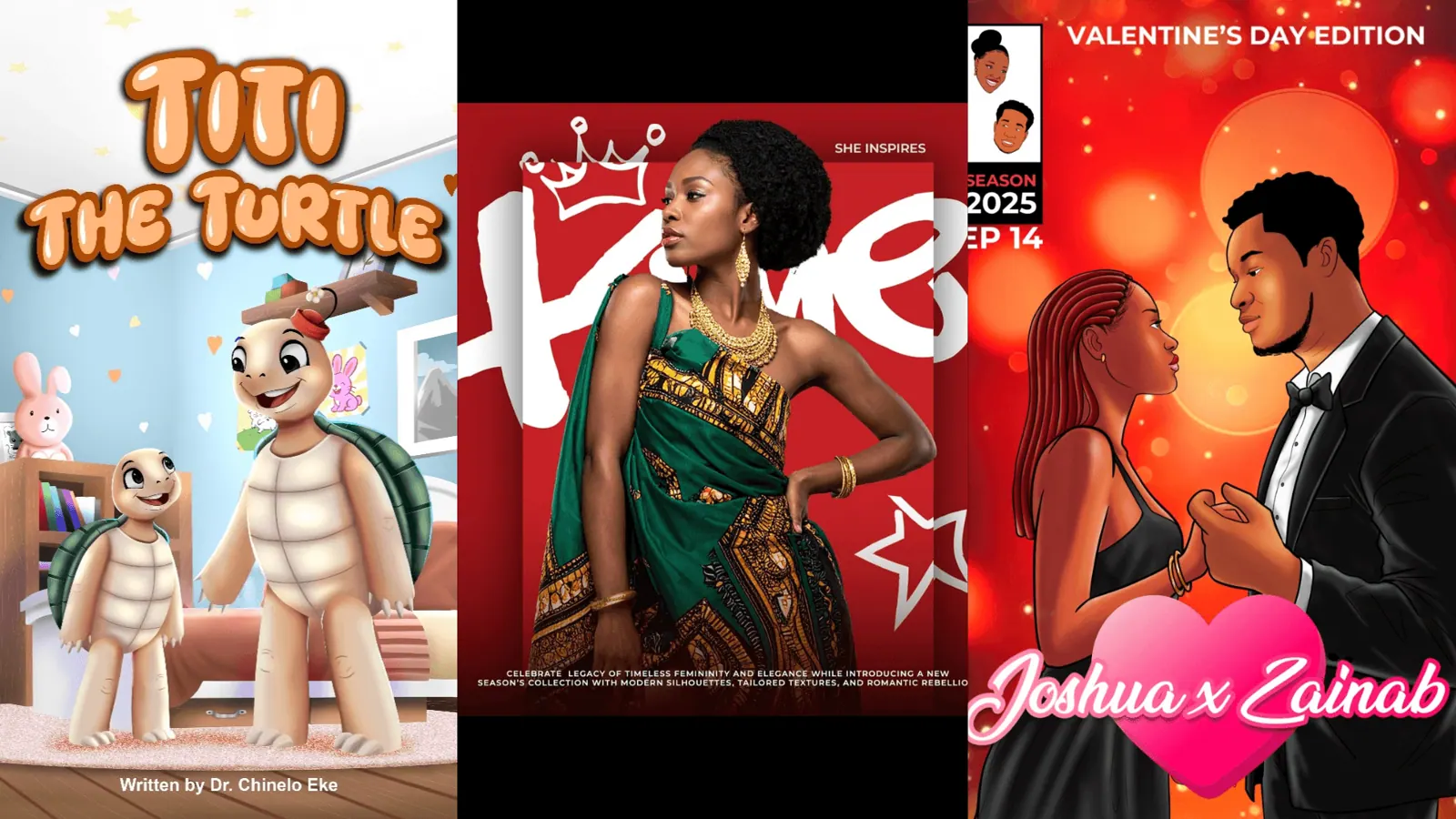
The two creatives have diverse portfolios that reflect their different approaches. Kelly's design portfolio is commercial and fast-turnaround, while Evans' illustration work is narrative and character-driven. Their work showcases the split at the heart of the industry: design that moves fast to meet commercial demand, and illustration that moves slower, built for stories that need to last. Kelly's portfolio includes a personal fashion campaign and a pet post, while Evans' work includes a children's book cover and an animated educational story.
Kelly and Evans' experiences demonstrate that building a viable career in Nigeria's creative economy requires adaptability. They advise young artists to grow alongside clients, stay open to shifting skill sets, and lean on community when work gets heavy. They also suggest finding the parts of the market that AI still can't fully replace, such as cultural specificity, craftsmanship, and legal ownership. While it's not easy, they believe it's possible to build something real with hard work and determination.
Ultimately, the question of whether Nigeria's creative economy can give young artists a viable career is complex. Kelly and Evans' stories suggest that it's possible, but it requires a deep understanding of the industry, a willingness to adapt, and a passion for the craft. With the right mindset and strategies, young artists can build sustainable careers in Nigeria's creative economy.
Key points
- The creative economy in Nigeria is growing, but young artists face challenges in building sustainable careers due to changing client needs and the rise of AI.
- Kelly Imhanlahimi and Imafidon Evans advise young artists to be adaptable, grow alongside clients, and find the parts of the market that AI can't fully replace.
- Building a viable career in Nigeria's creative economy requires a deep understanding of the industry, a willingness to adapt, and a passion for the craft.