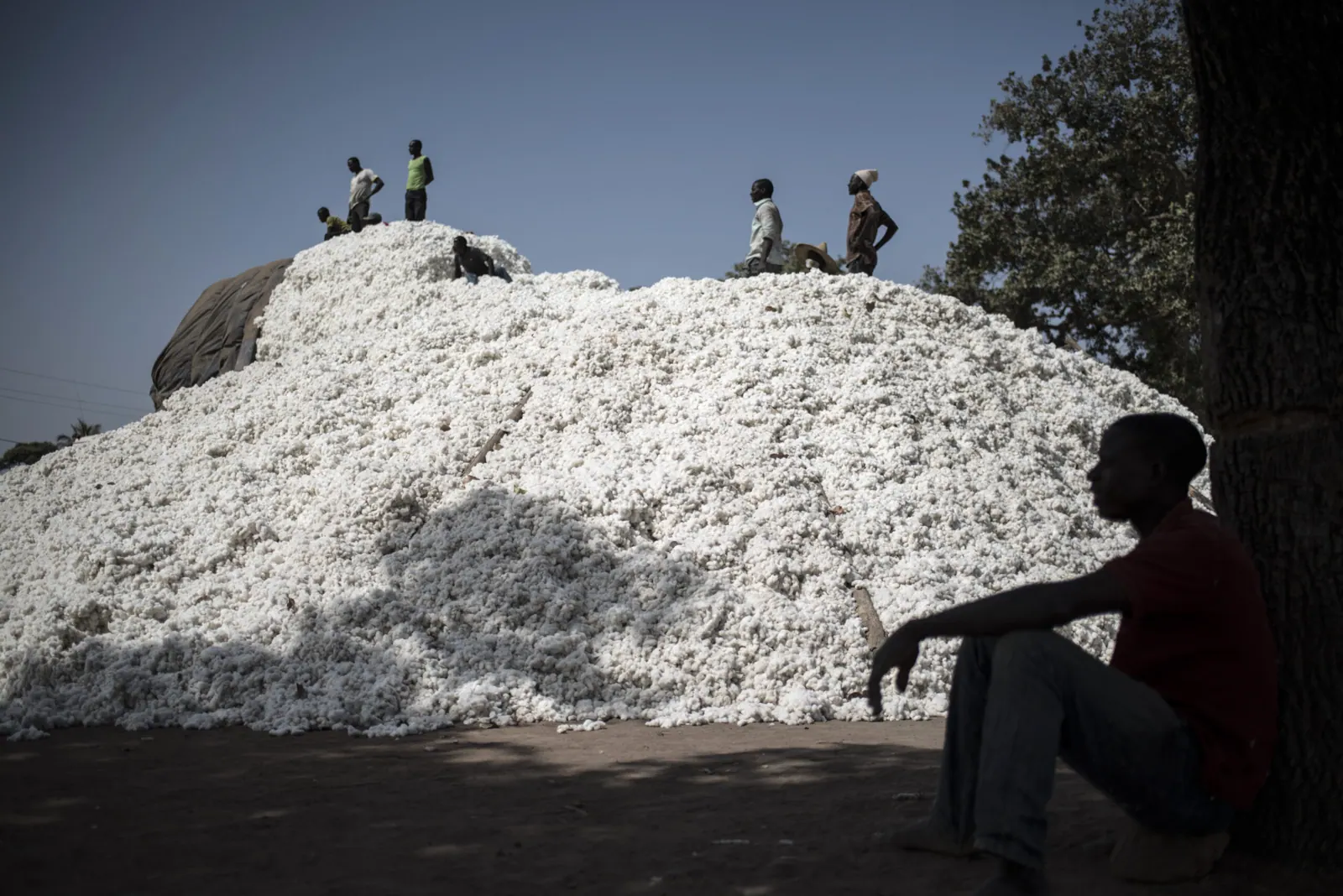
Africa's industrialisation efforts are focusing on the cotton, textile, and apparel sector, which powered the first industrial revolution in Britain and the United States. The continent's 37 cotton-growing countries produce between 6.3 million and 8.5 million bales of cotton a year, but much of this is shipped overseas unprocessed. This minimal level of local processing means Africa captures only a sliver of the value of its cotton, limiting the creation of skilled manufacturing jobs.
The African cotton production is concentrated in central and western regions, led by Mali, Benin, Cameroon, Burkina Faso, Sudan, Tanzania, Nigeria, Chad, and Egypt. In 2024, Mali, Benin, Cameroon, Burkina Faso, Chad, and Côte d'Ivoire launched the Partenariat pour le Coton, a multi-stakeholder initiative aimed at expanding local processing in these countries. The initiative targets an increase in local processing to 25% by 2035, backed by $5 billion in new investments.
The Partenariat pour le Coton initiative aims to build a regional "textile corridor" that will allow cotton grown in one country to be processed in another. This approach is intended to strengthen regional value chains and promote vertical integration, creating the economies of scale needed to make African manufacturers competitive. The programme is expected to create about 500,000 jobs and generate $6 billion in value-added textile products.
Afreximbank is supporting the development of special economic zones dedicated to cotton processing in Cameroon, Chad, and Mali. The bank's president, George Elombi, says that Africa will be out of the cotton export business and fully into exports of textiles and clothing within 15 to 20 years. He added that the bank will ramp up its investments in the sector to transform cotton into an engine of industrialisation.
Access to markets remains crucial for Africa to capture more value from its cotton. The continent must secure reliable access to markets that are big enough to support the profitable growth of its manufacturers. The Africa Growth and Opportunity Act (AGOA) has served as a lifeline for Africa's apparel industry, but its future has been uncertain since President Donald Trump re-took office.
AGOA lapsed in September 2025 before receiving a brief extension to the end of 2026, and a further two-year renewal to December 2028 is now moving through the US Congress. Despite the push for its renewal, AGOA is not without its critics, particularly over the third-country fabric provision. This provision has enabled significant growth in African apparel exports and employment but has reduced incentives to invest in local spinning and weaving capacity.
Ultimately, Africa's best chance to secure lasting market access for its apparel lies in developing its own consumer base. The African Continental Free Trade Area (AfCFTA) offers a framework for local brands to compete for market share. Intra-African trade still accounts for only about 10% of the continent's apparel exports and 17% of its imports, underscoring the scale of both the challenge and the opportunity for home-grown fashion brands.
Key points
- The African Continental Free Trade Area offers a framework for local brands to compete for market share.
- The Partenariat pour le Coton initiative targets an increase in local processing to 25% by 2035.
- Africa's apparel industry relies heavily on the uncertain future of the Africa Growth and Opportunity Act.