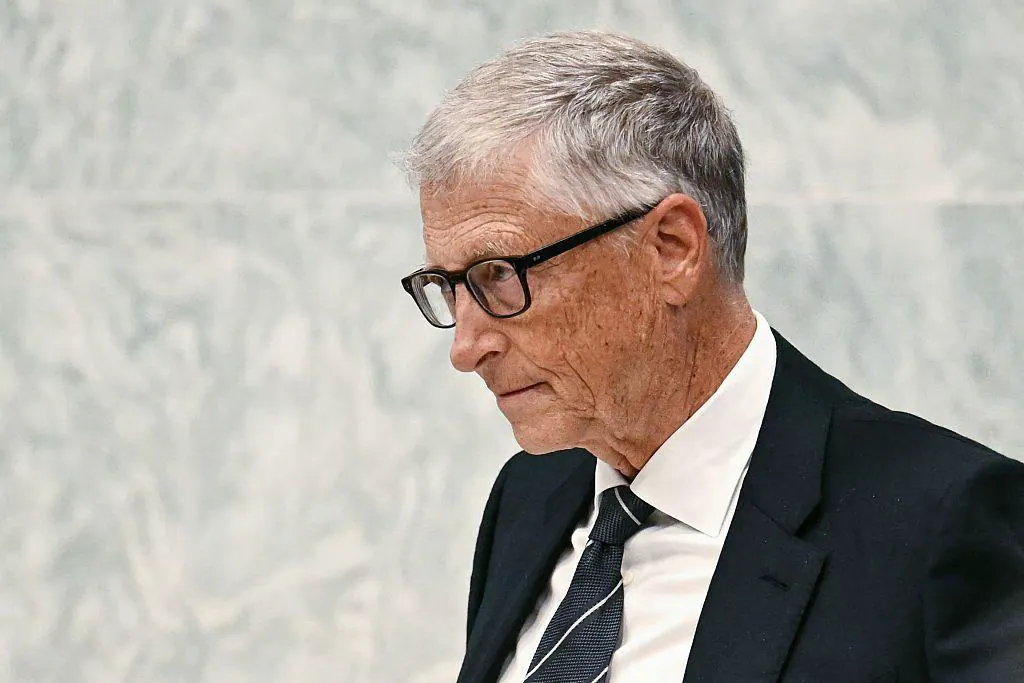
A recent article in The Guardian has raised questions about the credibility of Bill Gates' warnings on the dangers of artificial intelligence, given his past association with convicted sex offender Jeffrey Epstein. Gates, co-founder of Microsoft, has been warning about the potential risks of AI, stating that it could lead to the deaths of a billion people if left unchecked. However, the article's author, Arwa Mahdawi, questions whether Gates' judgment can be trusted, citing his past relationship with Epstein.
Gates met Epstein on multiple occasions after Epstein's conviction for sex crimes in 2011. While Gates has not been accused of participating in Epstein's crimes, he has acknowledged that he was aware of Epstein's troubled past. Mahdawi argues that Gates' attempts to downplay his relationship with Epstein are unconvincing, especially given his reputation for carefully managing his public image. The article highlights the need for scrutiny of Gates' warnings on AI, given his questionable judgment.
The article also points out that Gates' warnings on AI are often focused on hypothetical future risks, while ignoring the current use of AI in violent conflicts. For example, Microsoft's AI technology has been used in the war on Gaza, which Mahdawi argues is a more pressing concern than speculative future risks. She suggests that Gates should focus on addressing the current misuse of AI, rather than solely warning about potential future dangers.
In a separate article, UK Prime Minister Andy Burnham has called for a re-evaluation of the country's relationship with the European Union. Burnham's comments have been seen as a significant shift in the UK's stance on Brexit, with some speculating that it could lead to a return to EU membership. The article notes that Burnham's comments have been welcomed by some, but others have expressed skepticism about the feasibility of rejoining the EU.
The article highlights the potential economic benefits of rejoining the EU, including increased trade and investment. However, it also notes that there are significant challenges to overcome, including the need for a new negotiated agreement with the EU. The article suggests that Burnham's comments are a significant development in the ongoing debate about the UK's relationship with the EU.
Meanwhile, in the United States, Defense Secretary Pete Hegseth's job is under scrutiny ahead of the midterm elections. An article in The Washington Post notes that Hegseth's tenure has been marked by controversy, including the departure of several senior officials and allegations of politicization of the military. The article suggests that Hegseth's departure could have significant implications for the Pentagon.
The article notes that Hegseth's potential departure would not necessarily address the challenges facing the Pentagon, including the need to restore military readiness and address issues of civilian-military relations. The article suggests that a new defense secretary would need to navigate these complex issues, which could have significant implications for US national security.
Key points
- Bill Gates' credibility on AI warnings is questioned due to his past association with Jeffrey Epstein.
- UK Prime Minister Andy Burnham calls for a re-evaluation of the country's relationship with the EU.
- US Defense Secretary Pete Hegseth's job is under scrutiny ahead of the midterm elections.