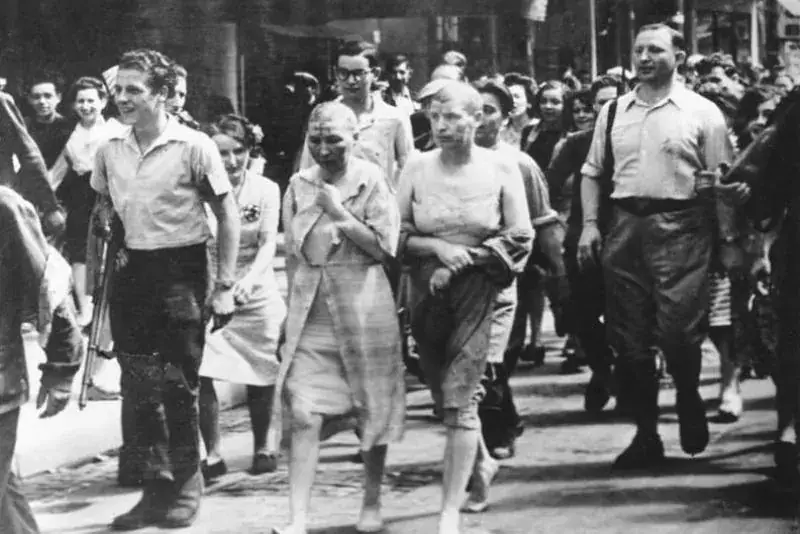
In the aftermath of France's liberation, a debate emerged among intellectuals regarding the purification of collaborators. Albert Camus and Francois Mauriac, two prominent figures, held differing views on the matter. Camus, in an editorial published in Combat on October 18, 1944, argued that purification was necessary, but it had to be done in a way that respected the principle of justice. He emphasized the importance of distinguishing between individual responsibilities and adapting condemnations accordingly.
Mauriac, on the other hand, advocated for a more cautious approach, stressing the need to distinguish between the guilty and suspects. In an editorial published in Le Figaro on October 13, 1944, he called for "union through amnesty" to ensure that the rights of the accused were protected. Mauriac, a resistant and Catholic, was concerned about the potential for unjust accusations and the dangers of mob mentality.
The disagreement between Camus and Mauriac centered on the legitimacy of accusations. Mauriac believed that false accusations could undermine the entire process, while Camus argued that the risk of error was real, but it should not justify abandoning purification. Camus advocated for a proportionate approach to justice, where punishments were tailored to individual responsibilities.
Mauriac responded to Camus' editorial on October 19, 1944, criticizing the methods employed by the purification movement. He argued that the process was arbitrary and that the press, particularly Combat, was manipulating public opinion. Mauriac also accused the Resistance of using its image as an argument of authority to justify its actions.
Camus responded to Mauriac's criticisms, affirming that he disagreed with the academician's views. He argued that the difficulties and controversies surrounding purification were necessary evils in the pursuit of justice. Camus maintained that the goal was not to punish many people, but to punish those responsible in a way that respected the principles of justice.
The debate between Camus and Mauriac reflected the complexities and challenges of post-war France. The country was grappling with the legacy of collaboration and the need for accountability. The intellectuals' disagreement highlighted the tensions between the desire for justice and the risk of injustice, as well as the difficulties of navigating the complexities of purification.
The discussion between Camus and Mauriac also underscored the importance of the press in shaping public opinion and influencing the purification process. The two intellectuals used their platforms to express their views and engage in a public debate, demonstrating the role of journalism in facilitating discussion and critique during times of social and political upheaval.
Key points
- The disagreement between Camus and Mauriac centered on the approach to punishing collaborators.
- Mauriac advocated for a cautious approach, stressing the need to distinguish between the guilty and suspects.
- Camus argued that purification was necessary, but it had to be done in a way that respected the principle of justice.
Reporting sources
- Le Radical · Le Radical