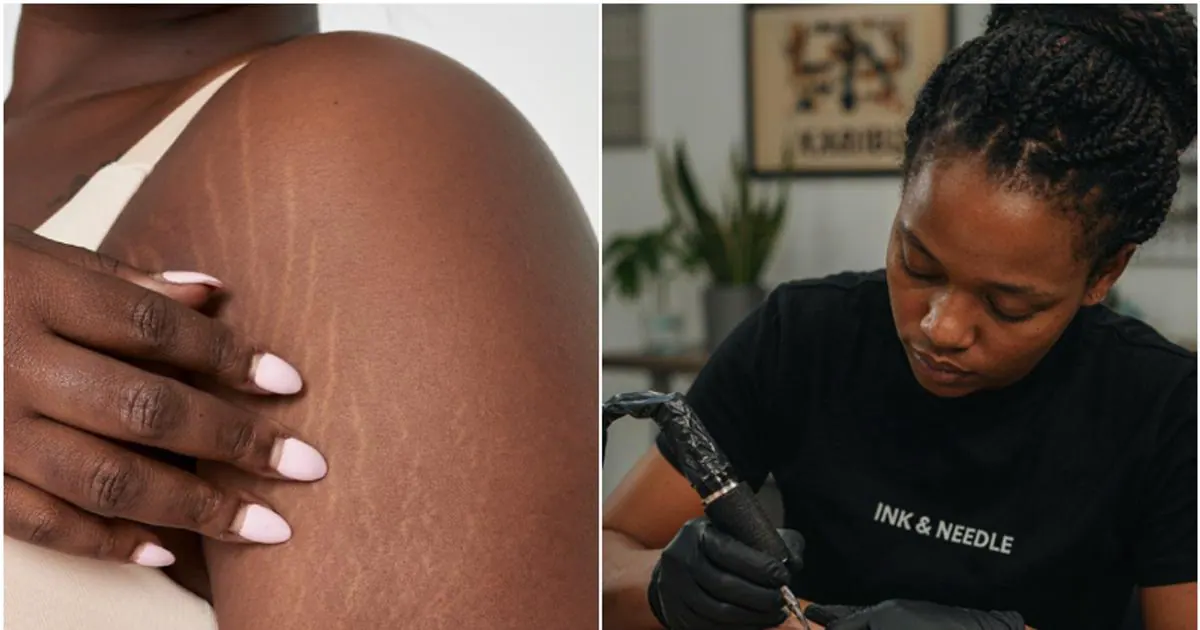
A technique known as stretch mark camouflage tattooing is gaining popularity, particularly among individuals seeking to minimize the appearance of stretch marks on their skin. This method involves a trained practitioner mixing custom pigments to match the individual's natural skin tone, which is then carefully deposited into the lighter stretch marks. The goal is not to erase the marks completely but to reduce the contrast that makes them noticeable.
Unlike traditional decorative tattoos, stretch mark camouflage tattooing falls under medical or paramedical tattooing, a specialized field that requires proper training. The procedure typically requires two to four sessions, spaced weeks or months apart, before optimal results are achieved. Some clinics market a version of this technique as the "Brazilian" method, which involves precise color matching and careful placement.
Tattoo artists such as Tatianna B. have taken to social media platforms like TikTok to share their experiences and showcase the effectiveness of this technique. Tatianna's client list includes individuals with various skin conditions, including burn victims, domestic abuse survivors, and people living with vitiligo. She custom-mixes ink to match each client's exact skin tone, using an "inkless" method for gentler results.
Paramedical tattooing extends beyond stretch mark camouflage, with applications in breast cancer recovery and nipple-areola tattooing. Veteran tattoo artist Vicky Martin has spent over 20 years perfecting this craft and continues to practice on herself to maintain precision. Some hospitals, such as one in Madrid, Spain, now offer free nipple and areola tattooing to breast cancer survivors, recognizing the emotional benefits of this procedure.
While camouflage tattooing excels at correcting color, it may not address texture-related issues. The technique works best on mature stretch marks that have faded to white or silver, as the pigment can effectively close the lightness gap. However, it may not smooth out indentations, ridges, or uneven texture left behind by the marks.
Ideal candidates for stretch mark tattoos have fully mature marks that are at least one to two years old and have stopped changing color or size. Individuals with medium to darker skin tones tend to achieve more natural-looking results. However, those with skin that tans heavily or shifts color with the seasons or hormones may face challenges in matching the pigment long-term.
As with any tattoo, there are risks associated with stretch mark camouflage tattooing, including infection, allergic reactions, and healing complications. Experts emphasize the importance of choosing a specialist in medical or paramedical tattooing, understanding the pigment composition, and following proper aftercare instructions. A consultation with a dermatologist beforehand can also help determine whether this procedure is suitable for individual cases.
Key points
- The technique involves custom-mixing ink to match an individual's natural skin tone.
- The procedure typically requires two to four sessions for optimal results.
- Ideal candidates have fully mature stretch marks that are at least one to two years old.