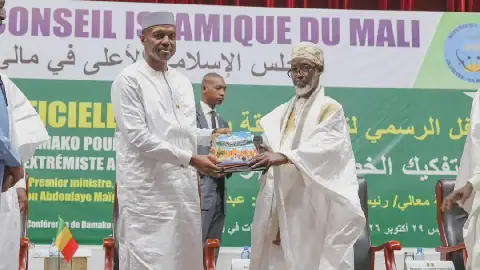
On January 28, 2024, the Alliance of Sahel States (AES), comprising Burkina Faso, Mali, and Niger, formally withdrew from the Economic Community of West African States (CEDEAO). This significant geopolitical shift was driven by the rejection of sanctions deemed excessive and the imperative need for these sovereign states to reinvent their security and destiny outside a community structure perceived as ineffective against terrorism.
In a bid to mitigate the negative consequences of this separation on populations and economies, CEDEAO and AES engaged in a series of exchanges. The first round of talks took place on May 22, 2025, in Bamako, Mali, involving high-level consultations between AES ministers and CEDEAO representatives. These discussions aimed to reestablish dialogue, probe each other's positions, and lay the groundwork for future negotiations despite the institutional freeze.
A second, pivotal meeting occurred on October 17, 2026, in Dakar, Senegal, marking the beginning of formal negotiations. The goal was to establish a new cooperation framework and redefine relations between CEDEAO and AES. Dr. Mariette Edimo Mboo, a researcher and permanent lecturer at the Institute of International Relations of Cameroon (IRIC), views these exchanges as a pragmatic search for equilibrium rather than a reversal.
According to Dr. Mboo, the objective of these discussions is twofold: to preserve vital economic interdependencies, particularly access to maritime corridors for landlocked Sahel states, and to maintain a minimum level of security coordination against common challenges. This development reflects a broader trend in West Africa, where nations are learning to reinvent their relationships, accepting that sovereignty and integration must coexist through permanent dialogue.
Despite these efforts, relations between CEDEAO and AES countries remain strained, with mutual accusations of destabilization and support for common enemies. The lingering suspicions and acrimonious climate raise questions about the potential for these talks to dissipate mistrust. Dr. Mboo cautions that while these meetings are essential, they may not magically erase deep-seated suspicions and accusations that touch on issues of survival and legitimacy.
However, she emphasizes that establishing a minimal communication channel is indispensable. In the context of integration and community institutions, dialogue is not a panacea for reconciling opposing visions overnight but a tool for managing disputes to prevent military escalation or total economic asphyxiation. Thus, these talks represent a pragmatic approach to coexistence despite differences.
The outcomes of these negotiations will be crucial in shaping the future of regional cooperation and stability in West Africa. As the situation unfolds, stakeholders and observers alike will be watching closely to see if this pragmatic approach can yield a sustainable framework for cooperation between CEDEAO and AES, ultimately benefiting the populations and economies of the sub-region.
Key points
- Formal negotiations between CEDEAO and AES aim to establish a new cooperation framework.
- The goal is to balance sovereignty with regional integration and economic interdependencies.
- Dialogue between the two blocs seeks to manage disputes and prevent further escalation.