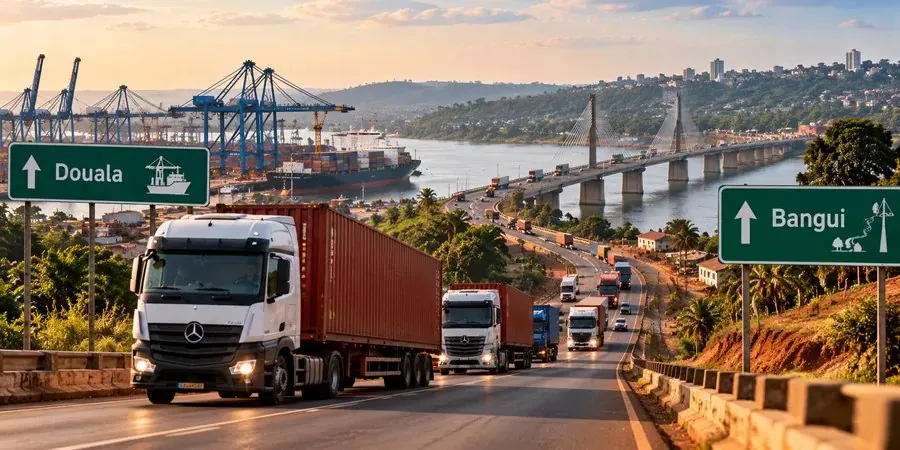
The government of Cameroon has authorised a loan of €347.5m, approximately US$408m, to upgrade the Douala-Bangui corridor, a critical trade route between the Atlantic coast and the landlocked Central African Republic. The loan, backed by the World Bank, was authorised by President Paul Biya through Decree No. 2026/321 on 2 October 2026. This decree allows the government to conclude the loan agreement with the International Bank for Reconstruction and Development, the World Bank's lending arm for middle-income borrowers.
The Douala-Bangui Economic Corridor Project aims to improve the primary trade artery between Cameroon and the Central African Republic. The corridor connects Douala's deep-water port with Bangui, the capital of the Central African Republic. It handles the bulk of the landlocked country's imports and exports. Upgrading the corridor is expected to strengthen the supply chain for both economies and increase the region's competitiveness.
The project targets several infrastructure gaps along the corridor, including road-safety measures, modern weigh stations, and corridor-management systems. Additionally, feeder roads and logistics facilities will link agricultural production zones to the main artery. The project also incorporates long-term maintenance into its design, with performance-based maintenance contracts governing upkeep after construction. Road-asset management systems will support more predictable spending and procurement.
The corridor upgrade presents several commercial opportunities for investors. Civil works contractors will pursue road rehabilitation and safety-system packages, while digital weighing and corridor-management platforms will attract specialist technology providers. However, physical infrastructure alone does not guarantee freight efficiency. The project's corridor-management component directly addresses historical frictions such as customs delays, informal checkpoints, and fragmented transit rules.
Despite the potential benefits, security conditions along sections of the route remain a variable. Freight reliability depends on the broader operating environment, not just construction progress. Logistics operators will monitor both tracks in parallel. Competition among trucking firms will also shape freight rates and service quality. Better roads reduce operating costs, but market structure determines how those savings flow through to shippers.
The decree marks the authorisation stage, and disbursement will follow once the loan agreement is signed and effectiveness conditions are met. Procurement notices for civil and technical works will be the next concrete signals for the market. This corridor handles a strategic volume of Central African trade, making it essential for investors and policymakers to track procurement schedules, disbursement tranches, and any updates to the corridor's transit-facilitation framework.
The successful implementation of the Douala-Bangui corridor upgrade project will have a significant impact on the region's trade and economic development. With a focus on predictable maintenance frameworks and performance-based contracts, the project aims to reduce lifecycle cost uncertainty and create recurring contract opportunities for specialist operators. As the project moves toward implementation, stakeholders will be closely monitoring its progress and execution milestones.
Key points
- The loan totals €347.5m (approximately US$408m).
- The project targets several infrastructure gaps along the corridor, including road-safety measures and modern weigh stations.
- The corridor upgrade presents several commercial opportunities for investors, including civil works and digital weighing and corridor-management platforms.