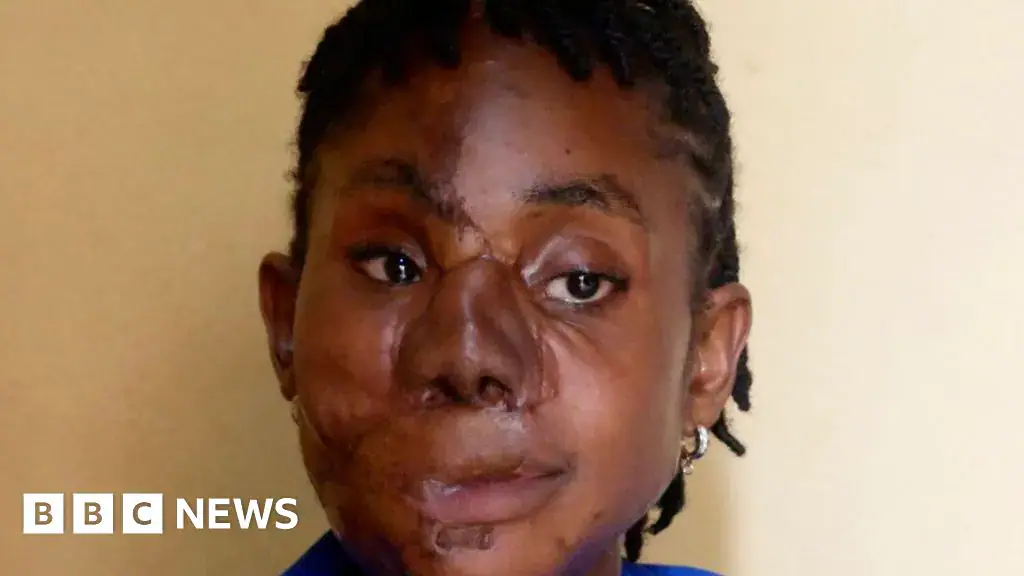
Median Bah, a 23-year-old from Cameroon's Southwest region, recalls the day her life changed forever - 7 April 2018. She was 15 and bedridden when armed men stormed her family's compound, shooting indiscriminately. Her brother escaped through a window, but Median had to exit through the door, coming face-to-face with two attackers who opened fire, severely damaging her face and jawbone.
The conflict in Cameroon began in October 2016, when lawyers and teachers in the English-speaking regions went on strike over alleged marginalization by the Francophone-dominated government. The protest turned violent after security forces cracked down, fueling an armed separatist movement. By 2017, a dozen armed groups had emerged, seeking independence for the two English-speaking regions and the creation of a breakaway state known as Ambazonia.
The violence has devastated communities, forcing half a million people from their homes and killing at least 6,000 people since the conflict began, according to Human Rights Watch. The UN refugee agency, UNHCR, says more than 70,000 Cameroonians have sought refuge in neighboring Nigeria. Many refugees, like Glory Akom, a 44-year-old mother-of-two, live in uncertainty, relying on monthly cash assistance to support her children.
Glory Akom's life in Cameroon was far better; she ran a business and provided for her family. However, fighting intensified in 2017, and soldiers pursued residents into the bush, forcing them to abandon their homes and flee into Nigeria. She now lives in a camp in Ogoja, a town in Nigeria's south-eastern Cross River state, near the Cameroonian border, where she depends on $67 monthly cash assistance from UNHCR.
The conflict has also severely impacted education, with over 200,000 children currently out of school in the conflict regions and nearly 2,500 learning institutions non-operational. Maurine Mangha, a 21-year-old refugee, had stopped attending school due to a separatist-imposed education boycott but managed to secure a scholarship through a higher education program for refugees managed by the UNHCR.
Maurine now studies microbiology at a local polytechnic but cannot help thinking about friends who remained in Cameroon. The consequences of the conflict for children have been severe, with many missing out on education and facing an uncertain future. The UN's children's agency, Unicef, cites Cameroonian education authorities, highlighting the need for a resolution to the conflict.
After nearly a decade of fighting, the Cameroonian government wants the separatists to abandon their armed struggle. In September, the authorities launched a community dialogue initiative aimed at finding grassroots solutions to the conflict. The initiative aims to bring an end to the violence and allow displaced people to return home, but uncertainty remains over when, or if, they will ever return.
Key points
- Over 6,000 people have been killed since the conflict began in 2016.
- Half a million people have been displaced, with many living in uncertainty.
- The conflict has severely impacted education, with over 200,000 children out of school.