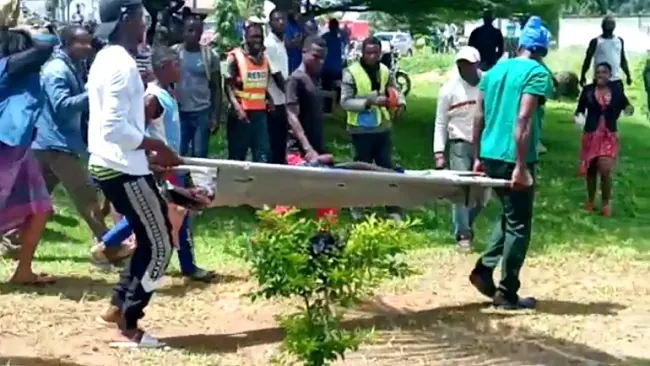
Cameroon's Anglophone crisis has marked its 10th anniversary, with human rights advocates releasing a partial list of reported deaths linked to the conflict. The list, compiled by the Centre for Human Rights and Democracy in Africa (CHRDA) and The Global Campaign for Peace & Justice in Cameroon, documents approximately 4,000 reported deaths from 2016 to 2026. However, only about half of those killed have been identified by name, with the remainder recorded as unidentified victims.
The conflict, which began as a political and civil-society protest movement, has resulted in a significant humanitarian crisis. Estimates of the overall number of people killed vary considerably, ranging from 6,500 to 10,000 or more. The crisis has also displaced approximately 1.5 million people and left hundreds of thousands of children without regular schooling. The government and armed separatist groups have faced allegations of serious abuses, including killings, kidnappings, and destruction of property.
The partial list of reported deaths was assembled by volunteers who searched news reports, online sources, and social media for information about reported deaths. The information was subsequently reviewed, duplicate entries removed, and available details standardized. The database is organized chronologically, beginning with reported deaths in 2026 and working backwards to 2016. However, significant gaps remain, and the public is being asked to help identify victims.
CHRDA and The Global Campaign for Peace & Justice in Cameroon are inviting families, witnesses, and members of the public to submit information about people who died as a result of the conflict but whose names may be missing from the database. Submissions can be made through Signal or WhatsApp, or by email. The information received will be cross-checked before additional names are incorporated into the database.
The initiative seeks to put names and identities behind casualty figures and ensure that victims do not disappear into statistics. The organizations behind the database say that documenting the dead is one step toward ensuring accountability and contributing to a broader national conversation about wrongdoing, apology, reconciliation, and healing. They also renewed calls for an inclusive dialogue capable of producing a roadmap toward a political settlement.
The Anglophone crisis traces its origins to protests in late 2016 by lawyers and teachers in the predominantly English-speaking Northwest and Southwest regions. The demonstrations centered on longstanding grievances over the perceived marginalization of Cameroon's Anglophone population and concerns about the increasing use of French in English-speaking courts and schools. The government's response to the demonstrations intensified tensions, and separatist movements subsequently gained momentum.
As the conflict enters its second decade, the anniversary serves as a reminder of the unresolved challenge facing Cameroon - finding a political path capable of ending the violence, addressing grievances, establishing accountability, and allowing deeply affected communities to begin rebuilding. The organizations behind the database acknowledge that significant gaps remain and that the public appeal for additional names forms a central part of the project.
Key points
- Human rights groups release partial list of 4,000 reported deaths in Cameroon's Anglophone crisis.
- The conflict has resulted in significant humanitarian crisis, displacing millions and leaving hundreds of thousands without regular schooling.
- The initiative seeks to ensure accountability and contribute to a broader national conversation about wrongdoing, apology, reconciliation, and healing.