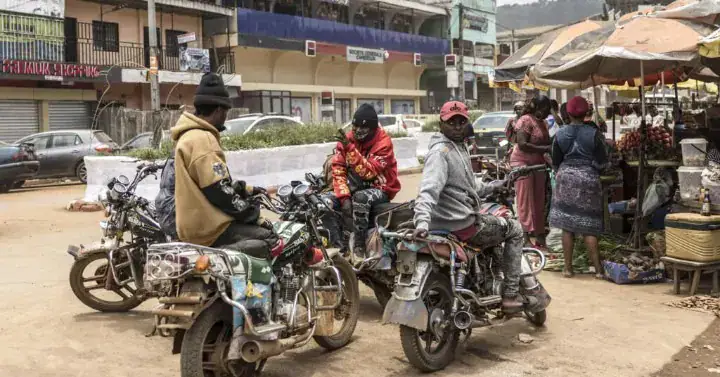
The Cameroonian government has initiated a nationwide crackdown on unregistered mototaxi drivers, starting November 17, 2026. This move follows a similar exercise targeting taxi owners and drivers a few weeks prior. The goal is to sanitize the sector by curbing the proliferation of clandestine and unidentified operators. According to Radio France Internationale, the increased presence of unauthorized drivers has negatively impacted the livelihoods of professional transport workers.
Célestin Bama, president of the Confédération syndicale des travailleurs, attributes the surge in clandestine operators to the passivity of municipal authorities. He notes that some expatriates, lacking national identity cards, have been able to infiltrate the sector by purchasing chasubles – uniforms worn by mototaxi drivers – from associations. Bama argues that municipal authorities have been lenient, preferring to work with associations that buy chasubles, rather than enforcing regulations.
Under pressure from the government, municipal authorities have changed their approach. They now require drivers to present identification or a residence permit during the mandatory biometric identification process. Julio Tsoungui, coordinator of the operation in Yaoundé 4, emphasizes that this measure aims to enhance security for mototaxi drivers. He clarifies that the exercise is not a crackdown on foreigners but rather an effort to ensure compliance with regulations.
In Yaoundé 4, approximately 9,000 drivers have already been registered. Joseph Belinga, a Cameroonian mototaxi driver, supports the initiative, stating that it will improve safety for drivers and their vehicles. He obtained his chasuble to avoid potential disruptions during the enforcement exercise. Belinga believes that with this identification process, stolen motorcycles can be more easily recovered.
Authorities report that only about 30% of mototaxi drivers have complied with the identification requirement over the past three years. The government aims to increase this number through the current enforcement exercise. By ensuring that all drivers are registered and identifiable, authorities hope to reduce the number of clandestine operators and promote a safer, more organized transport sector.
The identification process involves verifying drivers' identities and registering their vehicles. This measure is expected to generate revenue for municipal authorities and improve their ability to monitor and regulate the sector. According to officials, the exercise will continue until all mototaxi drivers have been identified and registered.
The crackdown on unregistered mototaxi drivers is part of a broader effort to improve the organization and safety of the transport sector in Cameroon. By enforcing regulations and promoting compliance, authorities aim to create a more secure environment for drivers, passengers, and the general public. The success of this initiative will depend on sustained efforts to monitor and regulate the sector.
Key points
- The Cameroonian government has launched a nationwide crackdown on unregistered mototaxi drivers to curb clandestine operators and improve sector safety.