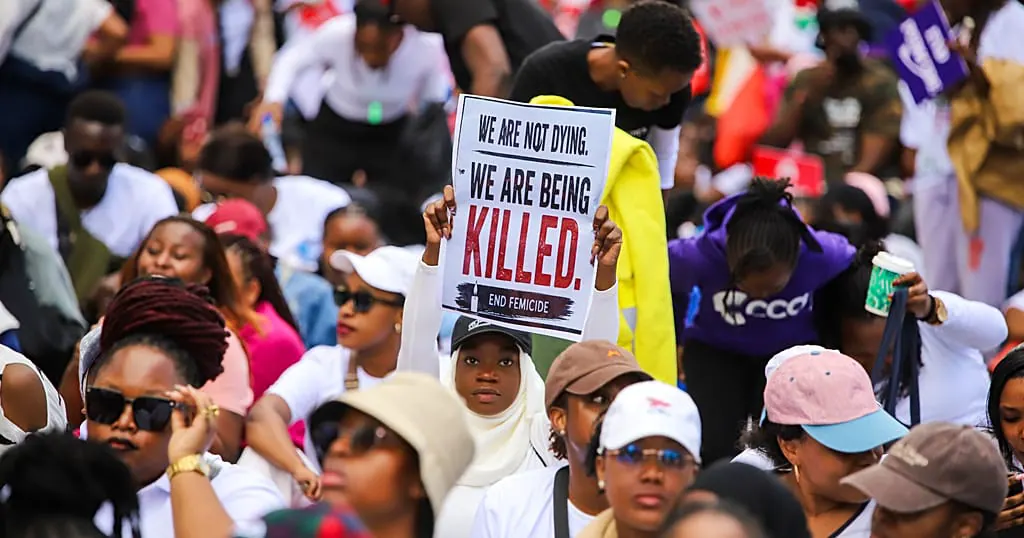
Cameroon is grappling with a surge in gender-based violence, with at least 56 women killed since the beginning of the year. The rising toll has sparked outrage from rights groups and the opposition, who accuse the government of inaction. According to the ministry for women and the family, between January and April, around 50 femicides were recorded in Cameroon, matching the total for the whole of 2023.
The situation has been further exacerbated by the fact that femicide is not currently recognised as a separate crime from murder in Cameroon. This has led to criticism that perpetrators are not being held accountable for their actions. Senator Francoise Puene, who has been involved in the struggle for women's rights for years, said several issues were behind the rise in murders, including the economic crisis and a lack of education about women's rights.
One of the victims of femicide is Geraldine Achia, a Cameroonian teacher who was beaten to death by her husband. Her son, Courage Anushuni, is still trying to come to terms with his loss. "Having lost my mother is a nightmare. The shock is overwhelming. I cannot believe what happened," he said. Achia's sister, Regina Mbatiabuh Ngukum, described arriving at hospital to find her sister's body laid under a sheet, with a disfigured face and bruises from the blows.
The growing toll of femicides has sparked anger from rights groups and the opposition, who accuse the government of inaction. Even Ajara Nchout Njoya, star striker on the Cameroon national women's football team, has spoken out, criticising the "tragic wave" of femicides. The opposition MRC party has criticised the "criminal passivity" of the government, which has ruled Cameroon with an iron fist for nearly 44 years.
In response to the outcry, the women's ministry announced last month that a bill to make femicide a separate crime from murder will be considered during parliament's November session. The bill has been in the works for years and has gained widespread support. However, the sluggish pace of progress has been condemned, with Human Rights Watch urging the authorities to take immediate action against gender-based violence.
The issue of femicide is a continent-wide one, with Africa having the highest femicide rate in the world, according to the United Nations. Several days after Achia's death, her husband, who denies having killed his wife, was arrested more than 300 kilometres away from Yaounde and remains in detention. Anushuni, who faces having to bury his mother, has but one wish: "that justice be done".
Experts point to a combination of factors behind the rise in femicides, including a patriarchal society, a violent education system, and a feeling that abusers escape punishment. Psychiatrist Laure Justine Menguene blames a patriarchal society and a violent education where men "grow up with the idea that they are superior to women". Viviane Tathi Yende, whose organisation has recorded 56 killings since the beginning of 2026, points to alcohol and drug abuse, economic issues, and tensions between traditional and modern ways of life.
Key points
- The Cameroonian government has announced plans to consider a bill to make femicide a separate crime from murder during parliament's November session.
- At least 56 women have been killed in Cameroon since the start of the year, with many cases going unreported.
- The issue of femicide is a continent-wide one, with Africa having the highest femicide rate in the world, according to the United Nations.