In Mauritania, a growing chorus of voices is calling for the abolition of the National Assembly, the country's legislative body. The argument is based on the Assembly's perceived ineffectiveness and high operating costs. In 2017, former President Mohamed Ould Abdel Aziz abolished the Senate, citing its high cost and perceived lack of usefulness. Now, some are making a similar case for the National Assembly.
The current National Assembly has a significant majority from the ruling party, El Insaf, which holds 107 out of 176 seats. This has resulted in a situation where the opposition has little influence, with only 27 seats. The opposition's limited representation renders it "pieds et poings liés" in terms of influencing legislative decisions and budget adoption, according to Deputy Khally Diallo.
The National Assembly's ineffectiveness was further highlighted in July 2025 when the majority adopted a new internal regulation that critics argue limits the ability of deputies to hold the government accountable. The regulation made it more difficult to establish investigative commissions and led to the rejection of all 28 amendments proposed by the opposition during the 2025 budget discussions.
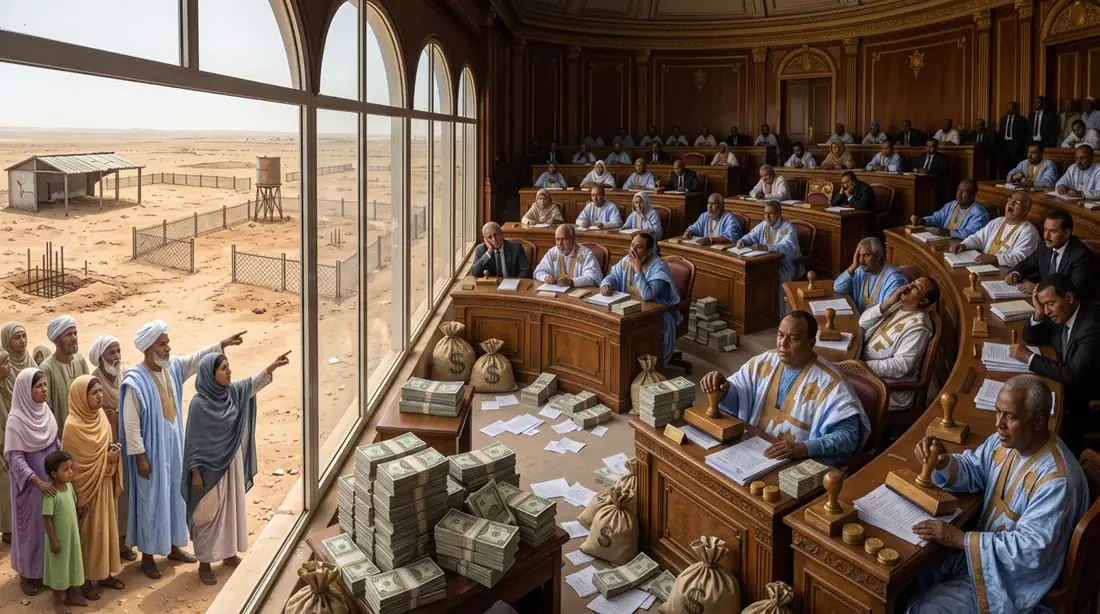
The financial cost of the National Assembly is also a point of contention. The official budget for 2026 is 524,063,444 ouguiyas, which is approximately 0.4% of the state's total budget. However, this figure does not include parliamentary allowances, bonuses, and other benefits. When these are taken into account, the total cost is significantly higher.
In 2011, a law set the monthly base allowance for deputies at 500,000 ouguiyas, plus a functional allowance, all of which is tax-exempt. Deputies also receive mission expenses, airplane tickets, official vehicles, and occasional bonuses. In 2025, each deputy received a 5 million ouguiyas bonus without clear justification.
Over a five-year term, the official budget of the National Assembly amounts to approximately 2.62 billion ouguiyas. This sum could be used to fund significant development projects, such as schools, health centers, and water drilling. For example, it could finance between 87 and 437 schools, or between 131 and 175 health structures over five years.
The comparison with the Senate, which was abolished in 2017, is instructive. Former President Aziz argued that the Senate had cost 37 million euros over 25 years without providing significant benefits. The National Assembly's current cost and ineffectiveness have led some to argue that it, too, is no longer justifiable.
Key points
- The National Assembly's abolition could lead to significant savings that could be redirected to development projects.
- The Assembly's ineffectiveness is highlighted by its rubber-stamp approach to legislation and its inability to hold the government accountable.
- The financial cost of the National Assembly is substantial, and its abolition could help address some of Mauritania's development needs.
Reporting sources
- Voilà pourquoi, il faut supprimer l’Assemblée nationale. Pr ELY Mustapha · Le Quotidien de Nouakchott