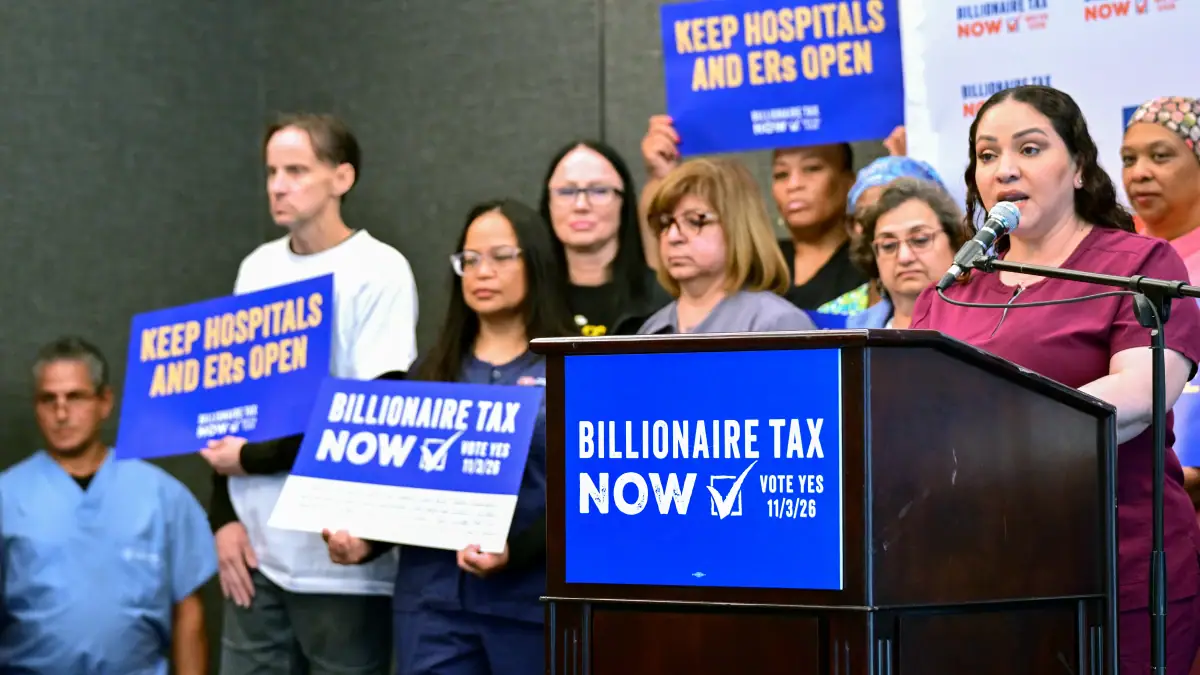
California voters have rejected Proposition 40, a proposed billionaire wealth tax, despite a strong Democratic showing in the state. The Associated Press determined the outcome late Monday. This result has sparked debate among economists and experts about the politics of wealth taxes. The proposed tax would have been a one-time measure, with 90% of revenue going to healthcare and 10% to food assistance and education.
Economists Gabriel Zucman and Joshua Rauh, who had previously disagreed on the potential impact of the wealth tax on California's economy and tax revenue, have offered differing explanations for the tax's failure. Zucman, a champion of wealth taxes, attributes the failure to the significant spending by opponents, who spent almost $400 million fighting the measure. He notes that this was one of the most expensive ballot initiative fights in history.
Zucman argues that the spending gap was a crucial factor, with opponents spending over $300 million on ads, while supporters had negligible spending. He believes that this one-sided advertising campaign likely influenced voters, particularly in a ballot initiative where voters may not have had a clear partisan signal to guide their decision. In contrast, Rauh questions whether money and advertising can fully explain the tax's poor showing.
Rauh suggests that popular opinion on wealth taxes may not be as strong as proponents thought. He points to the fact that prominent Democrats, including California Governor Gavin Newsom, came out against the measure. Newsom argued that a national minimum tax on billionaires would be more effective. Rauh also notes that support for the tax was lower in some progressive Bay Area counties, where voters may have been more skeptical of the tax due to proximity to billionaires and their businesses.
The debate over the wealth tax highlights divisions within the Democratic Party, which have been evident in previous discussions about wealth taxes. During the 2020 presidential primary, Elizabeth Warren and Bernie Sanders championed wealth taxes, while rivals like Cory Booker and Michael Bloomberg opposed them. The outcome of the California vote may have implications for the national conversation about wealth taxes.
Some critics of the tax argue that it was flawed in its design, with 90% of revenue allocated to healthcare and only 10% to education and food assistance. The California Teachers Association, a powerful teachers union, opposed the measure, arguing that it shortchanged public schools. Others argue that a wealth tax would be more effective at the national level, where it would be harder for billionaires to relocate.
Despite the defeat of Prop 40, Zucman believes that the wealth tax movement is far from over. He notes that many newly elected Democratic senators have campaigned on curbing the power and influence of billionaires, and that the issue is likely to be front and center in the new Congress. The debate over wealth taxes is likely to continue, with implications for future policy discussions.
Key points
- The proposed billionaire tax failed to pass despite a strong Democratic showing in California.
- Economists disagree on the reasons for the tax's failure, with some citing the influence of money and advertising, and others pointing to skepticism about the tax itself.
- The outcome of the California vote may have implications for the national conversation about wealth taxes and the Democratic Party's stance on the issue.