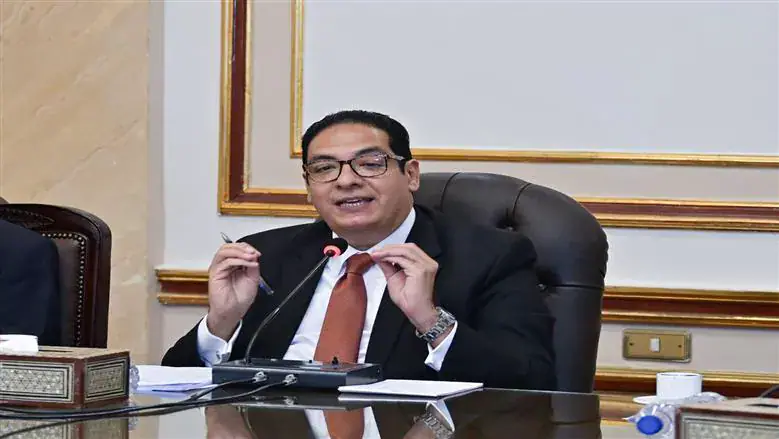
Cairo University, represented by Dr. Atia Tantawi, Dean of the Higher Institute of African Studies, recently participated in the 15th China-Africa Think Tank Forum. The event was hosted by the Institute of African Studies at Zhejiang Normal University in China and brought together representatives from 48 African countries. This participation reflects the university's commitment to strengthening its academic and research presence on the international stage and expanding scientific cooperation with global institutions.
Dr. Mohamed Sami Abdel Sadek, President of Cairo University, emphasized that the university's participation in the forum showcases its academic and research capabilities. He highlighted that Egypt-China relations have been a model of international cooperation based on historical friendship, mutual respect, and convergent development interests. These relations have evolved significantly over seven decades, encompassing politics, economy, trade, culture, science, and security.
The President of Cairo University also stressed that enhancing cooperation between Egyptian, Chinese, and African academic institutions and think tanks is crucial for exchanging expertise and knowledge. This collaboration aims to develop joint research, find scientific and practical solutions to development and environmental challenges, and utilize research and technological capabilities to serve sustainable development goals.
Dr. Atia Tantawi presented a comparative vision for China-Africa cooperation in adapting to climate change impacts. He discussed similarities in climate risks faced by China and African countries, such as droughts, floods, and extreme weather phenomena. Tantawi noted that Africa is highly vulnerable to climate change despite its limited contribution to greenhouse gas emissions.
Dr. Tantawi's vision emphasized the need to transition from mere technology transfer to sustainable development and research partnerships. These partnerships would involve exchanging experiences, researchers, and climate data, as well as developing joint projects and enhancing local capacities. This approach aims to find solutions tailored to African communities' needs and support their ability to face climate challenges and achieve sustainable development.
The framework for China-Africa cooperation in climate adaptation presented by Dr. Tantawi is based on four tracks: assessing climate risks using common methodologies, building science and technology partnerships, localizing solutions, and periodically measuring project impacts. The framework also includes supportive measures for adaptation and mitigation, such as expanding renewable energy use, developing infrastructure, and promoting climate-resilient agriculture.
The participation of Cairo University in the China-Africa Think Tank Forum demonstrates its commitment to addressing global challenges and fostering international cooperation in research and development. The university's involvement in such forums is expected to yield tangible results for communities and contribute to achieving sustainable development goals.
Key points
- Cairo University participates in the 15th China-Africa Think Tank Forum to enhance research and development partnerships in Africa.