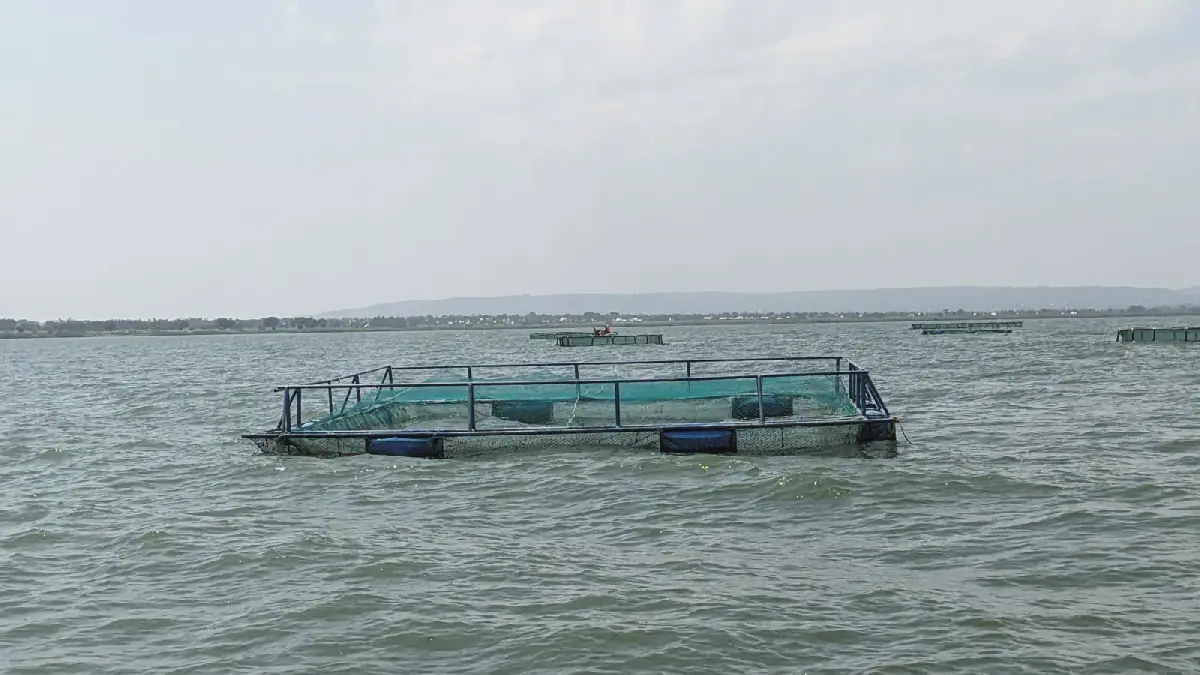
The Tanzanian government is expanding its support for Lake Victoria fishing communities, with a focus on cage fish farming. This move has brought renewed attention to the growing economic opportunities in the country's fishing industry. According to the Fisheries Education and Training Agency (FETA), cage fish farming has the potential to provide reliable harvests, improve household incomes, and respond to increasing demand for fish. The industry's growth is driven by changing dietary preferences, population growth, and the demand for white meat.
The increasing demand for fish has led to a surge in demand for fingerlings from cage fish operators in Lake Victoria. FETA has increased its monthly production capacity from 70,000 to two million fingerlings to meet this demand. However, the demand continues to exceed available supplies, with FETA working towards increasing production to at least 10 million fingerlings monthly. The institution attributes the pressure partly to declining stocks of indigenous fish in Lake Victoria, affected by several factors, including illegal fishing practices.
The expansion of cage fish farming has been supported by government interventions targeting youth economic empowerment. The government has disbursed 200bn/- for youth empowerment programmes nationwide, including 9bn/- made available to young people in the Lake Zone through the Build a Better Tomorrow (BBT) programme. In Mwanza, 80 beneficiaries entered farming activities in March and are expecting their first harvest in November. They operate 80 fish cages, each stocked with at least 11,280 fingerlings, with a projected production of 240 tonnes.
The market outlook for cage fish farming remains encouraging, with demand for fish in the region not yet fully satisfied. This provides farmers with an opportunity to sell their produce without facing significant market-related concerns. Cage fish farming may also contribute to the natural replenishment of fish stocks, as the areas beneath the cages provide relatively safe breeding grounds. Naturally occurring fish beneath the cages can benefit from feeds supplied to farmed fish, supporting their growth and breeding.
Government financing through local authorities has provided another source of support for cage fish farming. Under the 10 per cent council loan arrangement, approximately 2.5bn/- was disbursed to about 25 groups comprising 126 members in Mwanza City Council. Other beneficiaries include the Youth Fishing Group in Ukerewe District and the Ukerewe Business Venture Group, which received funds in 2025/26 and 2026/27, respectively.
Despite these interventions, stakeholders acknowledge that the sector continues to face challenges that could undermine its potential, particularly for small-scale operators. Shortages of fingerlings and the availability of substandard supplies are among the constraints affecting production. Farmers require healthy fingerlings to achieve satisfactory harvests, but limited supplies have made procurement increasingly expensive. Small-scale farmers are particularly vulnerable due to their limited financial capacity to compete with larger investors.
To address these challenges, Deputy Minister for Livestock and Fisheries Ng'wasi Kamani stated that the government is extending loans to individuals and groups involved in fishing and fish trading. These groups play important roles across the fishing value chain, particularly in collecting, transporting, and selling fish. Supporting such activities helps create employment, increase incomes, and improve the availability of fish. Cage fish farming can contribute significantly to employment creation and economic growth if the challenges facing farmers are addressed.
Key points
- The Tanzanian government is expanding its support for Lake Victoria fishing communities through cage fish farming, with a focus on youth economic empowerment and improving household incomes.
- Cage fish farming has the potential to provide reliable harvests, improve household incomes, and respond to increasing demand for fish in the region.
- Despite challenges, the market outlook for cage fish farming remains encouraging, with demand for fish in the region not yet fully satisfied.