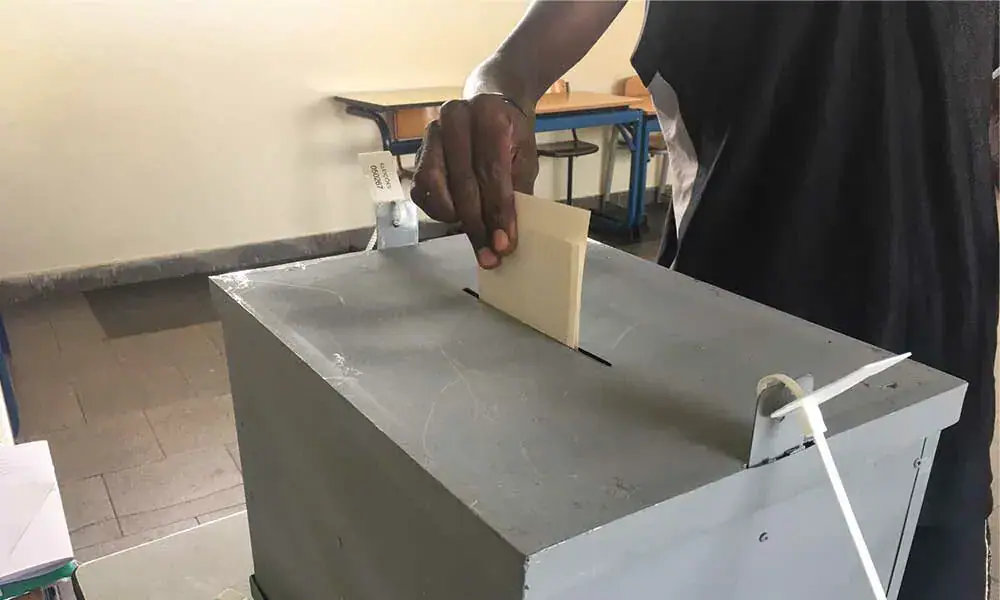
The presidential elections in Cabo Verde began smoothly in São Vicente, with voters casting their ballots without any reported issues. The island had four more polling stations than in the last legislative elections, a move aimed at accommodating the local electorate. According to the National Elections Commission (CNE), there are 140 polling stations on the island, spread across 19 voting assemblies.
Gilson Alves, one of the presidential candidates and a resident of São Vicente, exercised his right to vote at a local school. He expressed confidence that these elections would be historic, as he expects to win. Alves also stated that he contributed to reducing abstention and plans to follow the results with his family in his hometown of Santo Antão.
The CNE made logistical adjustments to facilitate voting in São Vicente. The polling stations usually located at the Humberto Ramos Elementary School were relocated to the José Augusto Pinto Secondary School. To avoid any confusion, the CNE provided an online portal, eleicoes.cv, and a free hotline, 800 10 14, for voters to check their polling stations.
A total of six candidates are running for the presidency, and over 400,000 voters are registered to participate in the elections. More than 76,000 voters are registered in the diaspora. The voting process will take place from 08:00 to 18:00, and a second round of voting is scheduled for November 29 if no candidate secures more than half of the valid votes.
International observers from five organizations are present in Cabo Verde to monitor the elections. These organizations include the African Union, the Economic Community of West African States, the Community of Portuguese Language Countries, and the International Organization of La Francophonie.
Cabo Verde has had five presidents since gaining independence from Portugal in 1975. The country has a history of peaceful transfers of power, with the most recent elections in 2021 seeing José Maria Neves win with 51.75% of the votes. The president is elected by universal suffrage, and only a citizen of Cabo Verdean origin, aged 35 or older, and residing permanently in the country for the past three years can run for the position.
The elections in Cabo Verde are a significant event, with the country's democratic institutions being put to the test. The outcome will determine the country's leadership for the next five years, and the international community is closely watching the process. The CNE has assured that everything is in place for a smooth voting process, and voters are encouraged to participate and exercise their democratic rights.
Key points
- The elections in Cabo Verde will determine the country's president for the next five years.
- International observers are present to monitor the voting process.
- The country has a history of peaceful transfers of power since gaining independence in 1975.