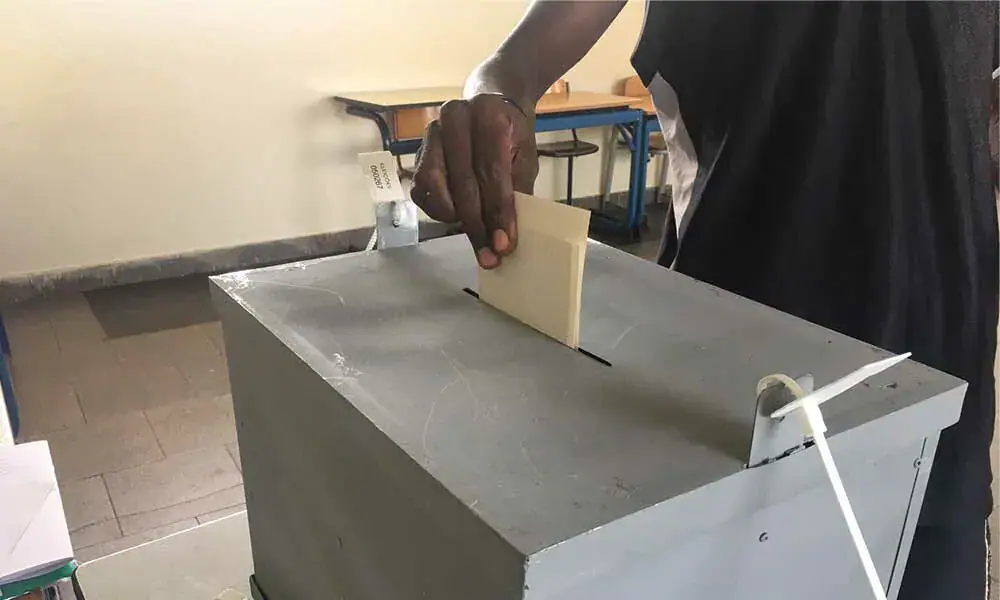
The presidential elections in Cabo Verde began smoothly in São Vicente, with voters casting their ballots without any reported issues. The National Elections Commission (CNE) had set up 140 polling stations on the island, an increase of four from the previous legislative elections. These stations are distributed across 19 voting assemblies. One of the notable logistical changes was the relocation of polling stations from the Humberto Ramos Elementary School to the José Augusto Pinto Secondary School in Mindelo city.
Gilson Alves, a presidential candidate and resident of São Vicente, exercised his right to vote at the Campim Dji d'Sal school zone around 10:30 am. The CNE made adjustments to accommodate the local electorate, including providing online consultation through the official elections portal, eleicoes.cv, and a free Green Line, 800 10 14. This aimed to prevent any confusion regarding the location of polling stations.
The voting process in São Vicente features six candidates for the presidency, listed in the following order: Antero Tavares, Casimiro de Pina, José Maria Neves, Gilson Alves, Joana Rosa, and Loisito Sousa. Over 400,000 voters are registered to participate in the elections, including more than 76,000 in the diaspora. Polling stations are operational from 8:00 am to 6:00 pm.
In case no candidate secures more than half of the valid votes, a second round of voting will take place on November 29. A total of 145 international observers from five organizations are present in Cabo Verde to monitor the presidential elections. These observers represent the African Union, the Economic Community of West African States, the Community of Portuguese Language Countries, the Network of Jurisdictional and Electoral Administration Bodies of the CPLP, and the International Organization of La Francophonie.
Cabo Verde has had five presidents since gaining independence from Portugal in 1975. The first president was Aristides Pereira, followed by António Mascarenhas Monteiro, Pedro Pires, Jorge Carlos Fonseca, and the current president, José Maria Neves, who won the 2021 elections with 51.75% of the votes. The president is elected by universal and direct suffrage by registered citizens in the national territory and abroad.
To be eligible for the presidency, a candidate must be a Cape Verdean by origin, without another nationality, at least 35 years old at the time of candidacy, and have had permanent residence in the national territory for the three years preceding the candidacy. The elections are a significant event in the country's democratic process.
The electoral process is being closely monitored, both locally and internationally. The presence of international observers aims to ensure the transparency and integrity of the elections. The outcome will determine the next president of Cabo Verde, shaping the country's future direction.
Key points
- The elections feature six candidates vying for the presidency.
- Over 400,000 voters are registered to participate.
- International observers are present to monitor the process.