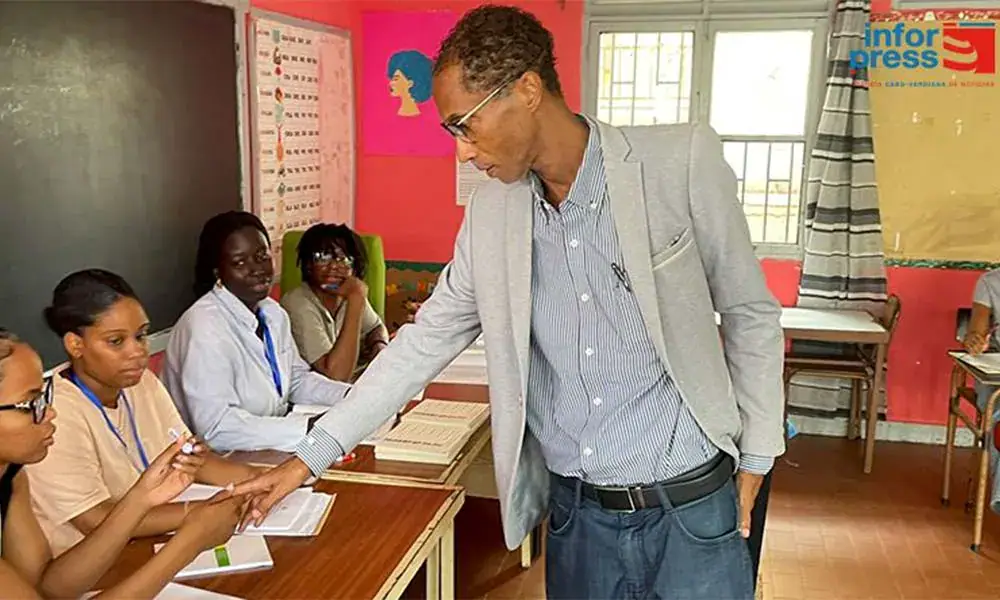
On November 15, 2026, Casimiro de Pina, a 52-year-old candidate from the island of Fogo, exercised his right to vote at the Escola Nova Presidência in the city of Praia. He emphasized the importance of civic participation in consolidating democracy and strengthening institutions in Cabo Verde. De Pina stated that he had fulfilled his civic duty and expressed his desire for Cabo Verdeans to turn out in large numbers to vote.
De Pina's campaign focuses on promoting legality, transparency, and responsibility in public management. He advocates for greater scrutiny of the exercise of power and stricter adherence to democratic rules. His platform also prioritizes the fight against corruption, which remains a significant concern for citizens. By emphasizing these issues, de Pina aims to appeal to voters seeking greater accountability from public officials and more transparent administration.
The presidential election features six candidates, including de Pina, Antero Tavares, José Maria Neves, Gilson Alves, Joana Rosa, and Loisito Sousa. A total of 419,448 voters are registered to participate, with 343,065 in Cabo Verde and 76,383 abroad. The voting process takes place at 1,302 polling stations, with 1,059 in Cabo Verde and 243 in the diaspora. Observers from various international organizations, including the Community of Portuguese Language Countries and the African Union, are monitoring the election.
De Pina's campaign has taken a distinct approach, focusing on institutional strengthening and moral elevation. He believes that Cabo Verde requires a consistent democratic republic with robust institutions, transparency, and respect for the Constitution. The candidate is optimistic about his chances of winning and plans to await the election results calmly with family and friends.
The election is taking place against the backdrop of Cabo Verde's history of democratic governance. Since gaining independence from Portugal in 1975, the country has had five presidents, including Aristides Pereira, António Mascarenhas Monteiro, Pedro Pires, Jorge Carlos Fonseca, and José Maria Neves. The current election will determine the next president, who must be a Cabo Verdean citizen by origin, at least 35 years old, and have resided permanently in the country for the past three years.
International observers are closely monitoring the election, with over 200 representatives from organizations such as the Economic Community of West African States, the African Union, and the International Organization of La Francophonie. Their presence aims to ensure the integrity and transparency of the electoral process.
If no candidate secures more than half of the valid votes, a second round of voting will take place on November 29, 2026. The outcome of the election will have significant implications for Cabo Verde's future, with citizens eagerly awaiting the results.
Key points
- Casimiro de Pina emphasizes the importance of civic participation in consolidating democracy and strengthening institutions in Cabo Verde.
- The presidential election features six candidates, with de Pina's campaign focusing on promoting legality, transparency, and responsibility in public management.
- International observers are monitoring the election to ensure its integrity and transparency.