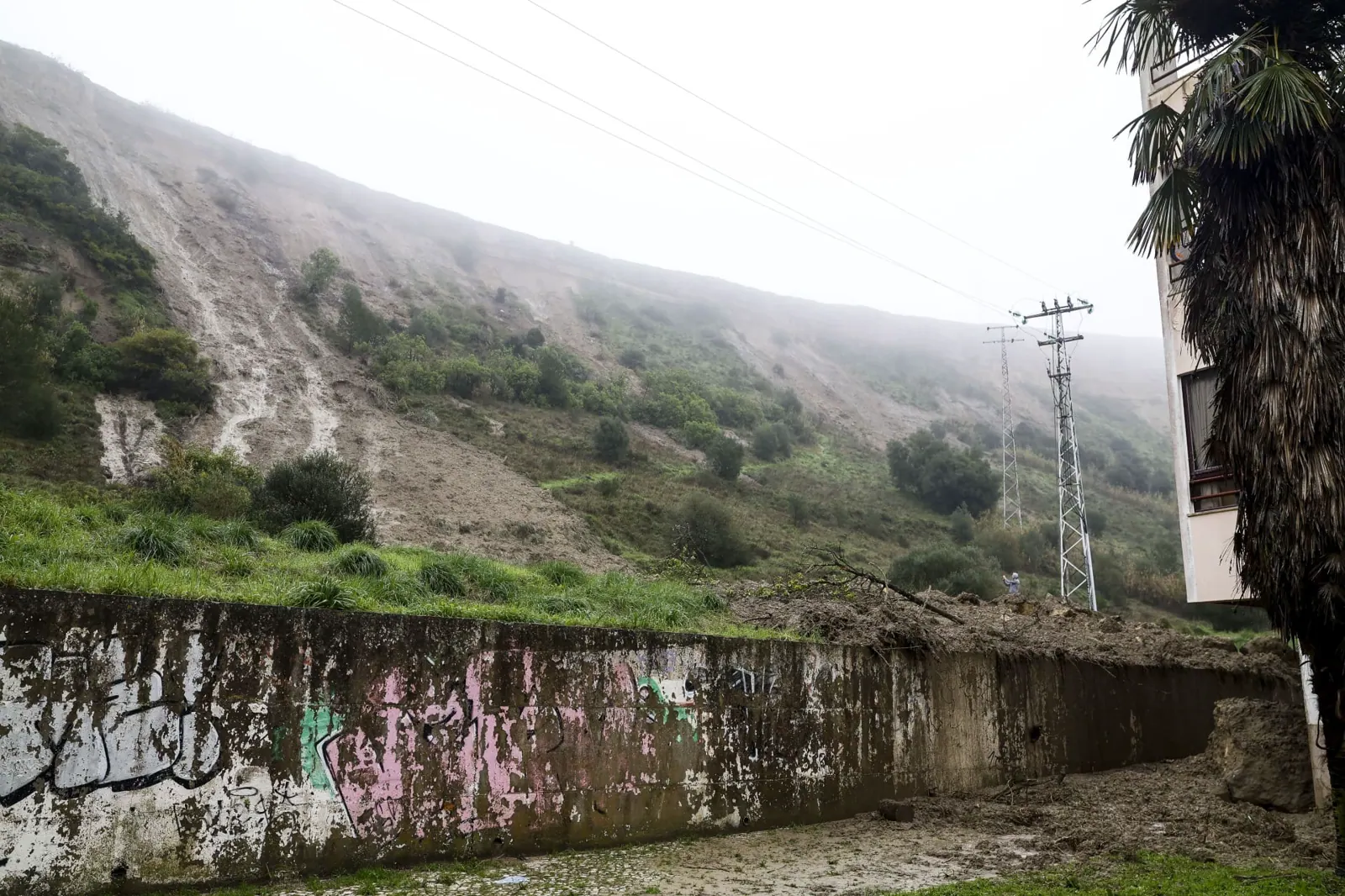
Recent storms in February caused significant erosion to Portugal's Arriba Fóssil cliff, with some areas receding by up to seven meters. A study by the Faculty of Sciences and Technology at the New University of Lisbon assessed the impact of the storms on the Almada municipality, particularly in the Porto Brandão and Arriba Fóssil areas. The research, led by José Carlos Ferreira and Paulo Sá Caetano, aimed to analyze the effects of the storms and provide recommendations for reducing vulnerability and risk.
The study found that the Arriba Fóssil cliff, a fossilized cliff face, experienced significant erosion, with a maximum historical recession of 12.5 meters recorded in one area. Specifically, the Pica Galo area saw a recession of approximately 6.9 meters between 2024 and February 2026. The study's findings indicate that certain areas are at high risk, and the researchers advise against allowing people to return to these zones.
The researchers recommend establishing safety zones to protect people and properties from the erosion. For the Pica Galo area, they suggest a primary safety zone of 15 meters and a secondary zone of 10 meters. In the southern sector, where a one-meter recession was recorded, a primary safety zone of 10 meters and a secondary zone of 10 meters are recommended. These safety zones are intended to account for potential future erosion and ensure public safety.
The study emphasizes that the cliff's crest is a sensitive area, prone to sudden and significant erosion. The researchers stress that construction of new buildings, reconstruction or expansion of existing ones, and installation of equipment or infrastructure should be prohibited within the safety zones. They also recommend that existing constructions within the safety zones be demolished and that the areas be converted into natural protection zones.
The researchers advise that the demolition of constructions within the safety zones should prioritize those closest to the cliff's crest and those in the primary and secondary safety zones. They emphasize that demolition is a structural measure to reduce vulnerability and that it applies to both legal and illegal constructions. The goal is to protect people and properties from the risks associated with the erosion.
In February, following severe weather in Portugal, approximately 500 people were evacuated from their homes in the Almada municipality. The study's findings and recommendations aim to prevent similar situations in the future. The researchers presented their findings at a public session attended by local residents and stakeholders.
The study's recommendations will be implemented to ensure public safety and prevent further erosion. The researchers' work highlights the importance of monitoring and addressing the risks associated with coastal erosion. By taking proactive measures, authorities can mitigate the impacts of erosion and protect communities.
Key points
- Portugal's Arriba Fóssil cliff erosion prompts safety concerns and recommendations
- Study recommends establishing safety zones to protect people and properties
- Demolition of constructions within safety zones advised to reduce vulnerability