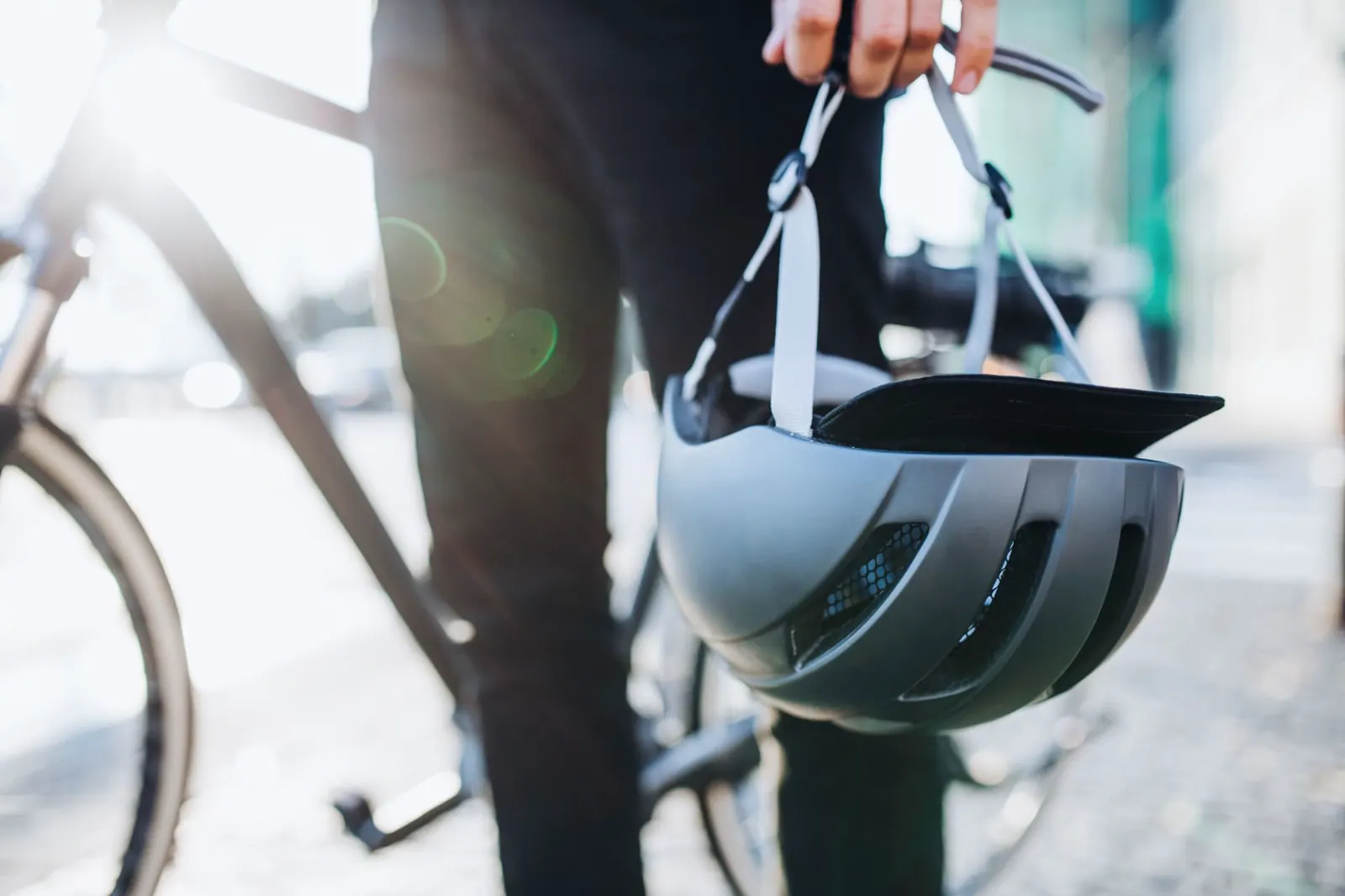
The parliament of Portugal has approved a bill that makes it mandatory for riders of electric scooters and bicycles to wear helmets. The bill, proposed by the PSD, aims to increase road safety and reduce accidents. According to statistics, there has been a significant increase in accidents involving electric scooters, with over 1,900 accidents reported in the past seven years, resulting in 10 fatalities and numerous serious injuries.
The bill also requires riders to wear reflective clothing or equipment, especially during low visibility conditions such as at night or in poor weather. The proposal establishes that the minimum characteristics of the reflective clothing or equipment will be defined by a government ordinance. Failure to comply with the helmet and reflective clothing requirements will result in fines ranging from 60 to 300 euros for electric scooter riders and 30 to 150 euros for bicycle riders.
The bill was approved with the support of various parties, including the PSD, Chega, PS, IL, CDS-PP, PCP, BE, and JPP. However, the PAN party abstained, and the Livre party voted against it. The co-porta-voz of the Livre party, Isabel Mendes Lopes, submitted a declaration of vote, as did the deputy of the PAN party, Inês de Sousa Real.
The PSD's proposal aims to guarantee that riders have visible elements and adequate equipment for circulation in low visibility conditions. The party clarified that the obligation to wear reflective clothing does not necessarily mean wearing a high-visibility vest. Instead, it could be achieved through elements integrated into clothing, technical clothing with reflective materials, or accessories placed on clothing, helmets, or other equipment.
During the plenary discussion, various deputies expressed their opinions on the bill. The PSD's Bruno Faria highlighted the alarming increase in accidents involving electric scooters, emphasizing that wearing helmets can save lives. The Chega party's Nuno Gabriel suggested that the national norms should be articulated with municipal competencies and instruments.
The PS party's Frederico Francisco argued that Portuguese cities are still dominated by cars and advocated for a redistribution of public space to prioritize other modes of transportation. He also expressed concerns that making helmets mandatory for shared scooter systems, such as the one in Lisbon, might deter occasional users.
Other parties, such as the IL, Livre, PCP, CDS-PP, PAN, and JPP, also contributed to the discussion, highlighting various concerns and suggestions. The bill will now proceed to the speciality discussion in the Commission of Infrastructures, Mobility, and Housing.
Key points
- The Portuguese parliament has approved a bill making helmets mandatory for electric scooter and bicycle riders to increase road safety.