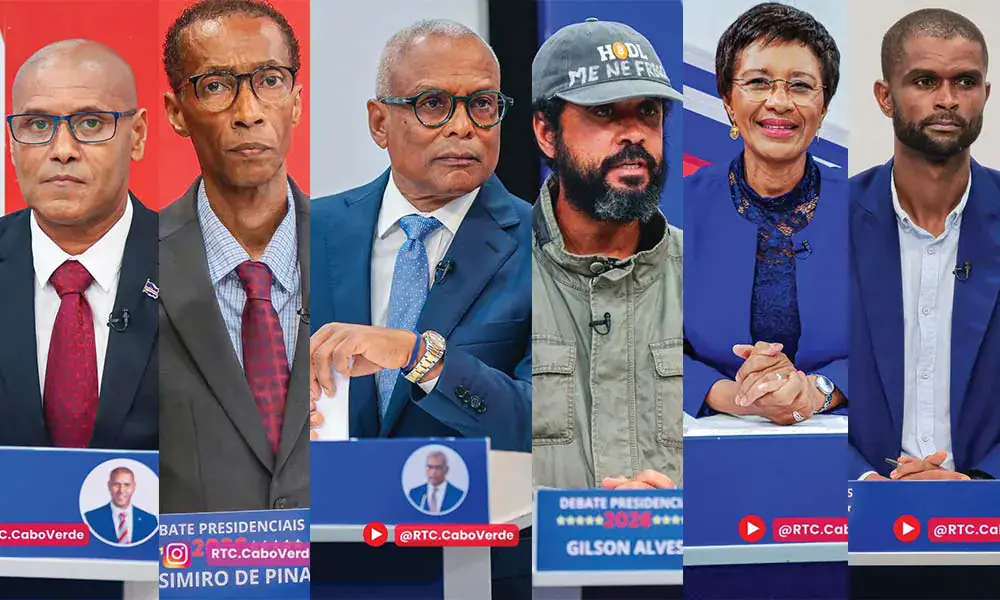
Cabo Verde is set to elect its sixth President on November 15, marking a significant milestone in the country's democratic journey since gaining independence from Portugal in 1975. Six candidates are vying for the top job, each presenting distinct visions for the country's future and the role of the head of state. The candidates are Antero Tavares, Casimiro de Pina, José Maria Neves, Gilson Alves, Joana Rosa, and Loisito Tavares.
Antero Tavares, a 58-year-old judge from the Praia district, is running on a platform of social inclusion and sustainable development. His campaign focuses on addressing the needs of communities facing difficulties in accessing opportunities. Tavares advocates for a presidency that is more responsive to citizens' concerns and works to reduce regional disparities. He prioritizes the development of different islands and promotes balanced growth.
Casimiro de Pina, a 52-year-old lawyer from the Mosteiros district on the island of Fogo, is emphasizing the importance of legality, transparency, and accountability in public management. His campaign centers on strengthening oversight of public powers and combating corruption. De Pina argues for greater scrutiny of power exercise and stricter adherence to democratic rules. He aims to win over voters seeking more accountability from public officials and transparent administration.
José Maria Neves, the incumbent head of state and a 66-year-old native of Santa Catarina on the island of Santiago, is seeking re-election with a platform focused on consolidating democracy. His campaign emphasizes continuity, political stability, and experience in public office. Neves advocates for a presidency that continues to play a moderating role in the political system and upholds the Constitution. He highlights the importance of dialogue among sovereign bodies and preserving democratic principles.
Gilson Alves, a 45-year-old surgeon from the Porto Novo district on the island of Santo Antão, is running on a platform of radical change to the traditional system. His campaign targets young people and those dissatisfied with the current functioning of institutions and responses to the country's problems. Alves advocates for profound transformation of the political and socioeconomic landscape, presenting himself as an alternative to traditional power structures.
Joana Rosa, a 61-year-old jurist from the island of Maio, is Cabo Verde's first female presidential candidate. Her campaign prioritizes modernizing the judicial system, promoting social cohesion, and strengthening civic rights. Rosa's platform advocates for institutions that are closer to citizens and a society with greater guarantees of justice and equality. She emphasizes social inclusion and gender equality.
The election marks a significant moment in Cabo Verde's history, with voters choosing from six distinct candidates. The country has had six presidents since independence, with the first being Aristides Pereira, who served from 1975 to 1991. The outcome of this election will shape the country's future and direction.
Key points
- The election features six candidates with diverse visions for Cabo Verde's future.
- The candidates include Antero Tavares, Casimiro de Pina, José Maria Neves, Gilson Alves, Joana Rosa, and Loisito Tavares.
- The president-elect will be Cabo Verde's sixth since independence in 1975.