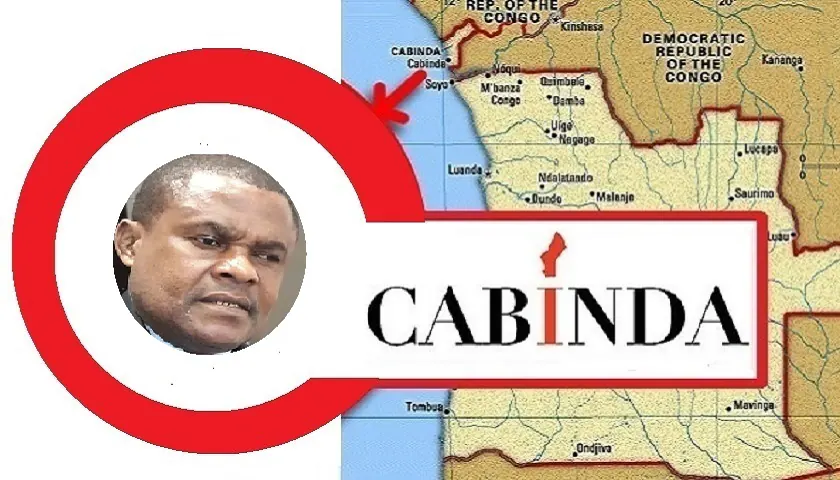
The Cabinda region in Angola has been a source of conflict for over five decades. Despite being rich in offshore resources, the region has been subject to military occupation and human rights abuses. The conflict has resulted in significant suffering for the local population, with many calling for greater autonomy or independence. However, the struggle for self-determination has been hindered by internal divisions and a lack of international support. According to Osvaldo Franque Buela, a writer and pan-Africanist, the current approach has failed to achieve its goals.
The current approach to achieving independence has been characterized by armed struggle and fragmentation among various factions. However, this approach has not yielded significant results, and the regime in Luanda has continued to maintain its grip on the region. Buela argues that it is time for a new approach, one that is based on diplomacy and international law. He cites the example of the World Jewish Congress, which was established in 1936 to promote Jewish rights and interests. The Congress has been successful in achieving its goals through diplomatic efforts and has provided a model for other groups to follow.
The World Jewish Congress has been successful in achieving its goals through diplomatic efforts. Buela argues that Cabinda can learn from its example. He suggests that the various factions in Cabinda should put aside their differences and work towards a unified goal of achieving self-determination through diplomatic means. This would involve establishing a united congress that represents the interests of the Cabindese people and working with international organizations to promote their rights. According to Buela, this approach would be more effective than continued armed struggle.
The international community has a role to play in resolving the Cabinda conflict. Buela argues that the regime in Luanda has committed numerous human rights abuses and has failed to respect the rights of the Cabindese people. He suggests that international organizations such as the United Nations and the European Union should take action to hold the regime accountable for its actions. This could involve imposing sanctions or taking other measures to pressure the regime to negotiate a peaceful solution to the conflict.
The United Nations has a role to play in resolving the Cabinda conflict. However, Buela notes that the UN is limited in its ability to act by its charter, which prohibits interference in the internal affairs of sovereign states. He suggests that the UN could play a greater role in promoting dialogue and negotiation between the parties to the conflict. The African Union also has a role to play in resolving the conflict, but its ability to act is limited by its commitment to the principle of non-interference in the internal affairs of member states.
The African Union has a commitment to the principle of non-interference in the internal affairs of member states. This principle, known as the "uti possidetis juris," has been a cornerstone of African international relations since the 1960s. However, Buela argues that this principle should not be used to justify the suppression of the rights of the Cabindese people. He suggests that the African Union should take a more nuanced approach to the conflict, one that balances the need to respect the sovereignty of Angola with the need to promote the rights of the Cabindese people.
A new approach to achieving self-determination in Cabinda is needed. Buela argues that this approach should be based on diplomacy, international law, and a commitment to non-violence. It should also involve a unified effort by the various factions in Cabinda to promote their rights and interests. The goal of this approach should be to achieve a negotiated settlement that respects the rights of the Cabindese people and promotes peace and stability in the region. According to Buela, this approach offers the best hope for a peaceful resolution to the conflict.
Key points
- The struggle for self-determination in Cabinda requires a new approach based on diplomacy and international law.
- The World Jewish Congress provides a model for achieving self-determination through diplomatic efforts.
- The African Union and the United Nations have a role to play in resolving the Cabinda conflict.