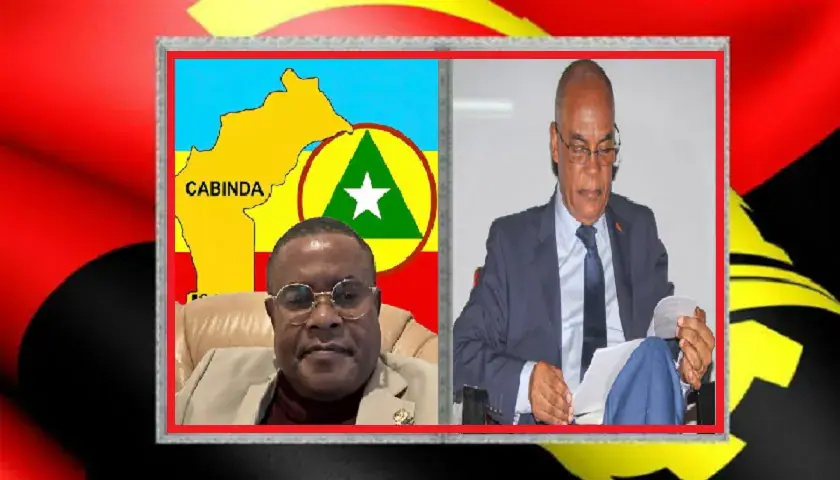
A recent open letter to UNITA leader Adalberto Costa Júnior has highlighted concerns about the party's approach to regional development in Cabinda, Angola. The letter, written by a member of Cabinda's civil society, expresses admiration for Costa Júnior's courage and audacity but also questions the party's strategy of presenting projects without consulting local communities. The author argues that this approach has been ongoing since the end of the civil war and has resulted in projects that do not reflect the needs and realities of Cabinda.
The letter specifically references a recent intervention by Costa Júnior, in which he outlined the UNITA's economic vision for Cabinda. While the project was well-structured and announced, the author notes that it was done without prior consultation with the local population. This lack of consultation is seen as a significant omission, given the maturity and intellectual capacity of Cabinda's civil society. The author argues that the UNITA's approach has been to incorporate certain elites from Cabinda's civil society into their electoral strategies, rather than genuinely engaging with the local population.
The author of the letter challenges Costa Júnior to demonstrate his commitment to genuine dialogue and consultation with the people of Cabinda. This includes engaging with the Cabinda diaspora in Europe, who are seen as an integral part of the region's community and intellectual landscape. The author argues that Cabinda is not just a territorial entity but also a community that exists beyond its borders, with a significant diaspora that must be consulted.
The letter sets out three key challenges to the UNITA leader. Firstly, the author calls for a genuine consultation with the people of Cabinda, including those in the diaspora, to determine their needs and aspirations. Secondly, the author requests that Costa Júnior engage directly with the Cabinda diaspora in Europe, rather than simply presenting projects without consultation. Finally, the author argues that the UNITA must recognize the maturity and intellectual capacity of Cabinda's civil society and treat its representatives as equal interlocutors.
The author of the letter emphasizes that Cabinda is not just a electoral asset or a rhetorical device but a community with its own distinct needs and aspirations. The author argues that the UNITA's approach to date has been characterized by a lack of genuine engagement with the local population and a tendency to present projects without consultation. The letter concludes by challenging Costa Júnior to demonstrate his commitment to genuine dialogue and consultation.
The open letter reflects a broader debate about the role of opposition parties in Angola and their approach to regional development. The UNITA has been a significant player in Angolan politics, and its approach to Cabinda will be closely watched by many in the country. The letter highlights the need for greater consultation and engagement between politicians and local communities, particularly in regions like Cabinda with complex histories and identities.
The author of the letter remains hopeful that Costa Júnior will take up the challenge and demonstrate a commitment to genuine dialogue and consultation. The letter concludes by emphasizing the importance of recognizing the maturity and intellectual capacity of Cabinda's civil society and engaging with the local population in a meaningful way.
Key points
- The open letter calls for greater consultation and engagement between the UNITA and the people of Cabinda.
- The author challenges Costa Júnior to engage directly with the Cabinda diaspora in Europe.
- The letter emphasizes the need for the UNITA to recognize the maturity and intellectual capacity of Cabinda's civil society.
Reporting sources
- CARTA ABERTA AO PRESIDENTE DA UNITA · jornalf8.net