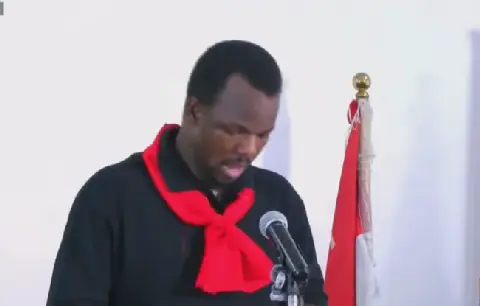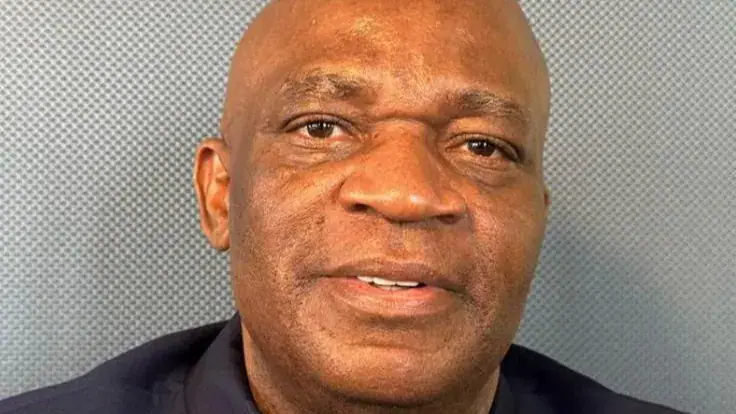
The Congolese opposition coalition, C64, is under scrutiny for its recent statement condemning the use of arms to seize power, yet failing to explicitly mention Joseph Kabila, the former president and leader of the Front for Refoundation of the Nation (FRN). According to Éric Kamba, a public policy researcher, a clear and consistent stance is required from the opposition to defend democracy. The C64's statement, released on October 27, 2026, rejected any prospect of a third presidential term and condemned the use of arms to conquer power.
However, the coalition's reluctance to directly mention Joseph Kabila has weakened the impact of its message. The FRN, led by Kabila, has explicitly stated its intention to use force to challenge the current government in Kinshasa. On October 12, 2026, the FRN announced its plans to combat the government, citing the need to restore national sovereignty. As a result, the C64 is urged to take a firm stance against Kabila's armed movement and demand that he renounce his plans and pursue peaceful means to achieve his goals.
The C64's credibility depends on its ability to defend democratic principles consistently. This includes condemning any attempts by Félix Tshisekedi, the current president, to extend his term through constitutional changes. On May 6, 2026, Tshisekedi stated that he would not seek a third term but would accept it if the people wanted him to. The opposition coalition must demand that Tshisekedi commit to respecting the constitutional limits of his term.
The United States has recently imposed sanctions on the Rwandan Ministry of Defense and Zigama Credit and Savings Society, accusing them of supporting the M23 rebel group and the Allied Democratic Forces (ADF) in eastern DRC. The sanctions aim to cut off financial and military support to these groups. The C64 should support these measures and demand that the Rwandan government withdraw its troops from the region.
The FRN's announcement that it will succeed the AFC (Alliance for the Congolese Forces) has reinforced the need for the C64 to clarify its stance on Kabila's armed movement. The opposition coalition should condemn the use of arms by the FRN and demand that Kabila renounce his plans. This stance is crucial to maintaining the integrity of the democratic process in DRC.
The C64's planned meetings with Félix Tshisekedi and Joseph Kabila may help find a solution to the crisis, but the coalition must use these opportunities to clearly state its position on their actions and responsibilities. The C64's credibility depends on its ability to defend democratic principles and maintain a consistent stance on these issues.
Ultimately, the C64's stance will be crucial in determining the future of democracy in DRC. By condemning Joseph Kabila's armed movement and defending the democratic process, the coalition can help maintain stability and ensure that the country's leaders are held accountable for their actions.
Key points
- The C64 must condemn Joseph Kabila's armed movement and demand that he renounce his plans to use force to seize power.
- The coalition must also defend democratic principles by opposing any attempts by Félix Tshisekedi to extend his term through constitutional changes.
- The C64's credibility depends on its ability to maintain a consistent stance on these issues and defend the integrity of the democratic process in DRC.