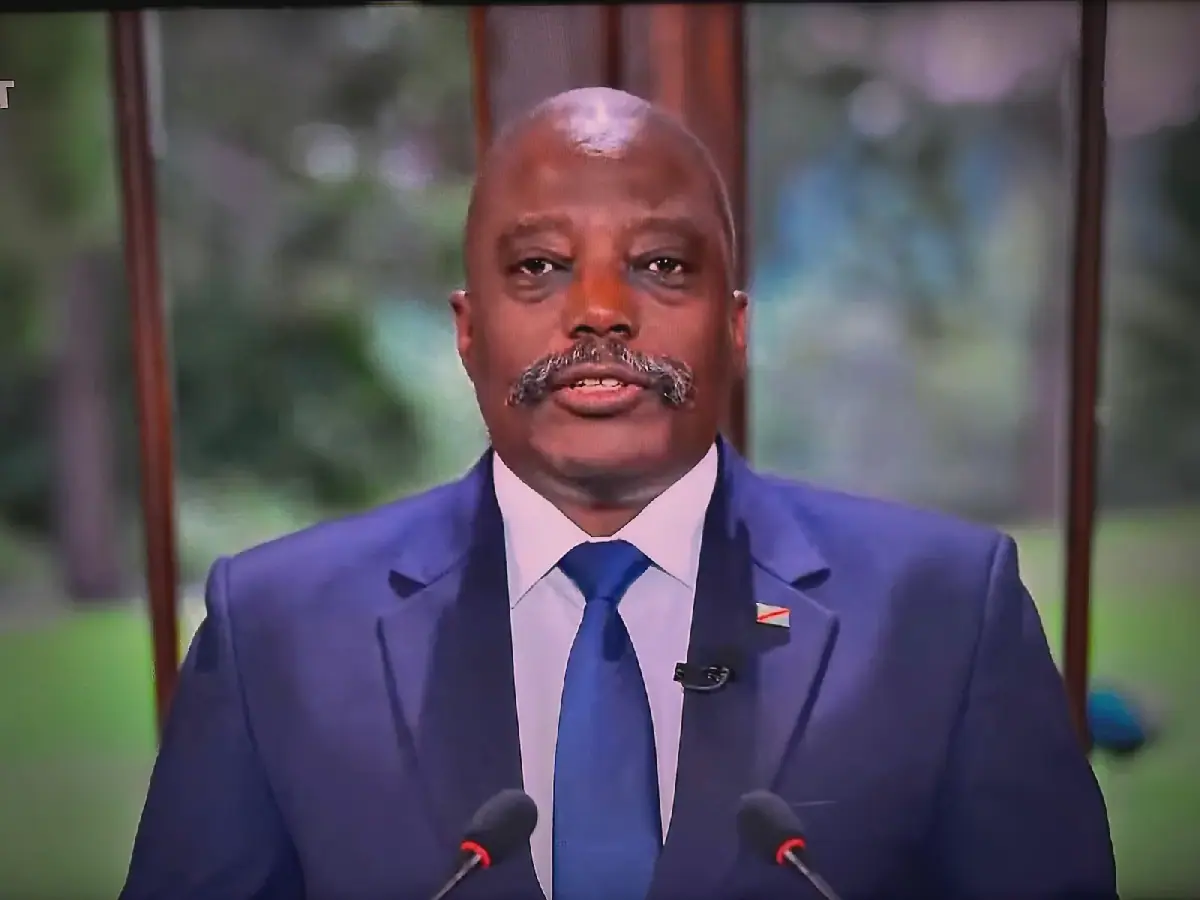
The Coalition Article 64 (C64), a platform of opposition groups in the Democratic Republic of Congo, has announced plans to meet separately with President Félix Tshisekedi and his predecessor Joseph Kabila. The initiative aims to promote an inclusive national dialogue and find a political solution to the country's ongoing crisis. The C64's move has garnered significant attention from various media outlets in the capital.
According to Congo Nouveau, the C64's decision to engage with both Tshisekedi and Kabila has raised questions about the coalition's neutrality. The newspaper notes that Kabila has recently been appointed to lead the Front pour la refondation de la nation (FRN), a move that has sparked concerns about the coalition's message being perceived as ambiguous. Le Potentiel also weighs in, describing the C64's initiative as "a high-risk endeavor."
The C64 has emphasized that its initiative is grounded in the country's constitution and aimed at promoting a peaceful resolution to the crisis. The coalition has also reiterated its commitment to protecting the country's territorial integrity and population. According to 7sur7.cd, the C64's efforts are designed to complement existing agreements, including the Accord de Washington, and to ensure the implementation of UN resolution 2773 on the withdrawal of foreign troops.
Notwithstanding the C64's stated goals, some critics have expressed skepticism about the viability of the initiative. Forum des As questions the coalition's ability to mediate without a clear mandate, noting that the initiative lacks a defined calendar, modalities, or official assent from the two leaders involved. Infos27 also voices concerns, warning that the C64's approach may conflate the country's political crisis with the conflict in the east.
The C64's initiative has also drawn criticism from some quarters, with Le Phare accusing the coalition of aligning itself with Rwanda and orchestrating a plan in conjunction with Cardinal Fridolin Ambongo's statements in Assise. The newspaper argues that the opposition has failed to unequivocally condemn the use of arms in the east. L'Observateur summarizes the dilemma facing the C64 leaders, describing them as being "caught between a rock and a hard place."
Despite the mixed reactions, the C64's initiative has garnered some support. Jean-Claude Katende, a civil society activist, has welcomed the coalition's efforts, although he regrets that the initiative does not explicitly address human rights abuses in the east. Le Potentiel reports that the C64 remains committed to finding a peaceful solution to the crisis, while reaffirming its attachment to the country's constitution and democratic principles.
The C64's initiative comes amid ongoing tensions in the country, marked by the recent interrogation of Prince Epenge, spokesperson for the Lamuka opposition coalition. The issue of integrating armed groups into a national dialogue remains a contentious issue, with many stakeholders calling for a more comprehensive approach to addressing the country's complex challenges.
Key points
- The C64's initiative aims to promote an inclusive national dialogue and find a political solution to the country's ongoing crisis.
- The coalition's decision to engage with both Tshisekedi and Kabila has raised questions about its neutrality.
- Critics have expressed skepticism about the viability of the initiative, citing concerns about the coalition's mandate and approach.