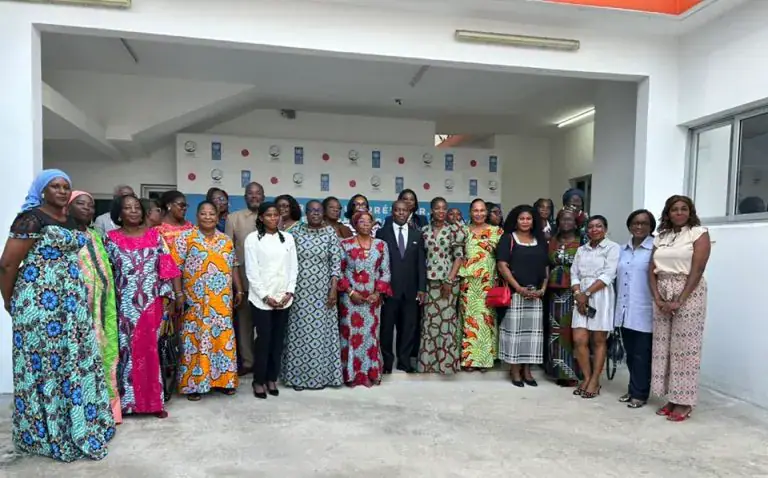
In a dialogue organized by the Groupe de plaidoyer pour une gouvernance électorale inclusive (GPGEI) at the Conseil national des droits de l'Homme (CNDH) in Abidjan, women leaders from political parties and civil society called for their concerns to be addressed in the electoral reform process. The event, which took place on November 4, 2026, aimed to discuss the obstacles to women's participation in electoral governance.
The president of GPGEI, Marie Flore Bégou, encouraged participants to seize the opportunity of this reform to strengthen the representation of women in electoral governance. She emphasized that diversity should be a collective wealth and that women should be genuine actors in decisions that affect their future. The dialogue was attended by the president of CNDH, Dr Christian Arnaud Adjélou.
The discussions highlighted several barriers to women's political participation, including sociocultural weights, discriminations, insufficient resources, and political violence. Participants also regretted the gap between the strong mobilization of women during electoral campaigns and their weak representation in decision-making bodies. These issues were identified as major challenges to achieving gender equality in electoral governance.
At the end of the dialogue, participants adopted a common declaration recommending a representation of at least 30% of women within the electoral administration, with a progressive evolution towards parity. They also suggested the creation of a citizen observatory to monitor gender equality and political violence against women. This observatory would play a crucial role in promoting women's rights and preventing violence.
The declaration emphasized that women should not be mere beneficiaries of electoral reforms but rather full-fledged actors. It urged public authorities, political parties, and civil society organizations to work towards more inclusive electoral governance. The call to action was addressed to public authorities, institutions in charge of electoral reform, political parties, civil society organizations, and technical and financial partners.
The women leaders' plea is part of a broader effort to promote gender equality and women's empowerment in Côte d'Ivoire. By advocating for a more inclusive electoral reform, they aim to increase their representation in decision-making bodies and contribute to the country's democratic development. This initiative is expected to have a positive impact on the country's governance and democracy.
The dialogue and the subsequent declaration demonstrate the commitment of women leaders in Côte d'Ivoire to promoting their rights and interests. The implementation of the recommendations made during the dialogue will be crucial in achieving a more inclusive electoral reform and promoting gender equality in the country.
Key points
- Women leaders in Côte d'Ivoire are calling for a more inclusive electoral reform to increase their representation in decision-making bodies.
- The proposed reform includes a representation of at least 30% of women within the electoral administration and the creation of a citizen observatory to monitor gender equality and political violence.
- The initiative aims to promote gender equality and women's empowerment in Côte d'Ivoire, contributing to the country's democratic development.