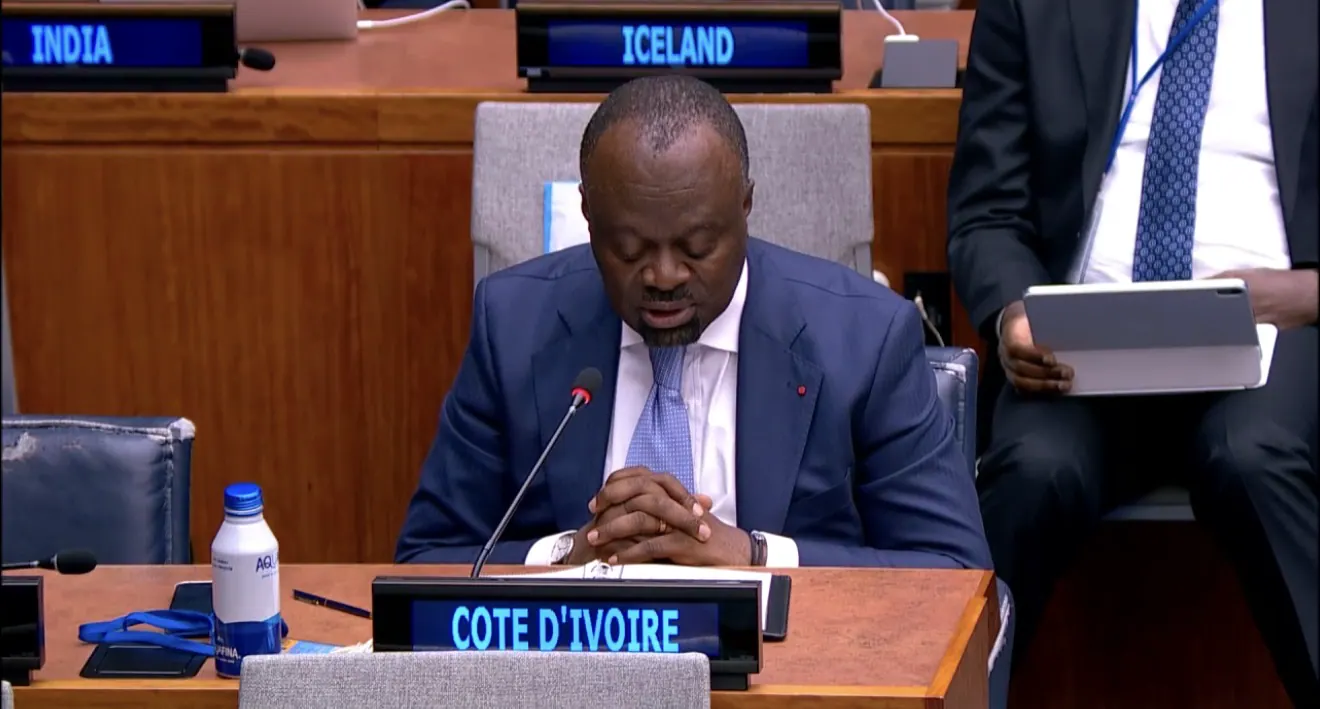
Côte d'Ivoire's ambassador to the UN delivered a statement at the Fourth Committee meeting, emphasizing his country's support for Morocco's sovereignty over Western Sahara and the autonomy initiative. He stated that the time is ripe to intensify efforts to resolve the conflict through dialogue and realism. The ambassador highlighted the importance of the UN Security Council's Resolution 2797, adopted in 2025, which underscores the need for a peaceful and final solution to the decades-long conflict.
The Ivoirian ambassador praised the efforts of UN Secretary-General António Guterres and his personal envoy for Western Sahara, Staffan de Mistura, in seeking a resolution to the conflict. Côte d'Ivoire encouraged Guterres and de Mistura to continue their initiatives to facilitate the resumption and consolidation of the political process. The ambassador called on Morocco, Algeria, Mauritania, and the Polisario Front to engage in good faith in this process.
Côte d'Ivoire welcomed the international momentum in support of Morocco's autonomy plan, which has garnered backing from nearly 130 countries, including three permanent members of the UN Security Council. The ambassador described the plan as a credible and serious proposal that provides a framework for considering the specificities of Western Sahara and promoting the participation of its inhabitants in the management of the region's political, economic, and social affairs.
The Ivoirian ambassador acknowledged the efforts of Moroccan authorities in promoting economic and social development in the region, as well as initiatives to enhance human rights protection. He noted the establishment of regional human rights committees in Laayoune and Dakhla and cooperation with the UN High Commissioner for Human Rights as positive developments.
Côte d'Ivoire's ambassador highlighted his country's efforts to strengthen relations with Morocco, including the opening of a general consulate in Laayoune. This move reflects Côte d'Ivoire's desire to contribute to the development of bilateral relations and the economic and social development of the region.
The ambassador expressed concern about reports of difficulties related to human rights in Tindouf camps and emphasized the importance of registering and counting the population in these camps, in accordance with UN High Commissioner for Refugees appeals and relevant international law. Côte d'Ivoire also stressed the need to enhance the capabilities of the UN Mission for the Referendum in Western Sahara (MINURSO) to effectively monitor the ceasefire.
Côte d'Ivoire reiterated its commitment to the UN-led process and its willingness to contribute to efforts to achieve a final political settlement to the Western Sahara conflict. The ambassador urged all parties to demonstrate realism, a spirit of compromise, and good faith to reach a realistic, practical, and durable solution, in accordance with relevant UN Security Council resolutions.
Key points
- Côte d'Ivoire supports Morocco's autonomy plan for Western Sahara.
- The plan has garnered backing from nearly 130 countries.
- Côte d'Ivoire encourages all parties to engage in good faith in the UN-led process.