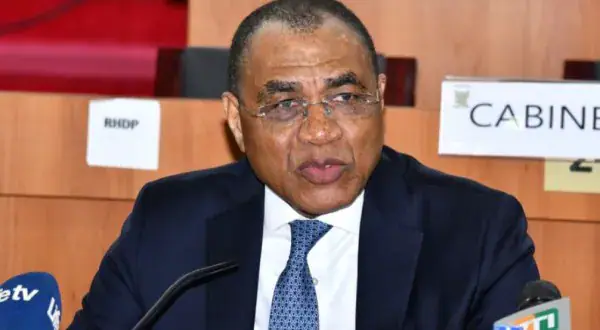
The Senate of Côte d'Ivoire has approved three key bills presented by Minister of Economy, Finance, and Budget Adama Coulibaly, aimed at improving the country's energy sector and supporting agricultural activities. The bills, which were approved by the Senate's Economic and Financial Affairs Committee on November 6, 2026, focus on financing electrical infrastructure, regional energy cooperation, and reducing taxes on agricultural products. These measures are expected to enhance the country's energy capabilities and alleviate fiscal pressures on the agricultural sector.
One of the approved bills involves the modification of Article 411 of the General Tax Code, which allows for the reallocation of a portion of the Tax on Support for the Development of Refining Activities (TSDAR) to finance investments in the electricity sector. The TSDAR was established in 2018 to help restructure the debt of the Société Ivoirienne de Raffinage (SIR) and has since achieved its objective, with the full repayment of the loan contracted. The reallocation of these resources aims to strengthen the national electricity grid and extend its coverage to areas that currently lack adequate supply.
A significant aspect of the approved bills is the creation of the Millennium Challenge Account-Côte d'Ivoire Régional (MCA-CI Régional), which will oversee the implementation of a regional energy compact between Côte d'Ivoire and the Millennium Challenge Corporation (MCC). The compact includes a grant of $322.5 million, approximately 180 billion FCFA, aimed at enhancing regional electricity exchanges and supporting energy integration in West Africa. This funding will contribute to Côte d'Ivoire's position as a regional energy hub and foster cooperation among West African countries.
The third bill focuses on reducing the Value-Added Tax (TVA) rate for agricultural and poultry products from 18% to 9%. This reduction applies to products such as jute and sisal fibers, animal feed, fertilizers, and certain agricultural inputs. The government's decision aims to mitigate the impact of fiscal reforms on production costs and consumer prices, ensuring the continued competitiveness and development of the agricultural sector.
Minister Adama Coulibaly emphasized that the reallocation of TSDAR resources and the creation of the MCA-CI Régional are crucial for adapting financing mechanisms to the country's new economic needs while supporting productive sectors. These measures are part of a broader strategy to enhance Côte d'Ivoire's economic development and address key challenges in the energy and agricultural sectors.
The approved bills reflect the government's commitment to addressing the country's economic challenges and promoting sustainable development. By strengthening the energy sector and reducing fiscal pressures on the agricultural sector, the government aims to create a more favorable business environment and improve living standards for its citizens.
The implementation of these measures is expected to have a positive impact on Côte d'Ivoire's economic growth and development, particularly in the energy and agricultural sectors. The country's ability to attract investments and enhance its regional energy cooperation will be crucial in achieving these objectives and ensuring a sustainable economic future.
Key points
- The Senate of Côte d'Ivoire has approved a $180 billion FCFA grant from the US to support energy and agricultural reforms.