The National Assembly of Côte d'Ivoire, under the leadership of President Patrick Achi, convened in plenary session on November 26, 2026, to discuss and vote on three crucial budgetary texts. These texts included the 2025 state budget regulation bill, the 2026 rectified finance bill, and the 2027 budget programming bill. The assembly unanimously approved these bills, aligning with the government's financial priorities amidst efforts to manage public debt, mobilize revenue, and enhance living conditions.
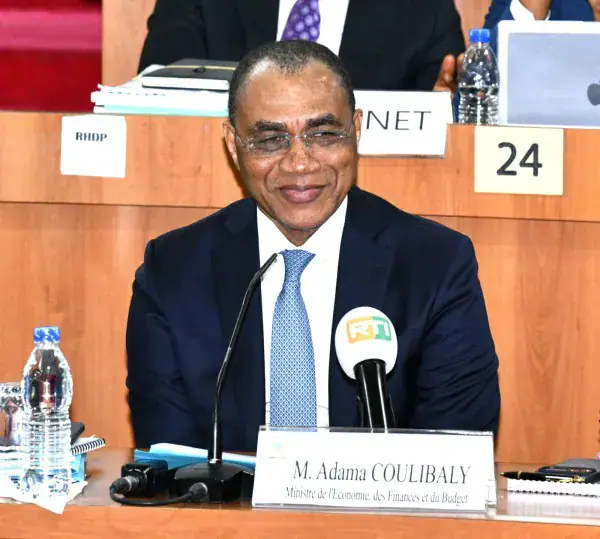
The 2025 state budget regulation bill presented by Minister of Economy, Finance, and Budget Adama Coulibaly, outlines an economic performance that the government deems satisfactory. Despite global tensions, Côte d'Ivoire achieved a 6.7% economic growth in 2025, up from 6.2% in 2024. The budget deficit was reduced to 3% of the Gross Domestic Product (GDP), adhering to the West African Economic and Monetary Union (UEMOA) community standard. The initial budget of 15,339.17 billion FCFA was adjusted to 15,464.10 billion FCFA.
The Assembly also examined the 2026 rectified finance bill, focusing on adjustments to account for changes in state resources and expenditures. Discussions included measures to offset declines in certain revenues and maintain budgetary balances. Topics such as support for cocoa producers, oil production prospects, and the establishment of a sovereign wealth fund for Côte d'Ivoire's development were addressed. The sustainability of public debt was a significant concern, emphasizing the need to preserve state financial capacities while pursuing economic and social development.
The 2027 budget programming bill aims to continue the government's economic and social ambitions, projecting a 6.6% economic growth rate. It plans a gradual reduction in the budget deficit from 3.8% of GDP in 2026 to 3.5% in 2027 and 3% in 2028. The bill outlines financing for 160 programs and 27 allocations across nine budgetary missions to fund governmental priorities and policy implementations.
The Economic and Financial Affairs Committee (CAEF) reviewed these bills from November 10 to 13, 2026, before their plenary adoption. The committee's approval paved the way for the Assembly's unanimous vote. This development marks a significant step in Côte d'Ivoire's public finance management, reflecting parliament's endorsement of the executive's budgetary directions for 2025, 2026, and 2027.
Key to these budgetary plans is the effective management of public resources, ensuring transparency, debt control, investment efficiency, and improved living standards. The government faces the challenge of translating mobilized resources into tangible outcomes that positively impact the daily lives of Ivoirians. This involves not only achieving growth rates and budgetary forecasts but also ensuring that economic progress translates into real benefits for the population.
The adoption of these budget texts underscores the collaborative effort between the legislative and executive branches in shaping Côte d'Ivoire's economic future. As the country navigates global economic challenges, the implementation of these budgetary plans will be crucial in driving sustainable development and enhancing the welfare of its citizens.
Key points
- The National Assembly of Côte d'Ivoire has unanimously approved the country's budgetary framework for 2025, 2026, and 2027.
- The budget plans aim to balance economic growth with public debt management and improved living conditions.
- Implementation of these plans will focus on translating economic growth into tangible benefits for the Ivoirian population.