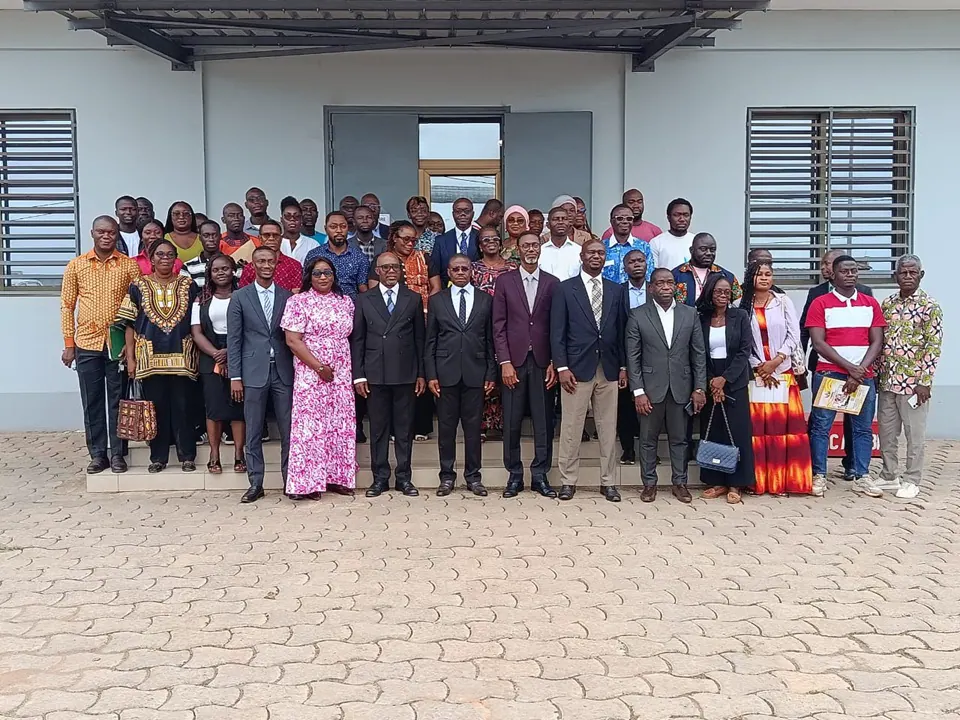
The Ivorian government has stepped up efforts to promote the employment of people with disabilities in the private sector. On October 1, 2026, a workshop was held in San Pedro to sensitize private sector companies to respect regulations on hiring people with disabilities. The event was organized by the Ministry of Employment, Social Protection, and Vocational Training, in collaboration with the National Social Security Fund (CNPS) and the Fund for the Professional Integration of People with Disabilities (FIPPSH).
The workshop covered several topics, including the definition of disability, barriers to inclusion, and the regulatory framework for employing people with disabilities. According to the regulations, companies with 100 or fewer employees must hire at least one person with a disability, while those with over 100 employees must allocate 2% of their workforce to people with disabilities. The regulations are based on several complementary texts, including a 1998 law that establishes general principles and a 2018 decree that specifies obligations for the private sector.
Despite the regulations, the current rate of employment of people with disabilities in the private sector is far below the required quota. According to Konaté Ibrahim, president of FIPPSH, only about 10,000 people with disabilities are employed in the private sector, out of a total of 1,200,000 workers, representing just 0.7% of the workforce. Ibrahim urged companies that already comply with the regulations to continue their efforts and those that do not to regularize their situation by either hiring the required number of people with disabilities or paying a compensatory financial contribution.
The FIPPSH was established to promote the insertion, reintegration, and maintenance of people with disabilities in the private sector. The fund finances investments necessary for the accessibility of premises and the adaptation of workstations. It also contributes to the acquisition of technical equipment, educational materials, or adapted work materials. Since its launch on March 18, 2025, in Abidjan, the fund has carried out information and awareness missions in 11 cities across the country.
Ibrahim's tour of the country aims to promote a new culture of employment in favor of people with disabilities, who are considered an untapped pool of skills that can contribute significantly to Côte d'Ivoire's development. He expressed his wish for companies to favor the employment of people with disabilities, who can bring new perspectives and ideas to the workforce. The FIPPSH president also highlighted the incentives offered to companies that hire people with disabilities, including tax advantages.
The CNPS has pledged to support the program and contribute to achieving its objectives. Yao Koffi Serge Patrick, deputy regional director of CNPS in San Pedro, welcomed the participation of companies in the workshop and assured that his institution would play its part in promoting the employment of people with disabilities. The workshop is part of a broader effort to promote social inclusion and equal opportunities for people with disabilities in Côte d'Ivoire.
The Ivorian government has put in place several measures to encourage companies to hire people with disabilities, including tax incentives and financial support. The FIPPSH has also been working to raise awareness among companies about the benefits of employing people with disabilities and to provide them with the necessary support to adapt their workplaces. With the support of partners like CNPS, the government aims to increase the employment rate of people with disabilities in the private sector and promote a more inclusive and equitable society.
Key points
- Companies with 100 or fewer employees must hire at least one person with a disability, while those with over 100 employees must allocate 2% of their workforce to people with disabilities.