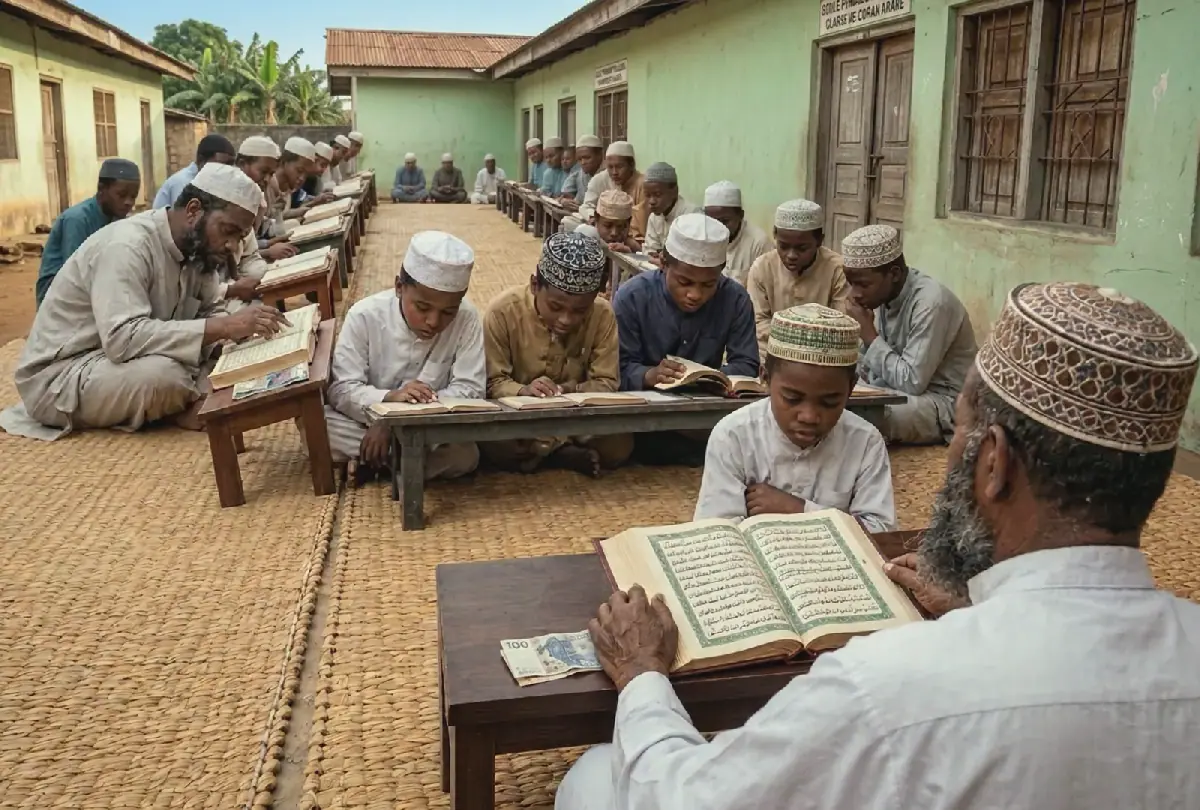
In Côte d'Ivoire, medersas, or Islamic schools, are attracting an increasing number of students. According to Imam Hassan Camara, aide in communication of the Organization of Confessional Educational Establishments (OEECI), there are now over one million students enrolled in medersas, a number that has nearly doubled in recent years. This growth is expected to continue, driven by concerns about the quality of general education.
The trend is linked to the challenging situation in general education, marked by a lack of infrastructure, teacher strikes, and concerns about academic integrity. As a result, many parents are turning to confessional education, whether Christian or Muslim. Kadio Claude, president of the Organization of Parents of Students and Students of Côte d'Ivoire (OPEECI), praises the seriousness of confessional schools, citing his own experience of sending his children to schools run by priests.
The increase in enrollment in medersas is a relatively recent phenomenon, according to Imam Hassan Camara. He attributes this growth to the integration of Islamic confessional establishments into the national education system. Around 1,300 medersas have been accredited, representing about 50% of existing medersas. These accredited schools receive government subsidies and are increasingly attracting students.
Students in medersas follow a curriculum similar to that of general education, with the addition of Arabic language and Islamic studies. Upon completing their secondary education, students can choose to pursue higher education in a conventional university or an Islamic university. However, Côte d'Ivoire has only six Islamic universities, with limited faculties, which can restrict students' options.
The OEECI is seeking to address some of the challenges facing medersas, including the need for greater harmonization of education at the secondary level. Imam Camara emphasizes that medersas require more teachers, as they offer instruction in both Arabic and French. The organization is calling for increased subsidies to support the development of medersas.
Despite these challenges, medersas are seen as a viable alternative to general education. Parents like Kadio Claude appreciate the moral education and academic results offered by these schools. As concerns about the quality of education in Côte d'Ivoire persist, it is likely that more parents will consider enrolling their children in medersas.
The growth of medersas reflects broader trends in education in Côte d'Ivoire. With the government's support, through subsidies and accreditation, these schools are increasingly seen as a credible option for parents seeking a high-quality education for their children. As the education sector continues to evolve, it will be important to monitor the development of medersas and their impact on the country's education system.
Key points
- Over one million students are now enrolled in medersas in Côte d'Ivoire, a number that has nearly doubled in recent years.