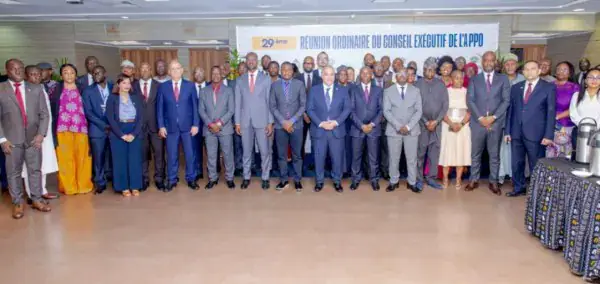
The 29th Ordinary Meeting of the African Petroleum Producers' Organization (APPO) Executive Council kicked off in Abidjan, Côte d'Ivoire, on November 15, 2026. The meeting, held under the Ivorian presidency of the Council of Ministers, brings together member countries to discuss pressing issues in the energy sector. The talks focus on financing energy projects through the African Energy Bank, developing local content, valorizing gas, refining, and strengthening cooperation among member states.
Côte d'Ivoire's Minister of Mines, Oil, and Energy, Mamadou Sangafowa-Coulibaly, officially opened the meeting, which is part of the organization's statutory end-of-term meetings. The ceremony was attended by members of the Executive Council, delegations from member countries, the APPO General Secretariat, and several Ivorian public sector officials. The discussions aim to consolidate the organization's achievements and accelerate initiatives to enhance Africa's energy autonomy.
APPO's Secretary General, Farid Kesaly, emphasized the need for the organization to evolve from a structure primarily focused on defending the interests of oil-producing countries to a genuine instrument for the continent's economic and industrial transformation. He stressed that this transformation should result in the creation of industries, development of skills, infrastructure, job creation, and better distribution of economic benefits from natural resources to African populations.
One of the major achievements highlighted during the ceremony is the establishment of the African Energy Bank, a joint initiative by APPO and Afreximbank. The bank's inaugural general assembly, held on October 31, 2026, in Abuja, Nigeria, marks a significant step towards financing energy projects on the continent. The bank aims to reduce African countries' dependence on external financing and mobilize resources tailored to the continent's energy priorities.
Kesaly identified four priority areas for APPO's future action: local content, gas valorization, refining, and regional logistics. He emphasized the need to develop genuine industrial capacities, strengthen small and medium-sized enterprises, and invest in training young Africans. The goal is to achieve 50% local content in member countries by 2030. Kesaly also stressed the importance of valorizing gas resources to boost electricity production, industrial development, and petrochemicals.
The APPO Secretary General invited member countries that have not yet done so to contribute to the African Energy Bank's capital as soon as possible. Soro Souleymane, Deputy Cabinet Director of the Ministry of Mines, Oil, and Energy, representing Minister Sangafowa-Coulibaly, praised the efforts of member states that have made it possible to achieve this major milestone. He noted that 2026 will be remembered as a significant year in APPO's institutional strengthening and strategic orientation implementation.
The meeting in Abidjan has brought together key stakeholders to discuss the future of Africa's energy sector. The outcome of the discussions will likely shape the continent's energy landscape and determine the course of action for APPO member countries. As the energy sector continues to evolve, African oil-producing countries are working together to assert their sovereignty and ensure a more equitable distribution of energy resources.
Key points
- Establishment of the African Energy Bank to finance energy projects on the continent.
- APPO's focus on developing local content, valorizing gas, and refining to boost Africa's energy autonomy.
- Goal to achieve 50% local content in member countries by 2030.