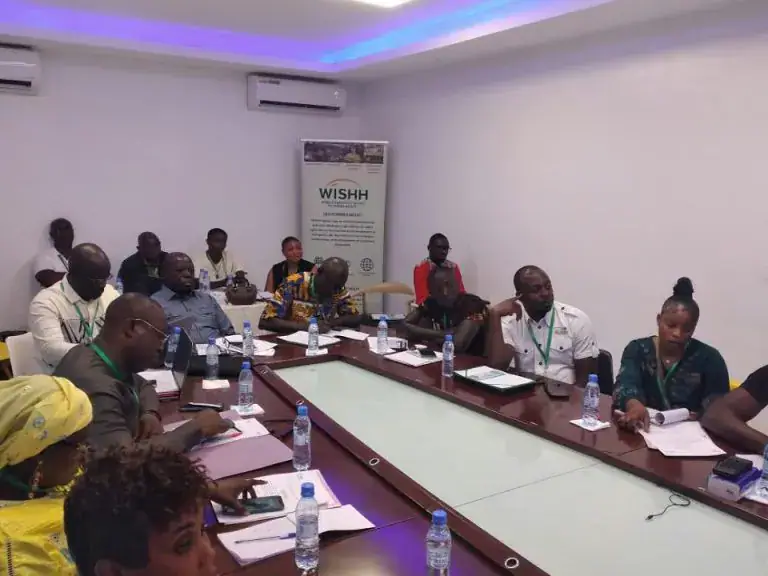
A four-day training program for Ivorian fish farmers concluded in Yamoussoukro on November 19, 2026. The program, organized by Wishh and Interaqua, focused on enhancing production practices, biosecurity, and farm management. Participants gained knowledge on managing breeding stock, producing high-quality fish fry and market-sized fish, and monitoring water quality. The training also covered best practices for fish farming and disease management.
The training program was designed based on the needs expressed by fish farmers during consultations with industry stakeholders and Interaqua. It included technical presentations, experience sharing, and practical exercises on topics such as fish mortality causes, fry transportation and handling, and water quality monitoring. The program aimed to equip participants with the skills to improve their farming practices and contribute to the growth of Côte d'Ivoire's aquaculture sector.
Salif Sawadogo, head of the Ivorian fish farming sector, encouraged participants to make the most of the training and apply the knowledge gained on their farms. He emphasized the importance of acquiring the necessary skills to manage their farms effectively and help develop the country's aquaculture industry. The training is part of a broader effort to professionalize the aquaculture sector, which faces increasing demands for high-quality products and improved farming practices.
The training covered essential topics such as feed quality, biosecurity, and farm management, which are critical for maintaining optimal farming conditions and improving production. Participants learned about the main causes of fish mortality and how to prevent them, as well as best practices for handling and transporting fish fry. The program also focused on the importance of monitoring water quality and implementing effective farm management strategies.
The program's curriculum was developed in response to the needs of fish farmers, who require practical skills and knowledge to manage their farms efficiently. By enhancing their skills and expertise, participants can improve their productivity and contribute to the growth of Côte d'Ivoire's aquaculture sector. The training program is a significant step towards professionalizing the sector and meeting the increasing demands for high-quality fish products.
The training program in Yamoussoukro is part of a broader effort to support the development of Côte d'Ivoire's aquaculture sector. By providing fish farmers with the necessary skills and knowledge, the program aims to improve the country's fish production and meet the growing demand for high-quality fish products. The sector faces challenges related to disease management, water quality, and farm management, which the training program seeks to address.
The Ivorian government and industry stakeholders recognize the importance of professionalizing the aquaculture sector to meet the increasing demands for high-quality products and improved farming practices. The training program in Yamoussoukro is a significant step towards achieving this goal, and participants are expected to apply their new skills and knowledge to improve their farming practices and contribute to the growth of the sector.
Key points
- The training program aimed to enhance fish farmers' skills in production practices, biosecurity, and farm management.
- The program covered essential topics such as feed quality, biosecurity, and farm management.
- The training is part of a broader effort to professionalize Côte d'Ivoire's aquaculture sector.