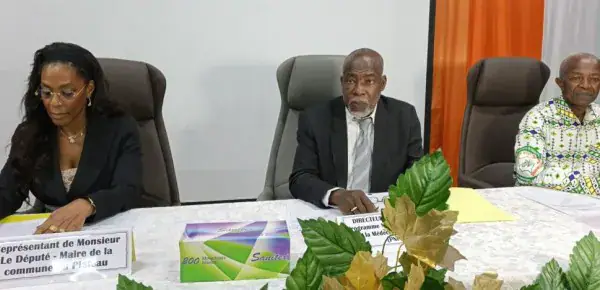
Côte d'Ivoire recently marked the 24th African Traditional Medicine Day, an event that brought together stakeholders in the health sector to discuss the integration of traditional medicine into the country's national health system. The celebration, held at the Institut national de santé publique (INSP) in Abidjan, was organized by the Ministry of Health, Public Hygiene, and Universal Health Coverage through the Programme national de promotion de la médecine traditionnelle (PNPMT). The theme of this year's celebration was "Reflection on efforts to research and develop traditional medicine to achieve universal health coverage in the African region."
The event highlighted the importance of traditional medicine in Côte d'Ivoire and its potential to improve access to healthcare. According to Mamadou Ouattara, president of the Conseil national de l'Organisation nationale des associations de praticiens des médecines traditionnelles, traditional medicine plays a significant role in the healthcare landscape of Africa, with many people relying on it as a first line of treatment. He emphasized the need for scientific validation of traditional healing practices to ensure their safety and efficacy.
The integration of traditional medicine into the national health system is seen as a way to enhance universal health coverage in Côte d'Ivoire. The country's healthcare system faces challenges in providing adequate healthcare services to its population, particularly in rural areas. Traditional medicine, with its cultural significance and geographical accessibility, can help bridge this gap. However, its integration into the formal healthcare system requires rigorous evaluation and regulation to ensure that traditional practices meet scientific standards.
Stakeholders at the event emphasized the need for collaboration between traditional medicine practitioners and conventional healthcare providers. Mamadou Ouattara called for intensified collaboration between the two, highlighting the benefits of combining traditional knowledge with scientific research. He also stressed the importance of addressing the issue of charlatans who often give traditional medicine a bad name.
The Programme national de promotion de la médecine traditionnelle (PNPMT) has reaffirmed its commitment to promoting and regulating traditional medicine in Côte d'Ivoire. Dr. Croat Ehoulé, director coordinator of the PNPMT, expressed his gratitude to stakeholders, including the Ministry of Health and research institutions, for their support. He noted that traditional medicine has the potential to contribute to healthcare in various areas, including maternal and child health, mental health, and infectious diseases.
The celebration of African Traditional Medicine Day in Côte d'Ivoire highlights the country's efforts to harness the potential of traditional medicine to improve healthcare outcomes. The event provided a platform for stakeholders to discuss the challenges and opportunities in integrating traditional medicine into the national health system. As the country moves forward, it is expected that traditional medicine will play a more significant role in providing healthcare services to its population.
Moving forward, the focus will be on scientifically validating traditional healing practices and integrating them into the formal healthcare system. This will require continued collaboration between traditional medicine practitioners, researchers, and conventional healthcare providers. With a growing emphasis on universal health coverage, Côte d'Ivoire is poised to make significant strides in leveraging traditional medicine to improve healthcare outcomes for its population.
Key points
- The integration of traditional medicine into Côte d'Ivoire's national health system aims to enhance universal health coverage.